
THE END OF AN ErrrrrA FOR D-M
Report and photos by George Karavantos
August 22, 2026
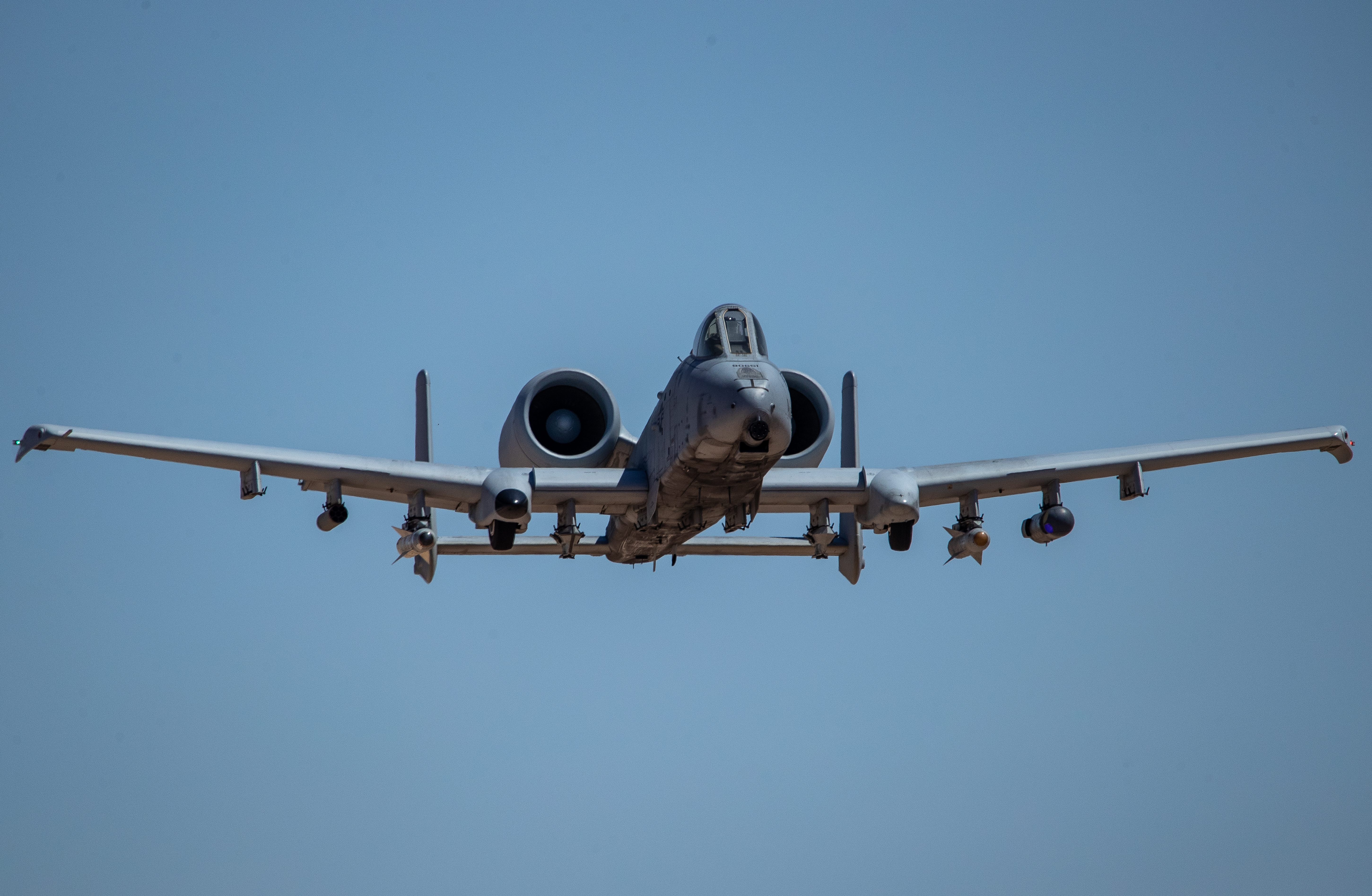
In the twilight of the Warthog’s celebrated career at Davis–Monthan Air Force Base, the 355th Wing had just one squadron remaining, the 357th Fighter Squadron. The “Last Dragons” flew the type’s final sortie on 29 July 2026, bringing nearly half a century of A-10 operations at Davis–Monthan to a close. Just days before this historic milestone, George Karavantos visited Davis–Monthan Air Force Base to witness one of the last A-10 Range Days – a final opportunity to capture the final sights and sounds of the Hawg in the skies over southern Arizona.
Davis-Monthan AFB:
Davis–Monthan Air Force Base made history in 1976 when it became the first home of the A-10 Thunderbolt II. Since then, generations of A-10 pilots have learned to fly and fight under the clear skies of sunny Tucson, making Davis–Monthan AFB synonymous with Warthog training and operations.
The first four A-10As arrived at Davis–Monthan on 2 March 1976, marking the beginning of a new era for the U.S. Air Force. Assigned to the 355th Tactical Fighter Wing, the aircraft entered service as the wing transitioned from the A-7D Corsair II.
Throughout those years, three active-duty fighter squadrons and one Air Force Reserve associate squadron operated the Warthog from Davis–Monthan AFB. Together, they carried out both combat and training missions, ensuring that every new generation of A-10 pilots was prepared for operational service.
354th Fighter Squadron “Bulldogs”
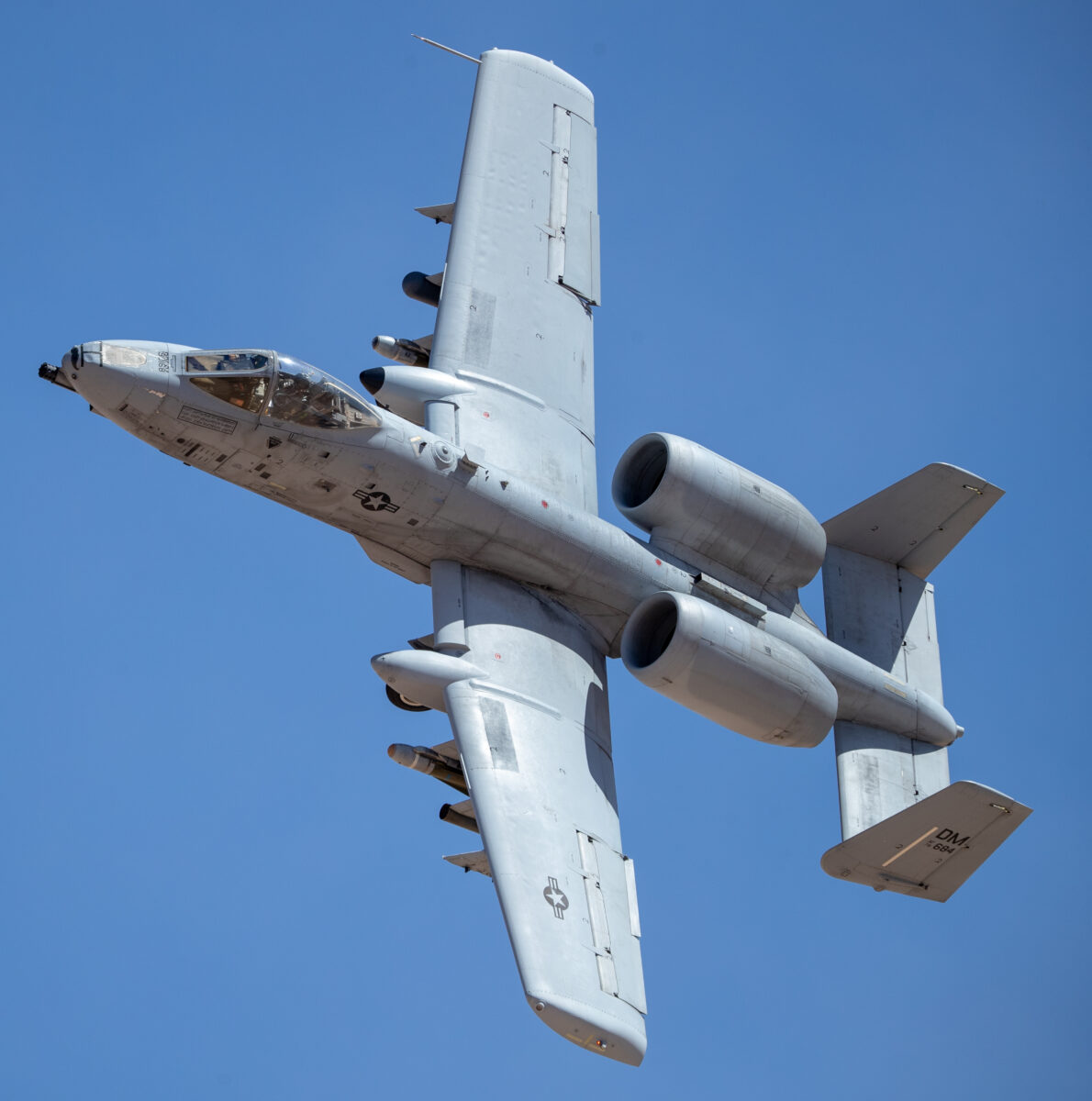
The 354th Fighter Squadron became an operational A-10 unit in 1992. For more than three decades, the Bulldogs stood ready for worldwide deployments until the squadron was deactivated on 13 September 2024. Its 36 aircraft were either retired or redistributed among other A-10 units.
357th Fighter Squadron “Dragons”
The Dragons hold a unique place in A-10 history as the very first squadron to receive the Thunderbolt II in Arizona. They remained with the aircraft throughout its service at Davis–Monthan and served as the Air Force’s Formal Training Unit (FTU), where virtually every A-10 pilot earned their wings in the Warthog.
358th Fighter Squadron “Lobos”
The Lobos were the second squadron to transition to the A-10. They operated the aircraft until 21 March 2014, when the squadron was inactivated during the Air Force’s first major effort to reduce the size of the A-10 fleet.
47th Fighter Squadron “Dogpatchers”
Assigned to the 924th Fighter Group of the Air Force Reserve, the Dogpatchers joined the A-10 community in 2011. Working alongside the 357th Fighter Squadron, they served as the Reserve associate Formal Training Unit, helping train future Warthog pilots while maintaining operational readiness. The squadron was inactivated in 2025, bringing another distinguished chapter in the A-10 story to a close.
Pilot Training:
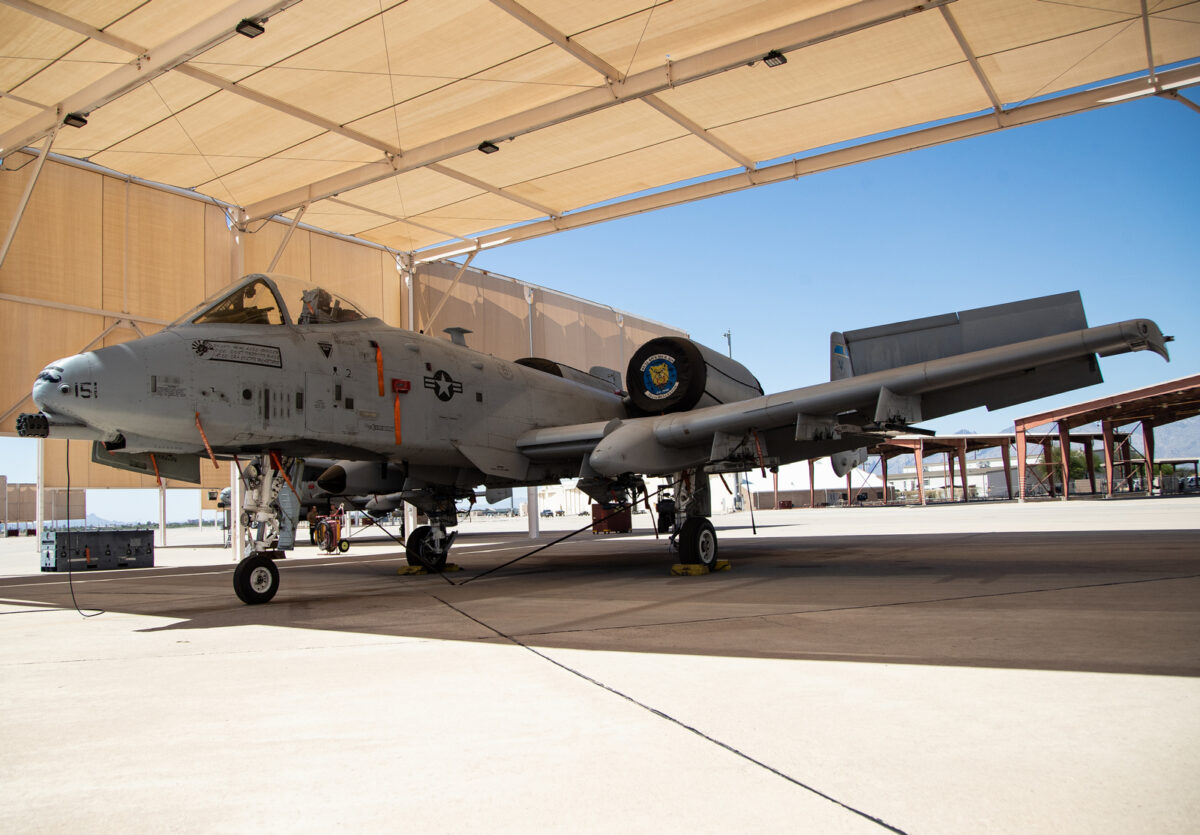
We had the opportunity to meet and interview Captain Lucas Van Epps from the last graduating class of 10 A-10 pilots and we were able to discuss with him the training process along with some other details about the Warthog.
The last future A-10 pilots-students went through an academic phase lasting approximately three weeks to familiarize themselves with the A-10C. This included a virtual reality cockpit providing students with a head start in understanding the cockpit layout.
From the academic phase of the syllabus, students begun flying the A-10C Full Mission Trainer Flight Simulator and spent, on average, six hours in preparation for their first flight. The simulator had a complete cockpit of the A-10C with a projected visual display offering a 360° field of view and provided students with a realistic environment which enabled an easier transition. Since the A-10 is a single-seat aircraft, a student’s first flight was ‘solo’ but with an IP flying on their wing.
After their first flight, students moved between simulator and live flying, developing an understanding of the weapons systems, CAS tactics, and wingman responsibilities. They begun flying within Military Operating Areas (MOAs) simulating attacks on targets selected by the IPs. Over the MOAs, the students learnt how to utilize the AGM-65 Maverick missile seeker head, either the K-model electro-optical version or the D/G-model Infra-Red variant to lock onto targets and understand their characteristics.
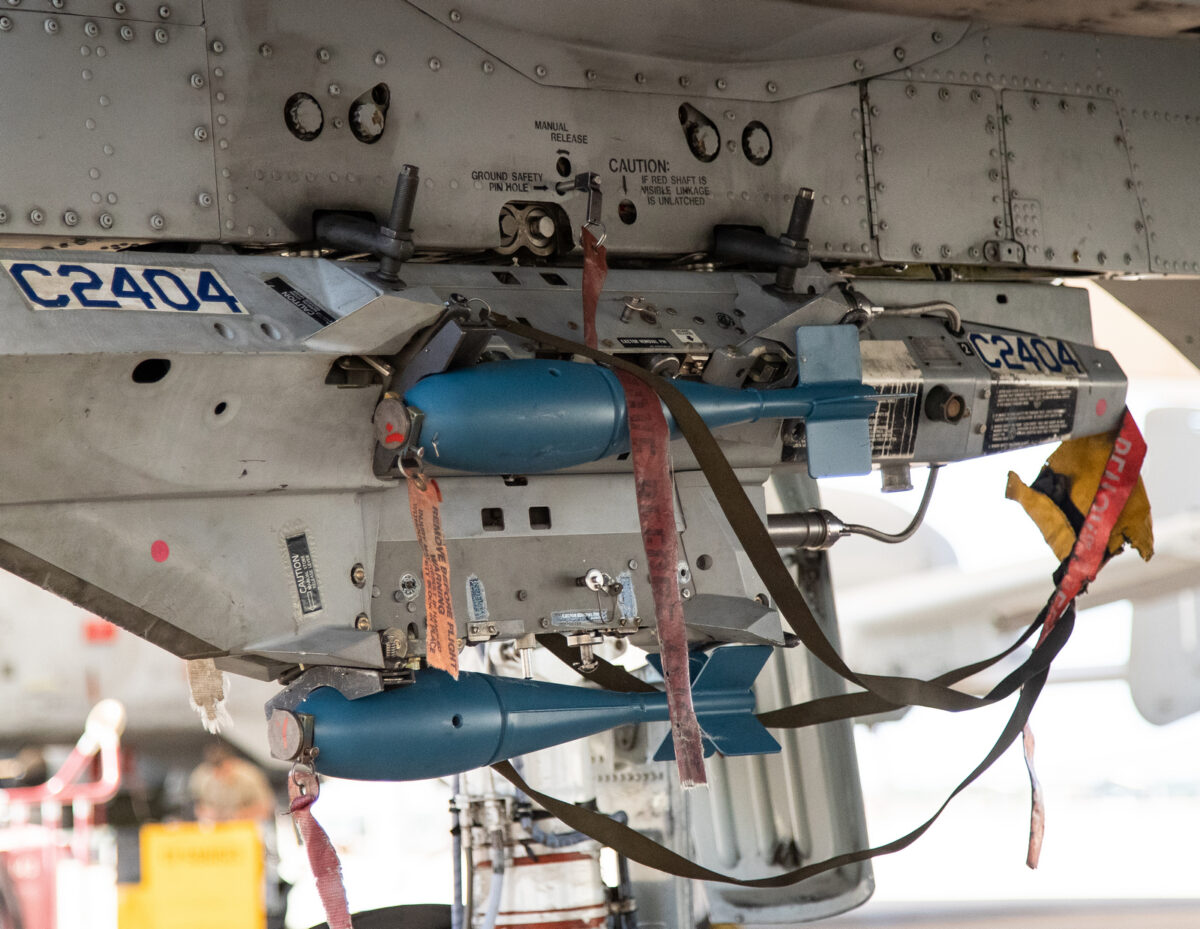
With the Barry M. Goldwater Range near Gila Bend, Arizona, less than half an hour flight time from Davis-Monthan, the 357th FS was spending a significant amount of time over the range with their students, employing predominantly BDU-33’s practice munitions to simulate Mk 82 500lb dumb bombs, unguided rockets, and of course the aircraft’s internal gun. “The first opportunity to fire the gun at the range is a momentous occasion for all the students”, admitted Captain Van Epps.
On 3 April 2026, the 357th FS Dragons held a graduation ceremony for the last batch of A-10 pilots. This marked the definitive end of the Thunderbolt II platform’s new pilot generation process, signaling another step in the Air Force’s goal of retiring the venerable close air support aircraft in the coming years.
With the termination of the 357th FS, most of the aircraft will be stored at AMARG while some of them, depending on their fatigue and total hours might fly to other squadrons. “Around 95% of the students of the final class went to the 23rd Wing at Moody AFB, Georgia, including Captain Van Epps.
“It was an absolute honor to be part of such a long legacy. The A-10 started here in 1976, and in 2026, getting to fly in the last class was absolutely awesome,” Capt. Van Epps said.
Consequently, maintaining two Squadrons through 2030 will require managing the fleet without the addition of new personnel. Similarly, the heavy maintenance infrastructure required to maintain the aircraft has already been decommissioned. In late February 2026, the Ogden Air Logistics Complex (ALC) at Hill AFB completed the last depot maintenance on an A-10C. The departure of the last aircraft serviced, “78-0655” of the 303rd FS, marked the end of the facility’s multi-year role, while the maintenance Squadron, the 571st AMS, was disbanded.
BRRRRTing and Bombing:
The event took place in Barry M Goldwater Range, 15 miles south on Gila Bend, west of Tucson, one of four manned, tower-controlled firing ranges of USAF. These ranges provide targets ideal for the bomb, rocket, and strafe attacks employed not just by A-10s, but by the F-16s and F-35s from Arizona’s Luke Air Force Base and Morris Air National Guard Base.
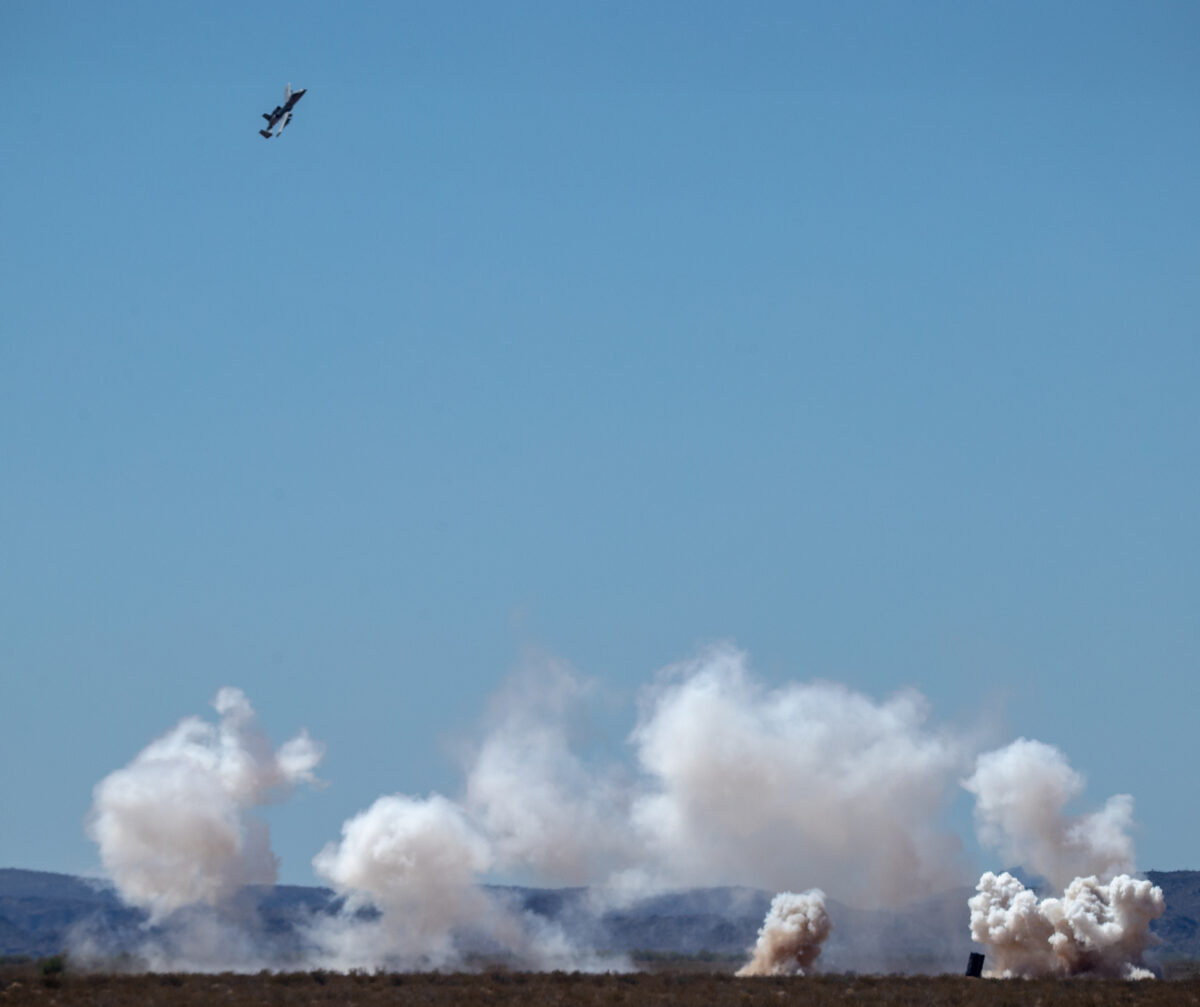
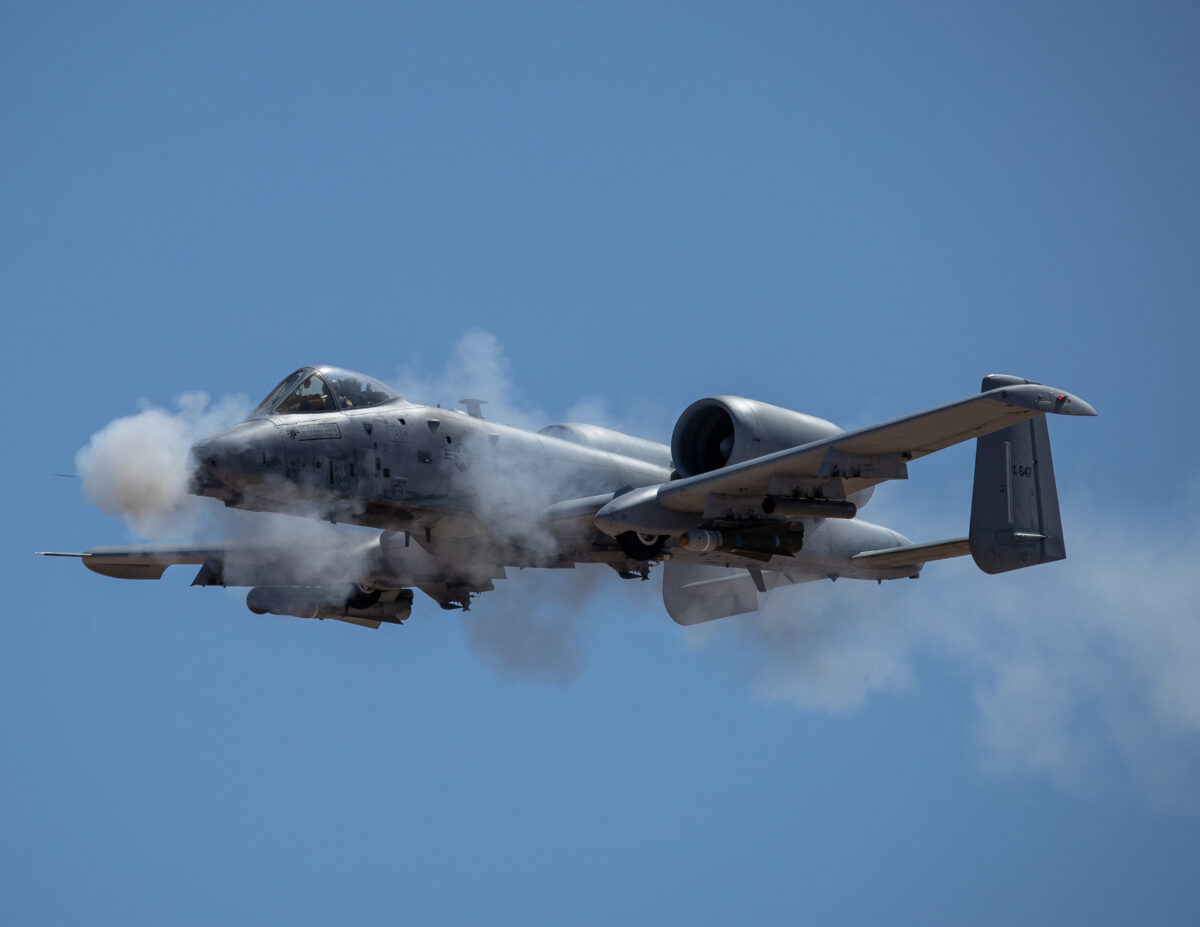
The A-10s flew over the area in formation and while breaking they started coming in at low altitude positioning themselves for strafe passes with the GAU-8 30mm cannon towards two cruciform drag-chute-type targets suspended between large poles. Each pilot flew two two-target strafe passes, with one burst fired at long range at one target, followed by some quick rudder work to line up on the adjacent target for a burst from much closer range. After the initial strafe passes, the Warthogs started flying very low for some close in strafe passes against the same targets until their ammunition run out.
After that the Warthogs switched to BDU-33 practice bomb weapons release to practice their dropping below minimum safe altitude maneuvers or practice their execution of a procedurally-correct safe escape maneuvers. Each Warthog practiced two attempts on these targets which were old-destroyed ground vehicles. Lastly all four Warthogs positioned themselves for one practice release of firing rockets to further distant ground targets.
At the end all four Warthogs in close formation released hundreds of flares above us and made several photo-passes at extremely low altitudes, where only Warthog knows how to fly best!
Updating until the end:
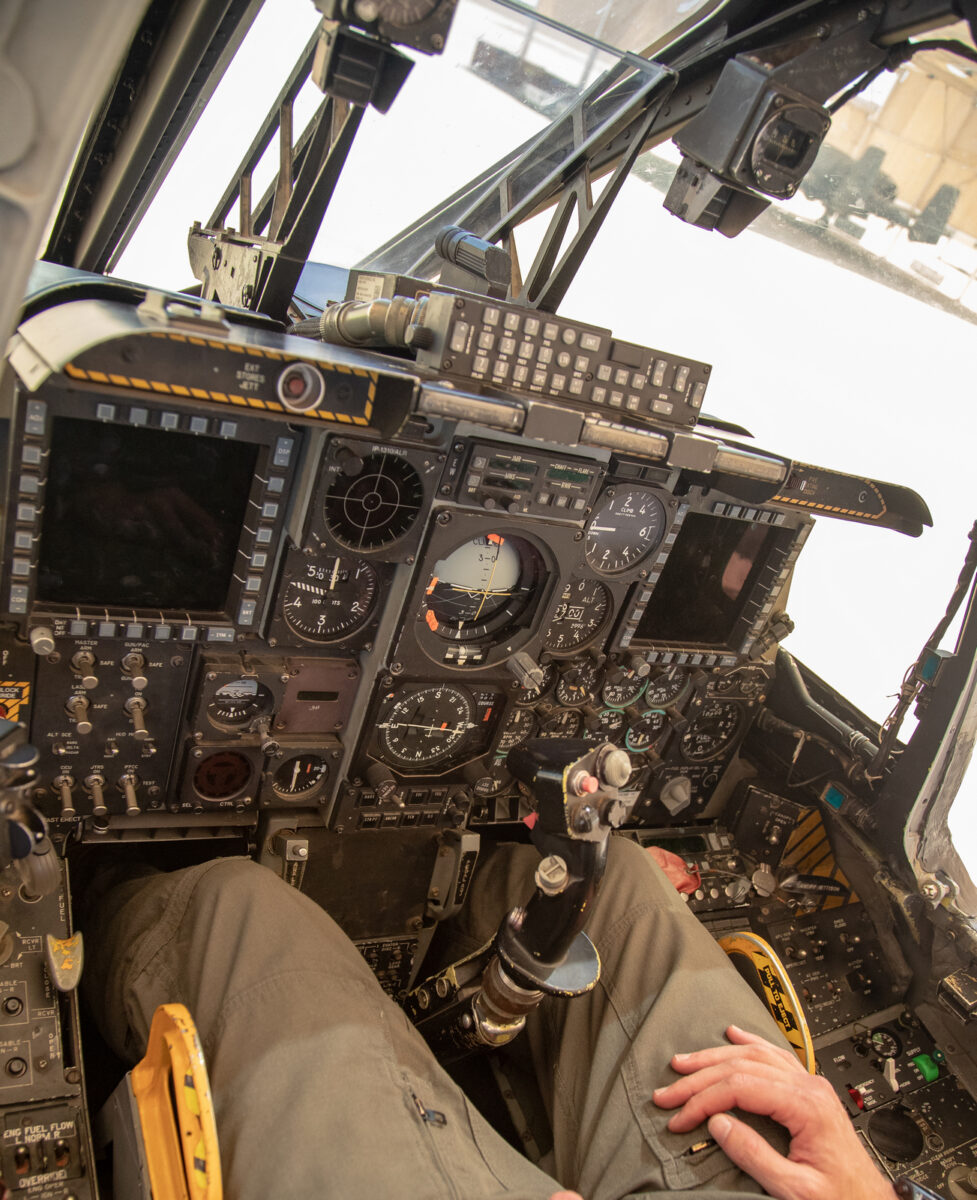
From 2005 to June 2011, a major upgrade program for the A-10s took place which resulted in the new A-10C. This included enhanced precision target engagement capabilities, which allowed the deployment of precision weapons, wind-corrected munitions dispenser (WCMD), as well as enabling an extension of the aircraft’s service life to 2028 along with new wings.
Other improvements included hands-on throttle and stick (HOTAS) control, two new Raytheon Technical Services 5in×5in multifunction cockpit displays, situational awareness datalinks (SADL), digital stores management system, an integrated flight and fire control computer (IFFCC) from BAE Systems Platform Solutions for automated continuously computed weapons delivery, ability to carry Sniper XR or Litening targeting pods for precision-guided weapons. Improvements also included modern communications suite including the unique Link 16 radio and Satcom.
Lockheed Martin Systems Integration-Owego was the prime contractor for the program. The first flight of the upgraded A-10C took place in January 2005. A contract for low-rate initial production (LRIP) of 72 units was awarded in March 2005. The first unit was delivered to Baltimore Air National Guard in August 2006. A contract for full-rate production of 107 units was placed in August 2006. The A-10C achieved initial operating capability in August 2007. A total of 100 A-10s had been upgraded by January 2008. A total of 356 A-10 aircraft were upgraded under that contract.
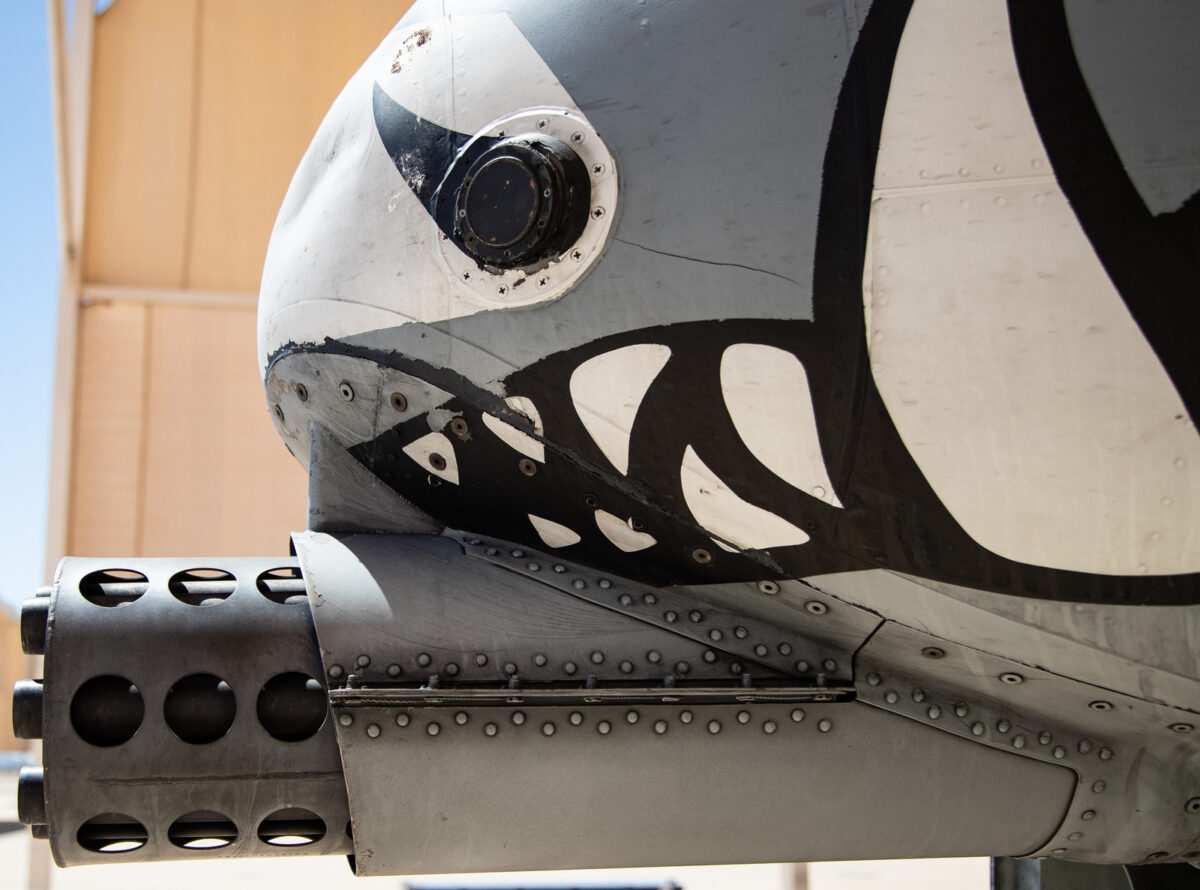
As recently as 2023, A-10 pilots have started wearing an improved helmet mounted sight. This resulted in a new designation of the A-10C+. Its key upgrades is the Scorpion Helmet-Mounted Cueing System (HMD): known as HObIT (Hybrid Optical-based Inertial Tracker), which allows separate targeting and attack of 6 (some sources say up to 18) separate targets independently. Captain Van Epps, explained us how this system works. “It’s pretty close to the helmet of the F-35, offering to the pilot a very good situational awareness. In contrast to the F-35 system, the A-10 has a Heads Up Display (HUD) in front. For that reason the canopy of the A-10 has many small dots on top of the helmet which provide orientation information to it. So when the pilot looks at his/her HUD, all the information disappears. In that way the pilot doesn’t become saturated with both of them. It’s a combination of new school with old school, which is quite handy”, said Van Epps.
Status of the A-10 Fleet:
As of early 2026, the total operational inventory of A-10Cs stood at 162 aircraft. This represented a significant and rapid decline from the approximately 245 aircraft remaining in active service at the end of 2024. The rate of retirement had been the subject of intense debate in Washington, culminating in the 2025 defense budget which limited the USAF to retiring just 59 aircraft for that fiscal year. Despite legislative interventions, the USAF’s phase-out of the A-10C was well underway by the time Epic Fury began. The remaining fleet in early 2026 is divided between the active force, the Air National Guard (ANG), the Air Force Reserve Command (AFRC), and the test squadrons. The active force (USAF) units were the 23rd Wing at Moody AFB, Georgia, operated with the 74th and 75th Fighter Squadrons. The ANG wing consisted of the 190th Fighter Squadron of the 124th Fighter Wing based at Gowen Field ANGB, Idaho, and the 107th Fighter Squadron of the 127th Fighter Wing at Selfridge ANGB, Michigan. The AFRC had the 303rd Fighter Squadron of the 442nd Fighter Wing at Whiteman AFB, Missouri, as well as the 76th Fighter Squadron of the 476th Fighter Group (FG) at Moody AFB and the 358th Fighter Squadron of the 49th Fighter Wing, also at Whiteman AFB. Training, weapons systems evaluation and flight testing were conducted by the 357th FS of the 355th FW at Davis-Monthan AFB in Arizona, the 422nd TES and 85th TES of the 53rd Wing at Nellis and Eglin bases respectively, the 66th Weapons Squadron of the 57th Wing at Nellis AFB and the 514th Flight Test Squadron Squadron of AFMC (Air Force Material Command) at Hill AFB, Utah.
The year 2025 marked a significant reduction in the A-10C fleet. The 104th FS of the Maryland Air National Guard (historically the oldest A-10 Squadron of the ANG, having operated with the type since 1979) was officially decommissioned on 23 September 2025 at Warfield ANGB at Martin State Airport.
Engagement in Iran:
The A-10’s divestment has been controversial as the Air Force has been trying to get rid of it for years, with the Congress intervening to avoid losing a critical CAS capability.
Although initial plans had the remaining 162 A-10s retired by the end of 2026, beginning of 2027, the Warthog fleet eventually found itself on the front lines of a major conflict. Initial missions to the U.S. Central Command (CENTCOM) area of responsibility included aircraft from the 74th and 75th Fighter Squadrons (FS), which were quickly thrown into action as the conflict intensified. To maintain operational momentum, expand capabilities and replace combat losses, the USAF significantly increased the A-10 presence in the CENTCOM AOR. Eighteen Air National Guard (ANG) A-10Cs from Idaho and Michigan were deployed to the Middle East, alongside aircraft already flying missions. The reinforcements were supplemented by two more A-10Cs from the 74th FS, establishing a strong Warthog presence there. Although considered by many to be outdated and vulnerable in a high-threat environment, the aircraft demonstrated remarkable versatility throughout Operation Epic Fury. In addition to traditional CAS missions, the A-10Cs in development were utilized to locate and neutralize Iranian fast attack craft in the Strait of Hormuz in support of CSAR missions within Iranian airspace, as well as to intercept UAVs.
The A-10’s operational engagement came to light when a USAF F-15E Strike Eagle from the 494th FS, call sign DUDE 44, was shot down by an AD-08 Majid short-range air defense system (SHORAD) inside Iran. The Warthogs were immediately involved in action against Iranian forces during the subsequent CSAR. A special rescue “package” was quickly assembled, incorporating A-10Cs with HC130J Combat King IIs and HH-60W Jolly Green IIs, to recover the pilot of the downed Strike Eagle. During this mission the A-10 fleet suffered one confirmed combat loss. One Warthog was shot down by enemy fire, although its pilot successfully ejected over the Persian Gulf, was recovered, and immediately transported to safety. Unconfirmed reports indicate the loss of a second A-10 in Kuwait on the same day, also to enemy fire. In response to the losses, two additional A-10Cs (numbered “78-0632” and “82-0659”) were deployed to AB Muwaffaq Al-Salti via RAF Lakenheath in mid-April 2026.
To bolster the Warthog fleet during the Epic Fury escalation, eighteen Air National Guard (ANG) A-10Cs transited RAF Lakenheath in late March and early April 2026, en route to the Middle East. The aircraft arrived at AB Muwaffaq Al-Salti on 2 and 8 April 2026. The reinforcement “package” brought together aircraft from two different ANG units: the 190th FS from Idaho and the 107th FS from Michigan.
This move is significant as it could be one of the last combat deployments for these units before their planned transition to new platforms. The Michigan Air National Guard contribution came from the 107th FS, known as the Red Devils, which is part of the 127th Wing based at Selfridge ANGB. Prior to the retirement plans, the unit maintained a fleet of twenty A-10Cs with the “MI” tail number designation. However, the Squadron has long been preparing for the retirement process, which is expected to begin in 2027. In April 2025 it was announced that the 107FS would transition to the F-15EX Eagle II, with the new platforms expected to begin arriving in 2028. Along with the Michigan aircraft, the 190FS is also facing the imminent retirement of the A-10Cs it operates. The Idaho unit is expected to end Thunderbolt II operations and begin its transition to F-16C/Ds by late 2026 and into 2027.
Epilogue:
The end of the A-10’s flight operations at Davis-Monthan AFB represents yet another step towards the retirement of the aircraft. According to current plans the A-10 will continue to serve the U.S. Air Force until 2030 with at least 103 of the airframes kept airworthy and two squadrons of A-10s maintained until that date and one other squadron extended until 2029. The operational squadrons expected to fly the A-10 through 2030 will be the 74th (or 75th) FS from Moody AFB and the 303rd FS from Whiteman AFB (which recently decided to transition from the A-10C to the F-15E Strike Eagle). One of the two active duty squadrons of the 23rd Fighter Group at Moody Air Force Base, is scheduled to transition to the F-35 beginning in 2029.
Although the inactivation of the 357th FTS terminated the life of the A-10 for Davis-Monthan, the future of the base still remains bright. The Department of the Air Force selected Davis-Monthan Air Force Base as the preferred location to host Air Force Special Operation Command, transforming the 492nd Special Operations Wing into a power projection wing with all of AFSOC’s mission capabilities. Last August, Davis-Monthan received its first of 10 planned EA-37B Compass Call aircraft, which will replace the aging EC-130Hs and continue the mission of the 55th Electronic Combat Group for years to come.


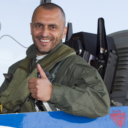
George Karavantos is from Athens, Greece. His love with military aviation started at the age of 10 when he accidentally read a Greek aviation magazine. Since then, he never stopped reading about fighter aircraft and taking photos of them. He was too tall to become a fighter pilot, so he became an airline pilot. Nowadays he is a Captain and a Flight Instructor on the A320 aircraft. Despite his profession, military aviation will always be his obsession.