
Central Coast AirFest 2026
The Hidden History of Nose art!
Report and photos by Jim Chamberlain
September 29, 2026
The afternoon light was harsh, and the warbirds were backlit by the high sun at the Planes of Fame Central Coast AirFest in Santa Maria, California in September. This made ground to air photography very difficult. I decided to shift to more detail photography of the great “nose art” on the aircraft.
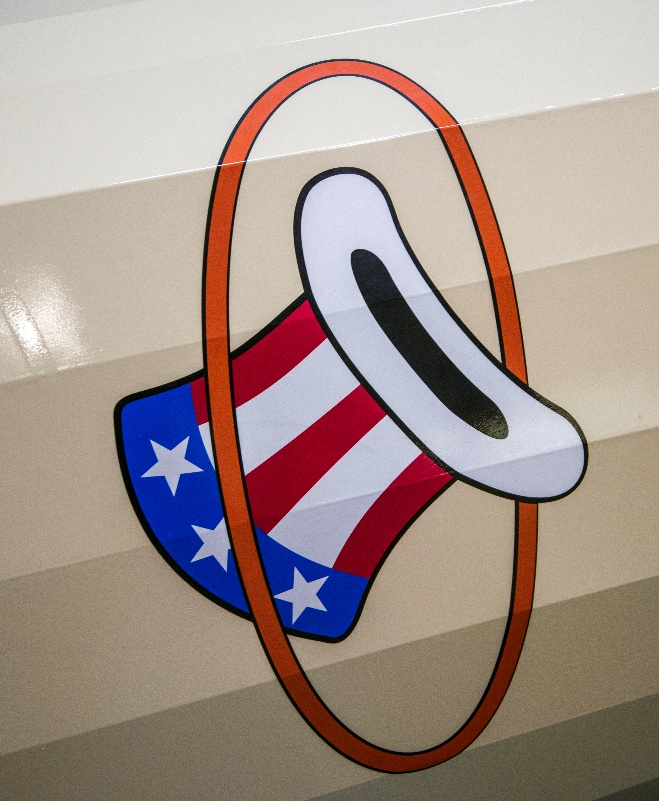
I have always been fascinated by this unusual and historic art form that was brought to its peak by the aircraft of the United States in World War II. The Italian and German planes of WWI are credited with the first examples of painting their planes with different colors and insignia to identify them in the air. The Americans soon followed with famous squadron identifiers like the 94th Pursuit Squadron’s “Hat in the Ring” insignia in WWI.
World War II saw the pinnacle of the “Nose Art” made famous in movies and newsreels with aircraft like the “Memphis Belle”, “Ruptured Duck”, and the “Piccadilly Lilly”. While the artwork on some of these aircraft is spectacular in itself, the stories these paintings talk about the aircraft and the pilots who flew and fought during combat. This occurred in all theatres of that worldwide conflict. It is their greater value to history.
The first aircraft to catch my eye was a P-38 Lightning as it taxied from the hot ramp towards its take-off position. The painting on its nose was of a beautiful pinup girl with the title “Thoughts of Midnite” It reminded me of the famous “Vargas Girl” paintings featured in Esquire magazine during the war that inspired so many aircraft paintings.

The nose art originally created by Captain Verl Erwin Jetts of the 431st Fighter Squadron, 475th Fighter Group, stationed in New Guinea in 1943 as part of the U.S. Army Air Forces Fifth Air Force in the Pacific Theater. He earned awards including the Distinguished Flying Cross and Silver Star for aerial combat achievement for downing 7 Japanese aircraft. “Thoughts of Midnite” was personal nose art painted on his Lockheed P-38 Lightning during combat operations reminding him of home and his girl. Charles Lindburgh even flew with the “Satan’s Angels” of the 475th as a civilian technician during the war.
Another historic warbird at the Planes of Fame Air Fest was their P-38 Lightning with unique nose art. The current airframe is painted to honor the original P-38H-1-LO flown by Captain Perry J. “Pee Wee” Dahl of the 432nd Fighter Squadron also of the “Satan’s Angels” 475th Fighter Group in the Pacific Theater. Captain Dahl named his original plane “23 Skidoo”. The Planes of Fame also honor the 475th with a museum display at their Chino museum. The slogan meant getting out of a dangerous situation quickly.
Captain Dahl shot down nine enemy aircraft during the conflict and received the Silver Star for one mission where he led a squadron of eight P-38 aircraft escorting bombers on an attack against an enemy convoy. He searched for the convoy and reported its location to the B-25 bombers. Later, he noticed that another flight of P-38’s that were unaware of some enemy fighters above them.
 ,
,
Dahl pulled up to intercept the enemy fighters as they dove to attack. Dahl stayed in the outnumbered engagement with the aid of only four other P-38’s. he forced the Japanese pilots to break off their attack, and he shot down one of the enemy fighters. He finally landed with 15 gallons of fuel in his tanks. He definitely pulled a “23 Skidoo” on this operation. You can see this aircraft at the Planes of Fame 475th Hanger in Chino, Ca. They will be doing a “Hanger Talk” about this rare flying fighter in November 2026.
One of my favorite aircraft was next down the taxiway. The F-86 Sabre was a famous warbird of the Korean war, and the Planes of Fame’s “Jolley Roger” is painted in full U.S.A.F colors and insignia. The seven red stars below the canopy combined with the Indian Chief logo and the particular spelling of “Jolley Roger” creates the curiosity to know who flew this plane.
The original “Jolley Roger” was flown in the Pacific Theatre by Capt. Cliff Jolley, hence the spelling. On July 4, 1952, he shot down a MiG-15 while protecting fighter-bombers over Korea. He was wounded and his aircraft badly damage in the confrontation. He was low on fuel, and his aircraft was difficult to handle but Jolley attempted to assist his wingman after receiving a distress call. Both pilots had to eject. Jolley’s wingman was killed but Jolley survived. Jolley was rescued by an H-5 Helicopter crew after North Korean soldiers tried to capture him. For his heroism, Jolley received the Silver Star. He later shot down 5 more Migs, becoming an ace with 7 total kills and 19 probables.

Steve Hinton Sr. of the Planes of Fame in “Jolley Roger”
Nose Art became such a morale booster and distinguishing feature of so many squadrons that even the Walt Disney company helped produce over a thousand different pieces of aircraft art. But most units, especially in remote combat areas, didn’t have the luxury of the great artists at Disney or Esquire for their aircraft. Instead, the house and sign painters that were members of ground crew were the artists responsible for most of the unique aircraft art. These amateur artists had to use military house paint diluted with aviation fuel or other common liquids found in the hanger to mix their paints. They trimmed and cut house paint brushes to fine tips to create their artwork.
Nose Art allowed many pilots and aircrews to express their individuality as well as helping easily identify their aircraft from hundreds of similar fighters and bombers. This was illustrated for me when a B-25 Mitchell bomber cruised past me with the name “Sweet Dreams”. The distinctive nose identified the individual plane but the art on the Tail identified the unit even better than numbers.
This North American Aviation TB-25J Mitchell, “Sweet Dreams”, represents the 345th Bomb Group. The ‘Air Apaches” became famous for their use of their Mitchells for skipping bombing techniques as well as gunships loaded with in the Pacific.
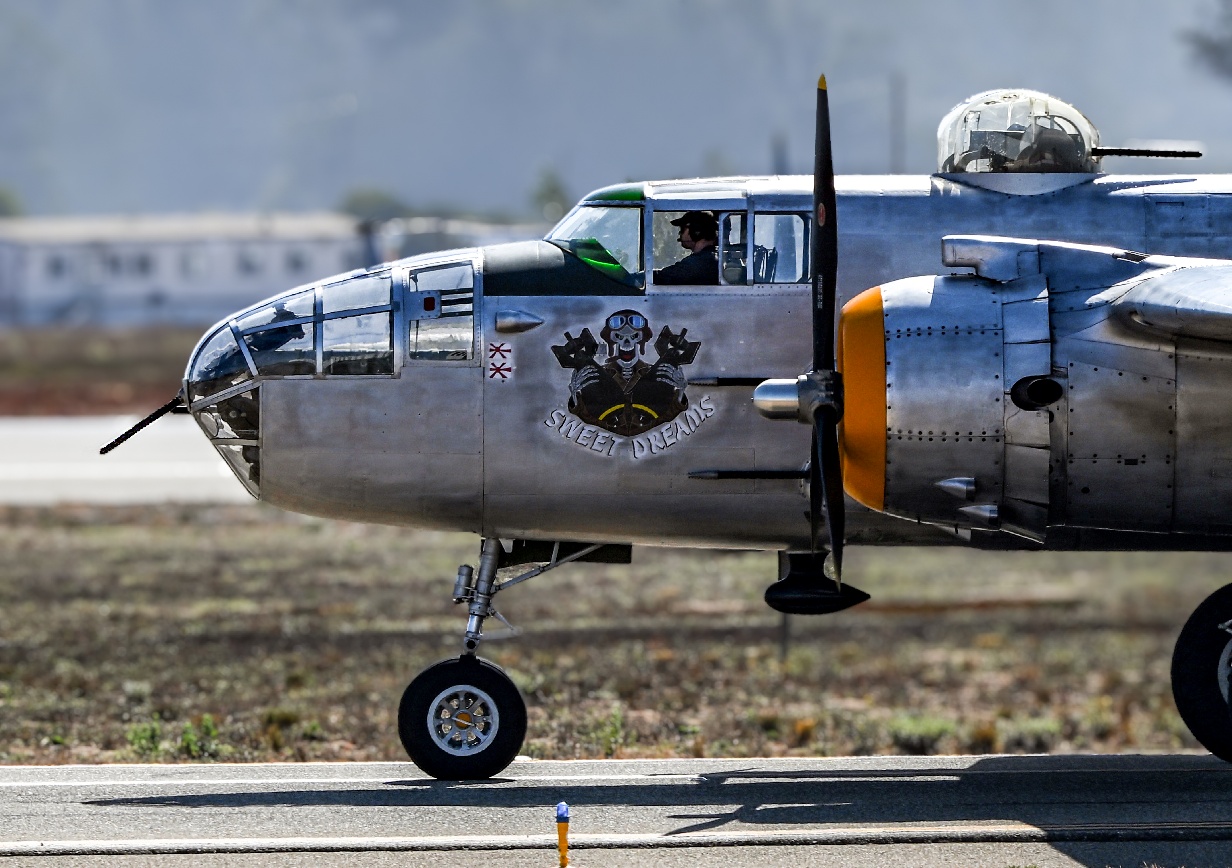
They served from New Guinea throughout the island-hopping campaign all the way to Japan. On 2 November,1943, the group was given the mission of attacking the Japanese anti-aircraft batteries on Rabaul (a major Japanese base in the Pacific). Three B-25s were lost during this successful but costly mission. The 345th was awarded its first of four Distinguished Unit Citations for its sacrifice and courage.

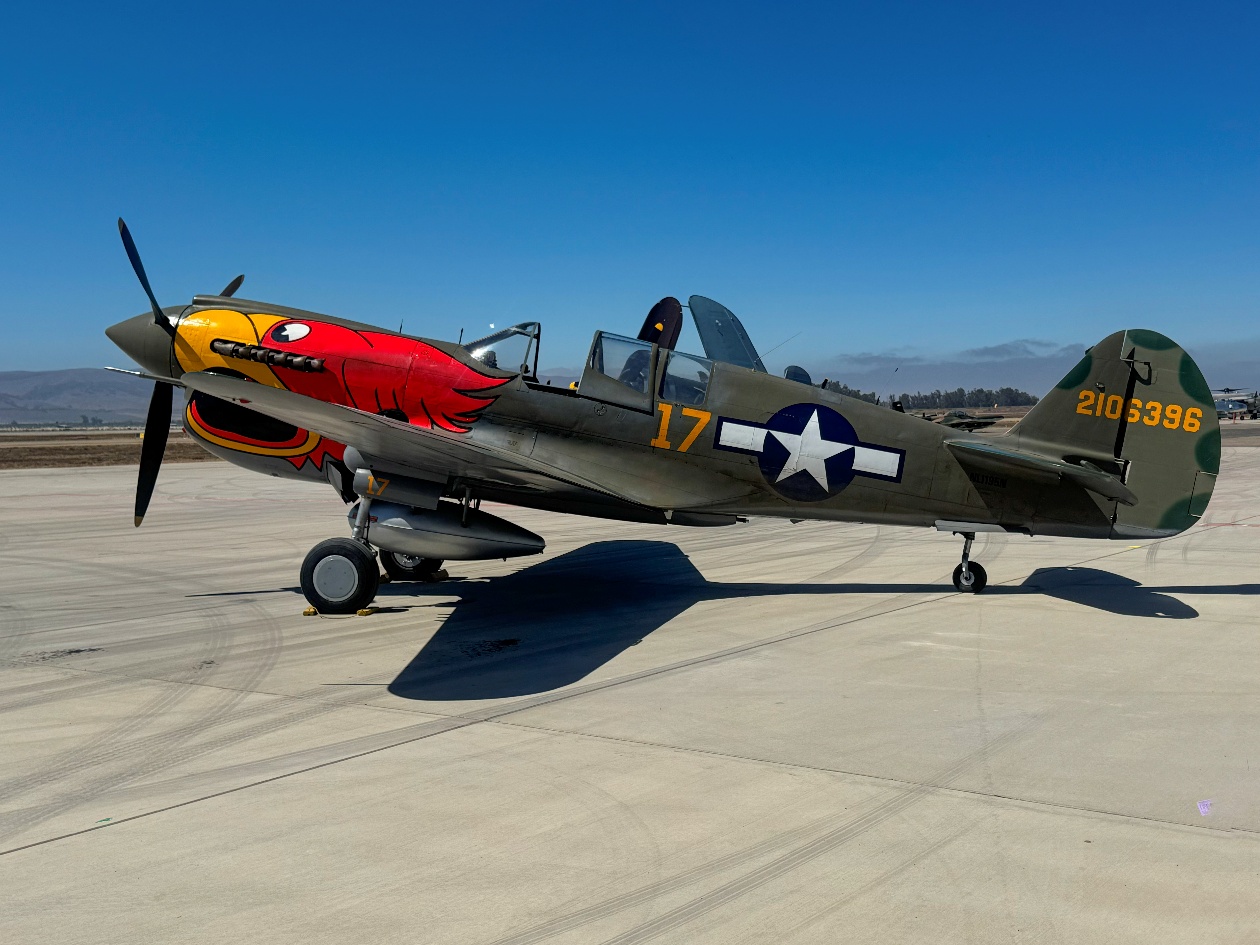
One of the most colorful pieces of Nose Art at the Planes of Fame AirFest was the “Parrothead”. The distinct paint scheme belongs to a P-40N (serial number 42-105711) used by the 502nd Fighter Squadron for pilot training in 1943. It competes at the Reno Air Races and was used in the filming of the motion picture Pearl Harbor.
The most recognizable piece of Nose Art does belong to the P-40 but not the “Parrothead”. It is obviously the ‘Shark Teeth” of the P-40s of the Flying Tigers of the American Volunteer Group (AVG) that served in China during WWII.

This nose art is probably the most replicated of any ever seen on an aircraft. The U.S.A.F has allowed this design to appear on aircraft as recently as the Gulf War on A-10 Warthogs. The 23rd Fighter Group (which includes the 74th and 75th Fighter Squadrons) is currently the only unit in the USAF authorized to permanently display the iconic shark teeth nose art across its entire fleet of A-10Cs. They are based in Georgia.
The U.S, Navy and Marine Corps. aircraft were generally prohibited from having non- regulation art painted on their aircraft. However, the Lewis Air Legends F7F “Tigercat” is painted with a namesake piece of nose art called “Here Kitty Kitty!” honoring its feline nickname.
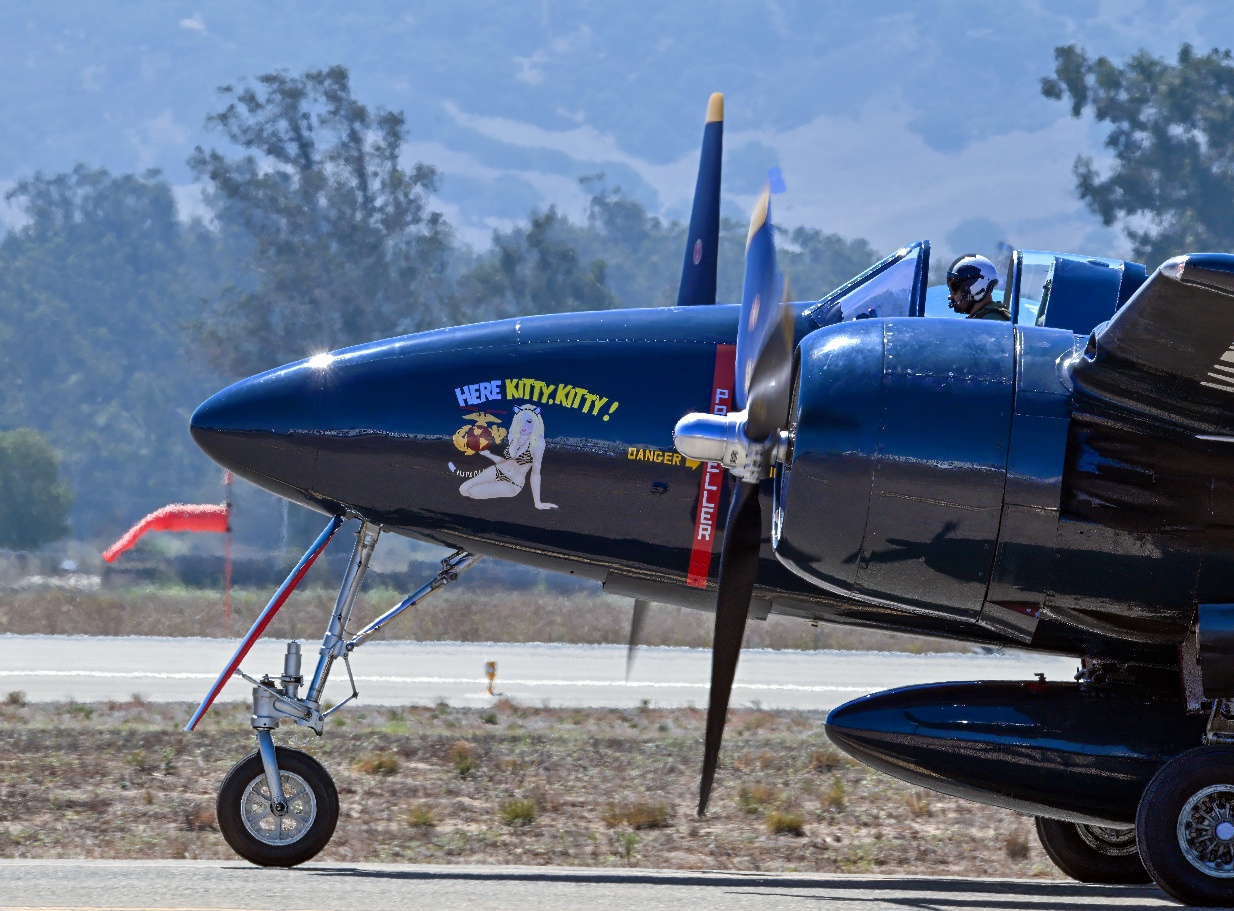
F7F-3N “TigerCat”
The hidden history behind this unique art form lives on today through the efforts of the many historical aircrafts museums and groups who wish to preserve the legacy of past generations of warfighters. The Planes of Fame Air Fest is a great example of that effort. I believe restoring aircraft with nose art is a great way to keep the stories of our air warriors alive for future generations.

Jim Chamberlain is a 72 year old, award winning photographer and travel writer from Goodyear, Az. Jim loves to travel with his wife, and his cameras accompany them on their adventures in the U.S and 5 other continents and in their former home State of Washington. Jim has authored one book and has had several articles published. He has visited over 43 countries and 45 of the U.S. states. He has lived in both Europe and Asia. He holds a B.A. and A.A degrees and is a graduate of the F.B.I. National Academy.
Jim has been an amateur photographer most of his life since he first borrowed his father’s 35 mm camera at age 15. He still has that camera. Jim decided to pursue a second career as a professional photographer upon his retirement from his 35 year career in Law Enforcement in 2011, where he held every rank from volunteer to second in command, Undersheriff, of the Thurston County Sheriff’s Office.
Jim uses Nikon cameras and lenses including the newly acquired Z8 and the venerable D850. He uses Photoshop and does his own printing on a Canon P1000.
Jim has been a member and past president of The Artists’ Gallery in Olympia, Washington and has been selling his photography as fine art for over 15 years in Washington and Arizona. His work is for sale both on his website and at the Expressions Gallery in Goodyear. His website contains over 1000 images at jim-chamberlain.pixels.com. He is currently a member of the Phoenix and the Pebblecreek Camera Clubs and regularly competes in the bi-annual Arizona Camera Club Council Roundups. Jim has recently become a Club Judge for PSA after completing several training programs.
Jim is married and resides in the Pebblecreek Community in Goodyear, Az. He as two daughters and 6 grandchildren.