

Antidotum Airshow Leszno 2026 – Against All Odds
Report and photos by Gabriele Rivera
September 28, 2026
Start with the name: Antidotum. An antidote to what, exactly? The answer took a while to surface. In June 2020, the Aero Club of Leszno, Poland, was forced to cancel its traditional air show as the pandemic took hold. Two months later, born almost in defiance of the lockdown, the first Antidotum Airshow took flight. It has grown steadily ever since, evolving from a modest local gathering into an event that now pulls in spectators from across Poland and beyond.
Luck, however, was in short supply for the 2026 edition. After a day of practice flights under promising skies, disaster struck within minutes of the gates opening on Friday, June 19th: the OV-10B Bronco, flown in by the Musée Européen de l’Aviation de Chasse of Montélimar, France, suffered a landing-gear failure on touchdown and was badly damaged. The pilot walked away unhurt, but the aircraft did not. Assessing the wreckage, the team decided repairs weren’t worth pursuing — instead, the Bronco would stay at Leszno for good, taking up a new post as gate guardian at the Aero Club.

Its wreck sitting on the grass runway pushed the show’s start back by several hours, and even once it was cleared away, the scarred surface kept heavier types like the Turbo Firecat and the Galeb Team’s aircraft grounded. The display finally got underway, running late but running nonetheless, carried by whatever aircraft and helicopters at Leszno could still fly from the second runway, plus the heavier assets based at nearby fields.
Just when things seemed to be finding their rhythm, the sky turned again. Around 6 p.m., a storm front that had been brewing on the horizon for a couple of hours began rolling in over the airfield, and organizers had no choice but to stop the show and clear the crowd out. Wind and driving rain wiped out the rest of the day’s program — and left behind enough damage that getting the show back on for day two took a genuinely heroic effort overnight.
Saturday’s program, wary of a repeat performance, kicked off earlier than scheduled — forecasters were predicting the same kind of storm, again around 6 p.m. The displays moved along briskly until, sure enough, flying had to stop once more. This time, though, the weather looked less menacing, and most of the crowd simply found shelter nearby and waited, holding out hope — especially for the night show everyone had been looking forward to.
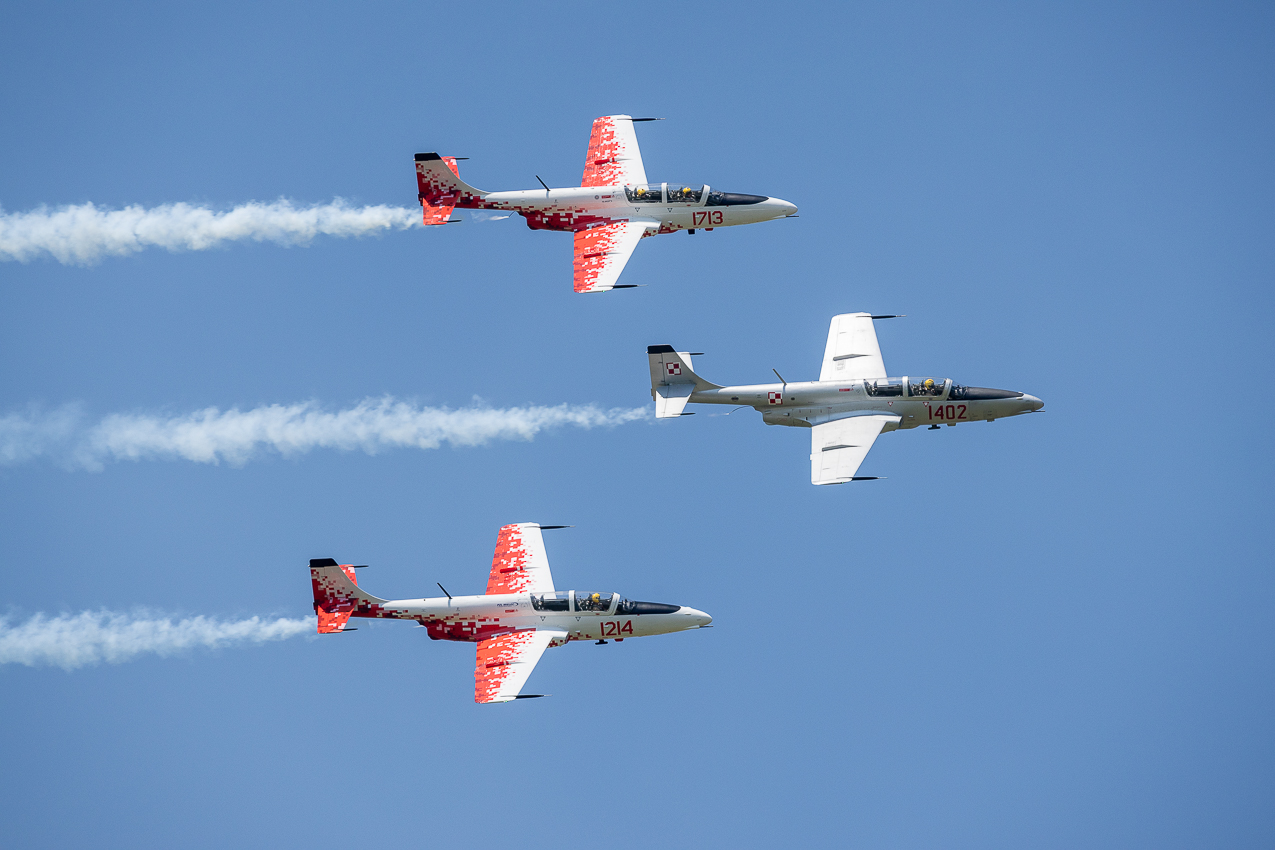
Before the interruption, spectators had already been treated to a genuinely rich lineup. Polish aviation history was well represented: the PZL-130 Orlik, flown by Poland’s own aerobatic team of the same name; a three-ship formation of TS-11 Iskra jets; the PZL-106 Kruk and PZL M18 Dromader, both agricultural aircraft by design; and, rounding things out, the Lim-2 and Lim-5 — Polish-built versions of the MiG-15bis and MiG-17.



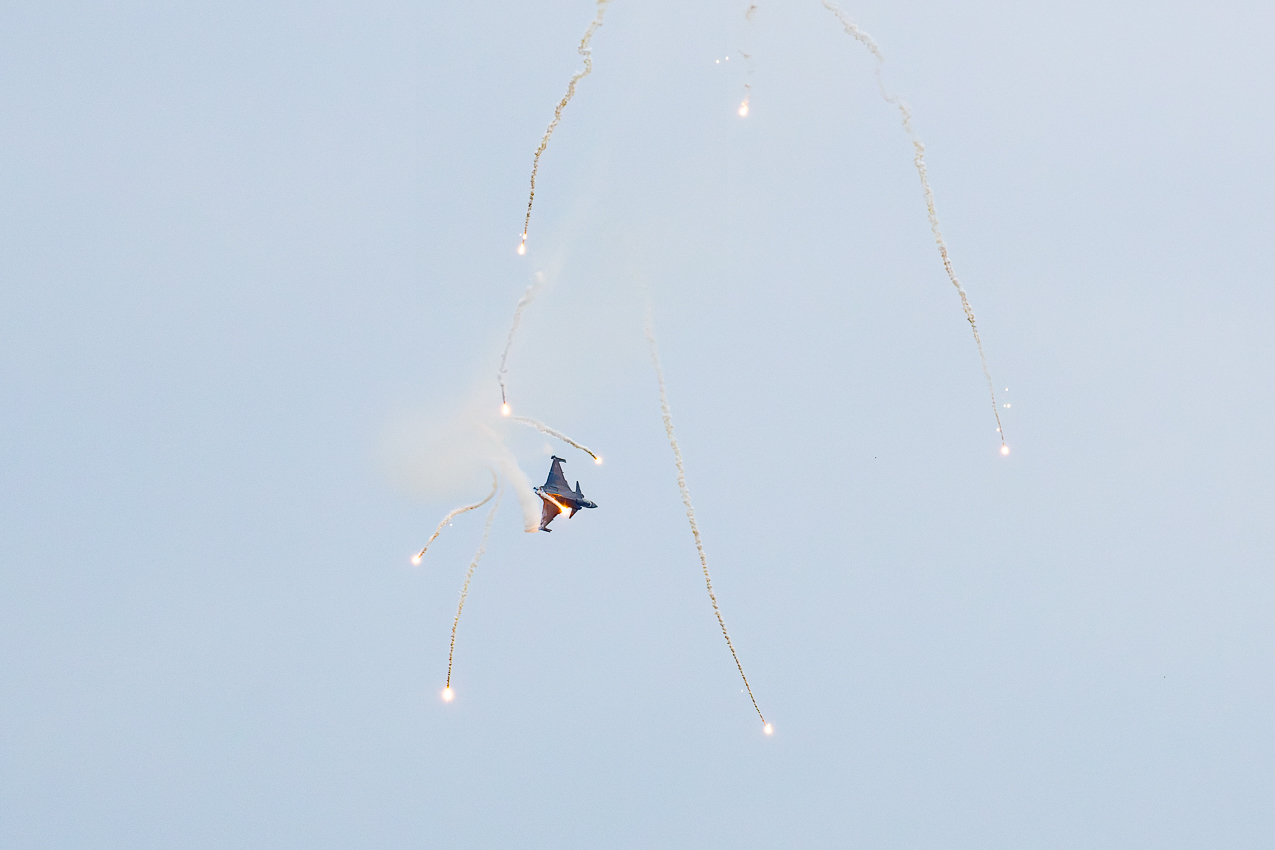
The Luftwaffe made a strong showing too, bringing Typhoons (including TaktLwG 74’s striking “Bavarian Tigers” livery), a Tornado (marking the type’s 50th anniversary in a special color scheme), and an A400M that did triple duty — simulating in-flight refueling, playing the slow, vulnerable target in a Slow Mover Interception, and simply showing off what the big transport can do in the air. The NH90 Demo Team stole a moment of its own too, closing its routine with a burst of flares against the sky.


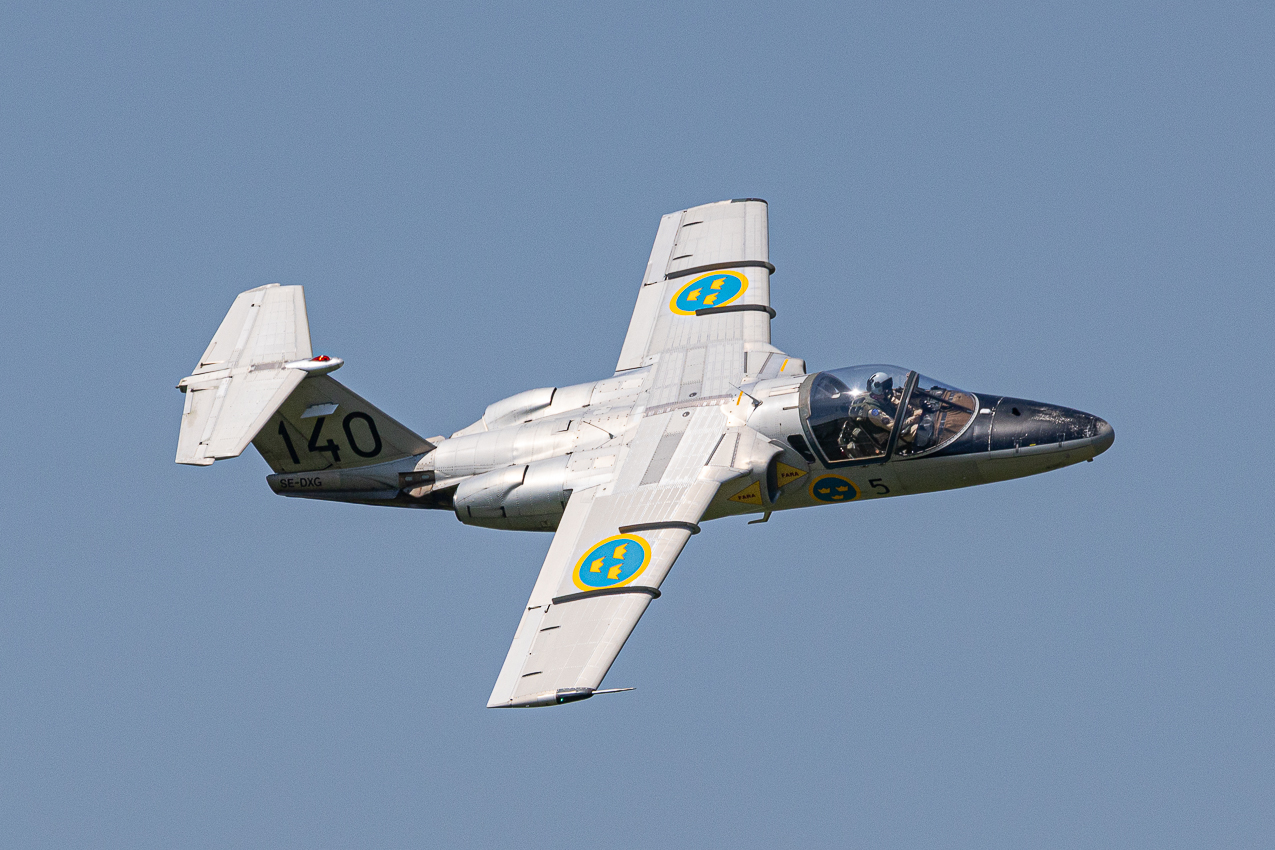
Beyond Turkey’s Solo Türk F-16 and Hungary’s Gripen, two aircraft from the Swedish Air Force Historic Flight drew plenty of anticipation: a Saab SK.60 and a two-seat SK-37E Viggen in splinter camouflage. Just as compelling was the Galeb Team’s Polish debut — two Soko G-2A Galebs, trainers designed and built in the former Yugoslavia, lifting off together from Leszno’s grass strip.


 Warbird enthusiasts had plenty to look at as well: Flying Legends brought a Spitfire Mk.IXB and a F4U-5NL Corsair, while the Flying Bulls Collection fielded another Corsair (an F4U-4), a B-25J Mitchell and a Bo-105C helicopter.


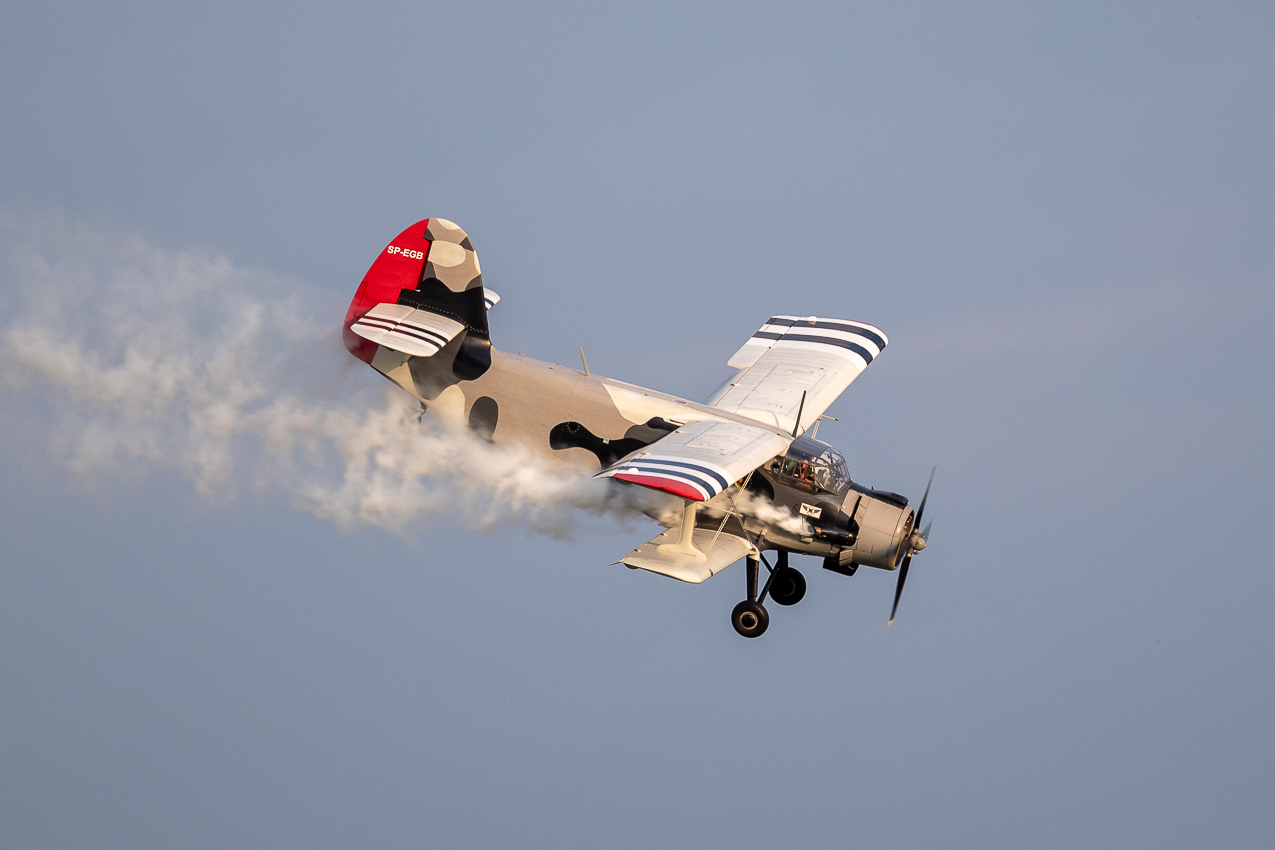
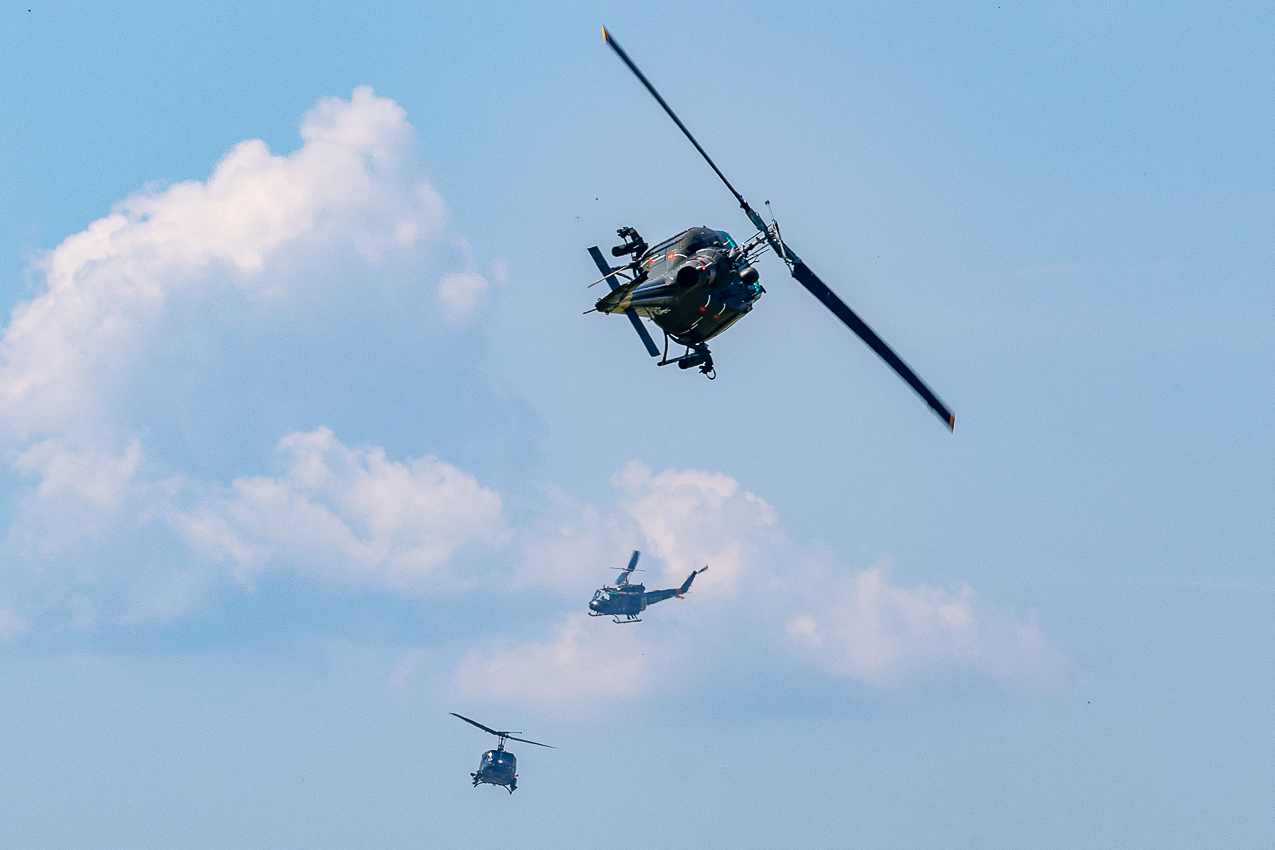
One of the crowd favorites was the “Vietnam Combo” sequence. Without the Bronco — which had only managed a single rehearsal on Thursday before its accident — the scene still delivered: three UH-1 Hueys forced an Antonov An-2 to the ground, then dropped a squad of riflemen who “captured” the crew of the lumbering, stand-in “North Vietnamese” transport.

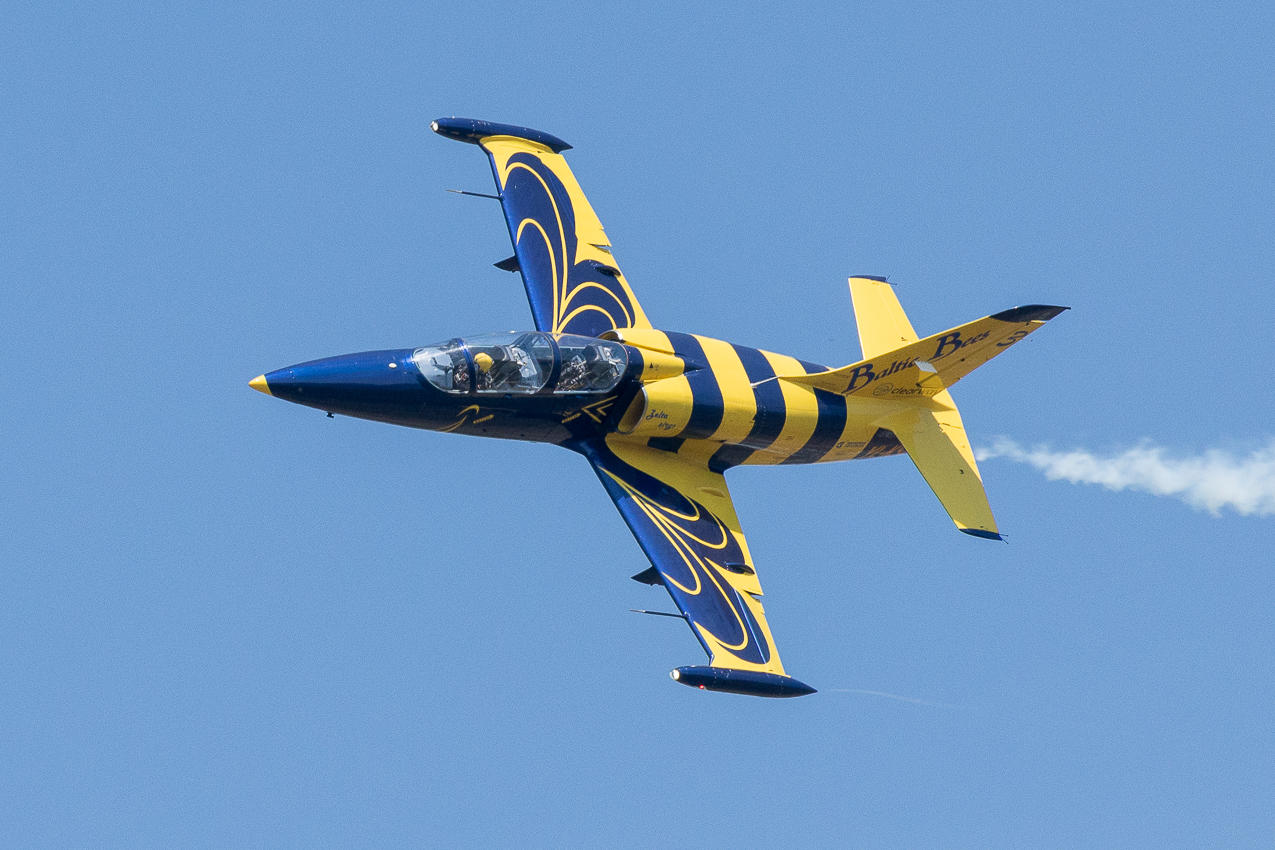
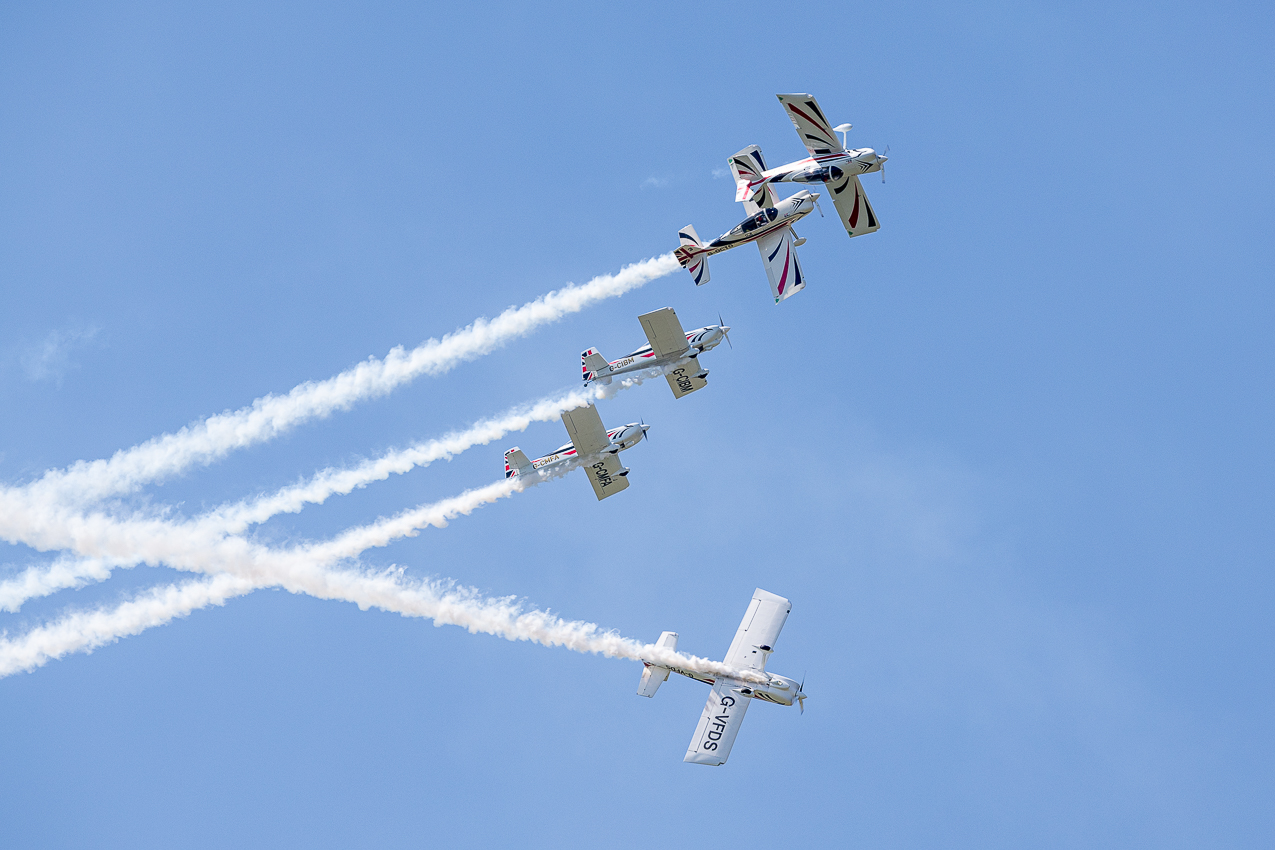
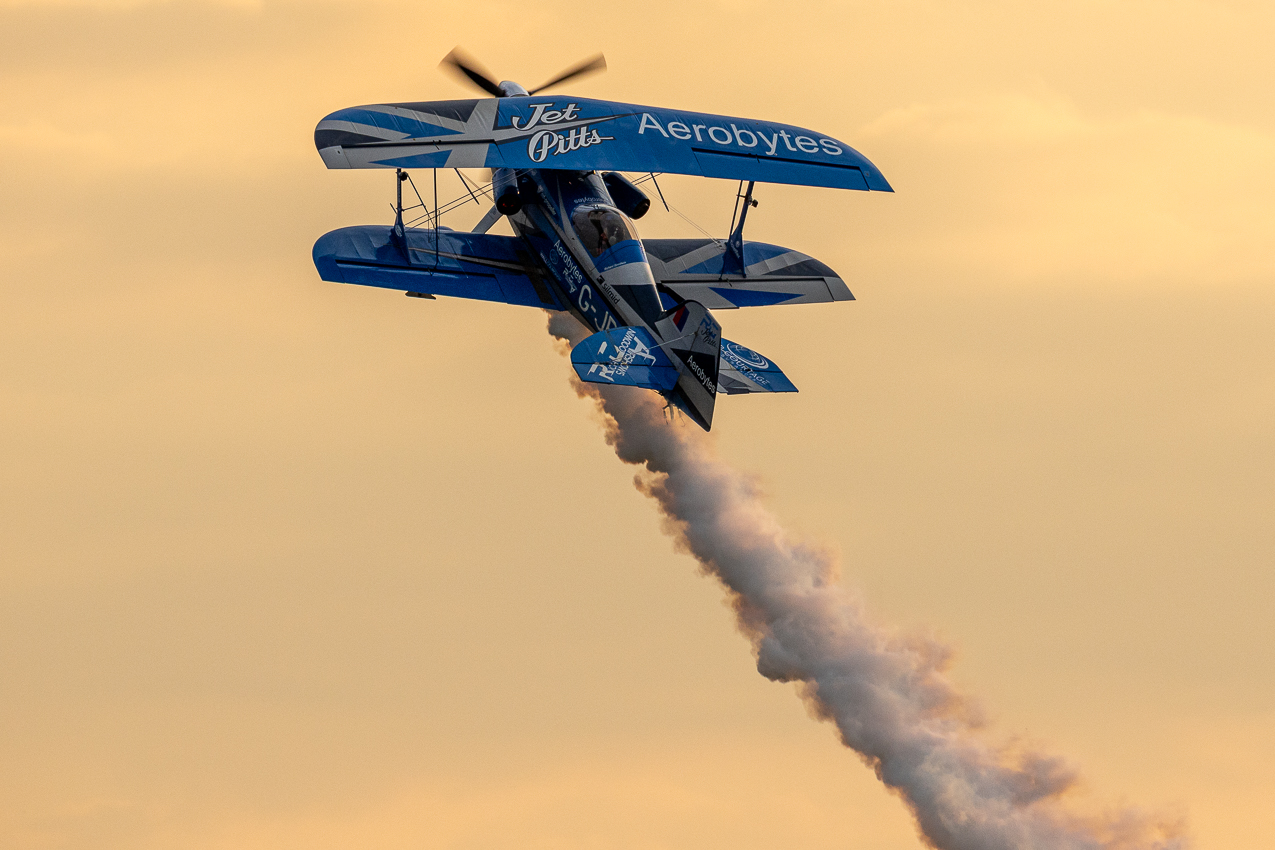
Civilian performers rounded out the bill — the Baltic Bees, Team Raven, Rich Goodwin and his Jet Pitts, a CubCrafters Carbon Cub and an Extra 330SC (flown respectively by Łukasz Czepiela and Norbert Kasperek) — while Saturday brought a lighter touch courtesy of a DHC-2 Beaver on floats, which swept low over the crowd scattering fake banknotes from the fictional “Antidotum” currency.


 The one letdown was the Polish Air Force’s thin presence: an F-16 was due to fly Friday but never made it, a casualty of the weather-driven delays.
Those who stuck it out on Saturday, watching the sky and hoping, were rewarded. After a wait of just over an hour, the gates reopened and the show’s final act played out beneath a sunset repeatedly veiled by cloud — lending the display an unusually atmospheric backdrop.
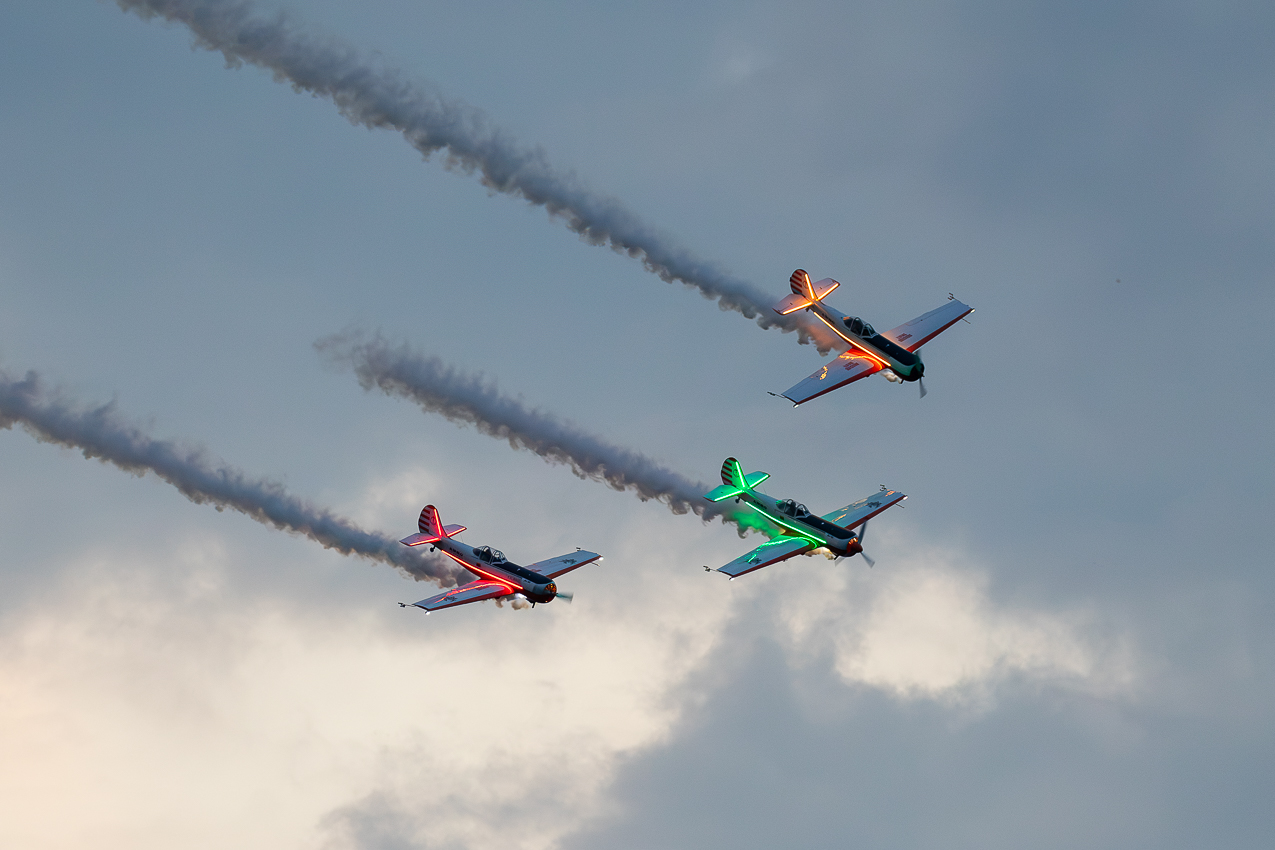
As dusk settled in, the closing segment unfolded: the ANBO Presidential Team on Yak 50/52s, gliders flown by Johan Gustafsson and the Blanix Team, the RAGNARÖK aerobatic group, the Flying Dragons Team on powered paragliders, and the Ogniste Motolotnie on powered hang gliders — before it all built to a Grand Finale by aeroSPARX, blending ground fireworks with drone-launched pyrotechnics and weaving in passes from every performer still on hand.


 More than 85,000 people turned out over the two days — proof, storms and all, that Antidotum remains an event on the rise, and one worth watching in the years to come.



Gabriele was born in Turin, Italy, grew up in Sicily and now lives in Rome. His love for aviation goes back to the days when he was seven years old, he started to collect the ‘History of Aviation’ sold weekly at the nearby newsstand. With that, he realized that his goal was to become a military pilot. This dream met a harsh reality when, during the medical tests, a defect in his chromatic sense of sight was discovered.
His interest in photography arose a few years later, when he bought from a colleague his first single-lens reflex camera, a Pentax ME Super. Then everyday life took its toll; working as an IT analyst, studying for an MD in political science and starting a family left no time for enjoying his old interest for aviation. One day in 2008, he decided to revive the passion, starting again to take pictures of aircraft each time he has a chance. Now, using Canon gear, he is striving to become a photojournalist.
Gabriele can be reached at: [email protected]