
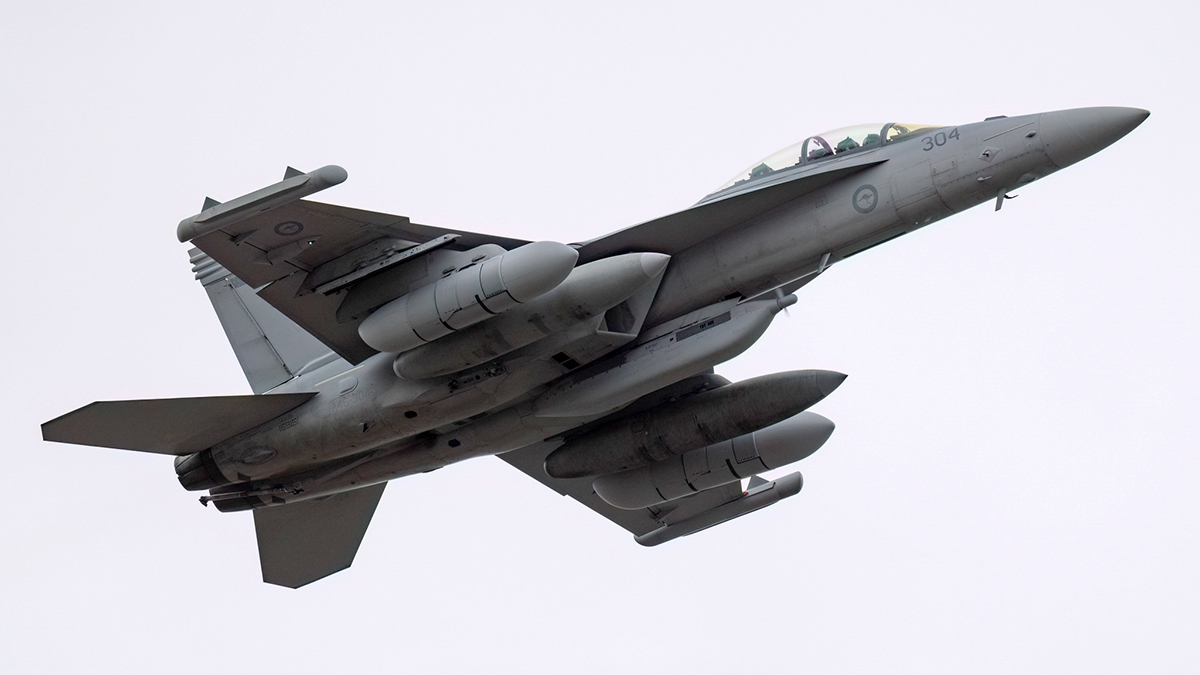
Royal Australian Air Force EA-18G Growler carries new Electronic Warfare pods.
Pictured at RAAF Base Williamtown, a EA-18G carrying the new Raytheon AN/ALQ-249 Next Generation Jammer Mid-Band Electronic Warfare pods.
Article: Jaryd Stock
Images: Mitch Andrews, Jaryd Stock, Raytheon and U.S. Navy
Royal Australian Air Force (RAAF) EA-18G Growler from No.6 Squadron based at RAAF Base Amberley has been spotted carrying the Raytheon AN/ALQ-249 Next Generation Jammer-Mid Band (NGJ-MB) pods as it arrived into and departed RAAF Base Williamtown earlier this week.
EA-18G aircraft 304 was seen with external hard points 3 and 9 carrying the new NGJ-MB pods, these new electronic warfare pods will replace the aging ALQ-99 Tactical Jamming System pods that were first developed for the EA-6B Prowler back in the late 1960’s early 1970’s.
In November 2024 Raytheon was awarded a $590 million (U.S.) dollar contract for 13 sets of NGJ-MB pods which are known as ship sets consisting of two pods per ship set. 9 of these ship sets were to be delivered to the U.S. Navy and 4 ship sets delivered to the RAAF.
In November local aviation enthusiasts at RAAF Base Amberley located near Brisbane noted that RAAF had started carrying the new NGJ-MB ship sets on the EA-18G Grower with aircraft 306 pictured carrying the pods for the first time although no offical media release of the delivery of the NGJ’s by the Australian Defence Force or Raytheon had been issued.
The RAAF ship sets are funded through US$185.9 million (U.S. dollars) worth of RAAF cooperative development funds. The broader contract also includes spares, maintenance, and one-off engineering support.
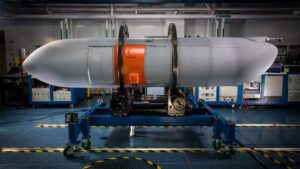
Raytheon’s AN/ALQ-249(V)1 Next Generation Jammer pod- Raytheon
In 2017 the then Chief of Air Force Air Marshal Leo Davies signed a memorandum of understanding (MoU) between Australia and the United States for the development of the NGJ-MB.
Talking of the MoU at the time AM Davies stated, “As this is a rapidly evolving area, we will work in partnership with the US Navy to develop the next generation jamming capability, which will ensure that our aircraft remain at the technological forefront throughout their service life”.
Details about the AN/ALQ-249 pod’s capabilities remain limited but it has been designed to look much like an external auxiliary fuel tank with the new NGJ being described by the U.S. Navy as a quantum leap in electronic attack warfare over the older ALQ-99 pods, offering vastly increased power and range, target flexibility and digital jamming techniques.
AN/ALQ-249 pods are designed to improve EA-18G capabilities against modern, advanced radio-frequency (RF) threats, namely air defences as well as communications, datalinks, and non-traditional RF targets with and is able to integrate with AN/ALQ-218 wing tip pods already in use with the RAAF and U.S. Navy on their EA-18G aircraft.
The NGJ use of multiple active electronically scanned arrays (AESA), is something not found on the older ALQ-99 pods, as well as its modular open architecture design, could make it possible to enhance and include a new range of capabilities as the system matures and comes to full Full Operational Capability (FOC) in the future.
The NGJ according to a Pentagon report released last year is “to deny, degrade, or deceive the enemy’s use of the electromagnetic spectrum by employing both reactive and preemptive jamming techniques while enhancing the friendly force’s use of the electromagnetic spectrum”.
The U.S. Navy declared Initial Operating Capability (IOC) of the NGJ during Electronic Attack Squadron VAQ-133 “Wizards” deployment onboard aircraft carrier USS Abraham Lincoln late last year, with the Abraham Lincoln Carrier Strike Group and carrier air wing 9 embarked onboard deployed to the Middle East Area of Operations.
VAQ-133 was conducting a Operational Evaluation of the NGJ-MB during that five month deployment onboard the USS Abraham Lincoln with the U.S. Navy stating the NGJ-MB performed beyond expectations although details on the missions VAQ-133 undertook against Iran backed Houthi’s in Yemen are classified.

Pictured by Mitch Andrews, Instagram @mitchandrewsphotos
As these new NGJ pictured on the Aussie Growler are designed for Mid-Band range, L3 Harris is developing a Low-Band frequency jammer pod with a further High-Band pod in development.
As with any new capability there will inevitably be some teething issues but the RAAF will conduct its own process to bring the new system to FOC for No.6 Squadron as more ship sets are delivered over the coming years.
In the meantime 82 Wing based at RAAF Base Amberley will surely look into how more effectively 6 Squadron will employ the NGJ-MB’s and the tactics used currently and how they can enhance and develop new tactics to operate the NGJ-MB to its full potential ensuring a higher survival and mission success rate to its aircrews in any offensive or defensive air combat situation the air force finds itself in.
With testing of the new NGJ’s clearly underway it will be interesting to see if the new NGJ’s will be employed onboard the Growlers during the Diamond Series of exercises slated for next year during the RAAF’s 6 month Air Warfare Instructors Course (AWIC).
If so it will show that the RAAF are clearly on the front foot in developing their own tactics utilising the NGJ’s, and coupled with the latest news out this week about the Collaborative Combat Aircraft the Boeing MQ-28A Ghost Bat program also maturing with further investment made by the Australian Government, both systems are starting to paint a bigger picture in regards to the lethality of the RAAF’s strike roles and the potential for the future upgrades of these systems.

No.6 Squadron Anniversary EA-18G Growler 306 carrying the ALQ-99 Tactical Jamming System pods during Exercise Diamond Storm 2022- Jaryd Stock

Jaryd Stock is based in Sydney Australia. He has been a die-hard aviation enthusiast from a young age when he was chauffeured around by his father to various airshows and airports around Australia. At his first Airshow he witnessed the awesomeness of a General Dynamics F-111C and immediately fell in love with aviation.
Jaryd picked up a camera at a young age and has never looked back. He now combines photography and writing to highlight “Downunder” aviation; especially U.S. DoD units. Jaryd uses Nikon cameras and lenses.