
EART 2025: Interoperability in Action at Lanzarote Air Base
Report and photos by Peter van den Berg
November 19, 2025
Strategic Context and Operational Importance
European Air Refueling Training (EART) 2025 underscored a critical truth: interoperability in Europe is no longer aspirational—it’s operational reality. Against the backdrop of global security challenges, lessons from Ukraine and the Indo-Pacific shaped the exercise’s objectives. Commanders emphasized that High Value Airborne Assets (HVAA), such as tankers, have evolved into strategic enablers requiring protection and integration. Lanzarote’s unique combination of airspace, weather, and infrastructure reaffirmed its role as a premier venue for multinational AAR training.
Scope and Mission
Running from October 17 to 31, EART 2025 brought together Europe’s leading tanker fleets in the Canary Islands for two weeks of intensive training. The exercise aimed to sharpen advanced air-to-air refueling tactics, boost operational readiness, and foster multinational expertise exchange. This year introduced an additional focus: innovation and sustainability—anchored by two flagship initiatives, X-Maintenance and Combined Air Terminal Operations (CATO).
Innovating for Efficiency and Sustainability
- X-Maintenance: Promotes cross-national cooperation in aircraft maintenance under shared EASA-standard procedures, saving manpower, resources, and time.
- CATO: Streamlines multinational ground and terminal operations, improving logistics and throughput coordination.
Together, these programs reflect EATC’s commitment to building a fully integrated and sustainable European air mobility system.
Training Environment and Realism
The exercise leveraged Lanzarote’s expansive airspace south of Gran Canaria, stretching from 2,000 feet AMSL to unlimited altitude—conditions rarely achievable over continental Europe. A fictional scenario involving three nations competing for offshore oil resources added strategic realism to daily engagements between “blue” and “red” forces.
Participants and Aircraft
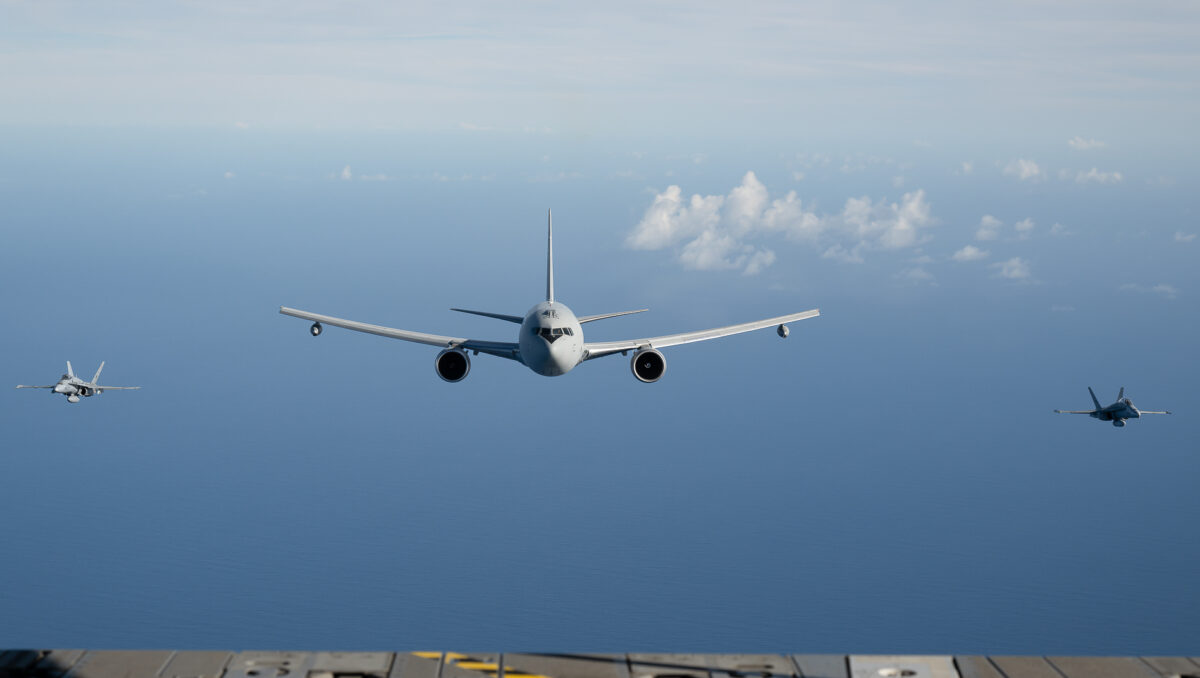
Tanker assets included:
- Spain: A400M (Ala 31 – Zaragoza)
- France: A330 MRTT Phénix
- Italy: KC-767 (Pratica di Mare)
- MMU: KC-30M multinational MRTT
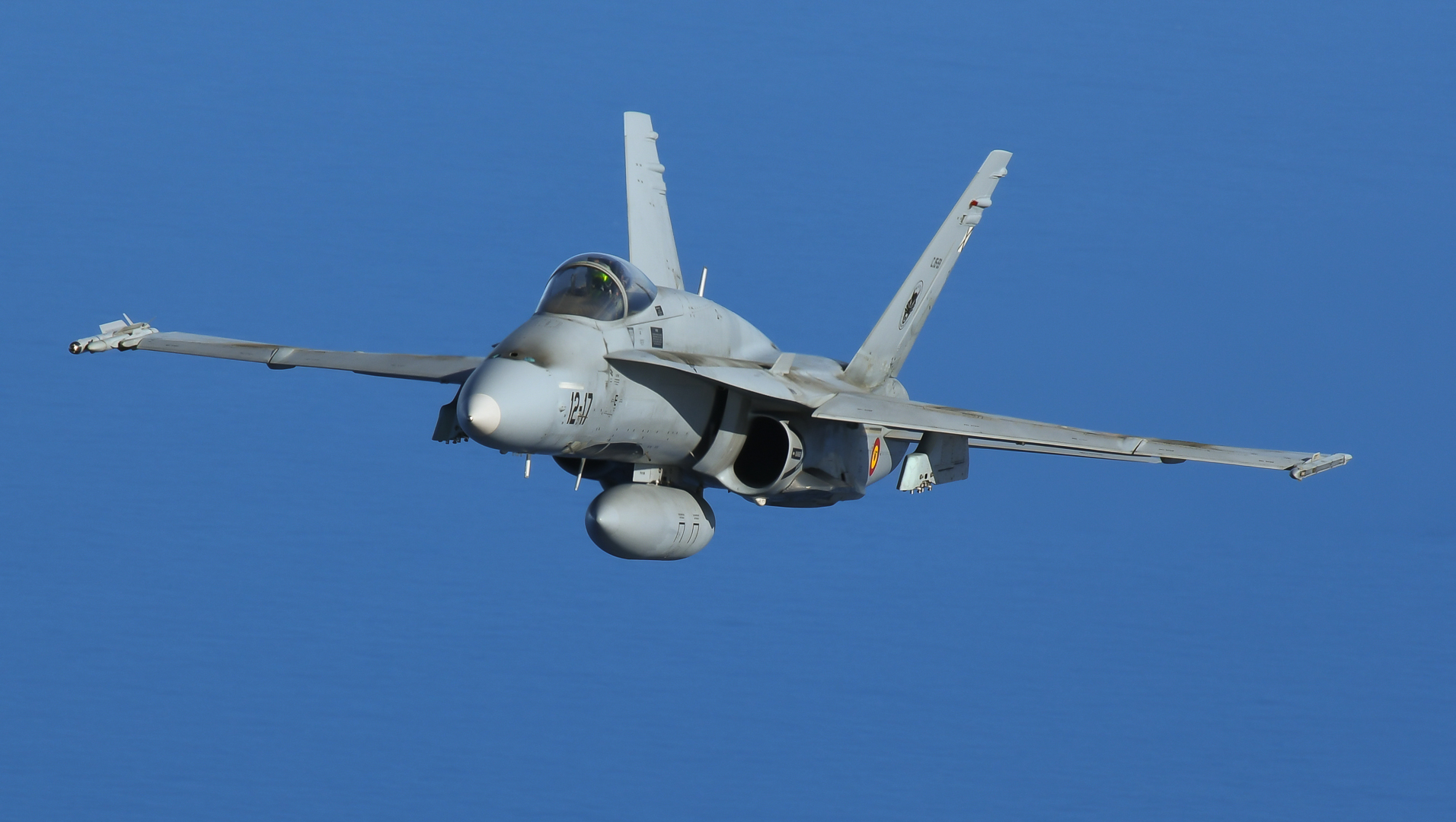
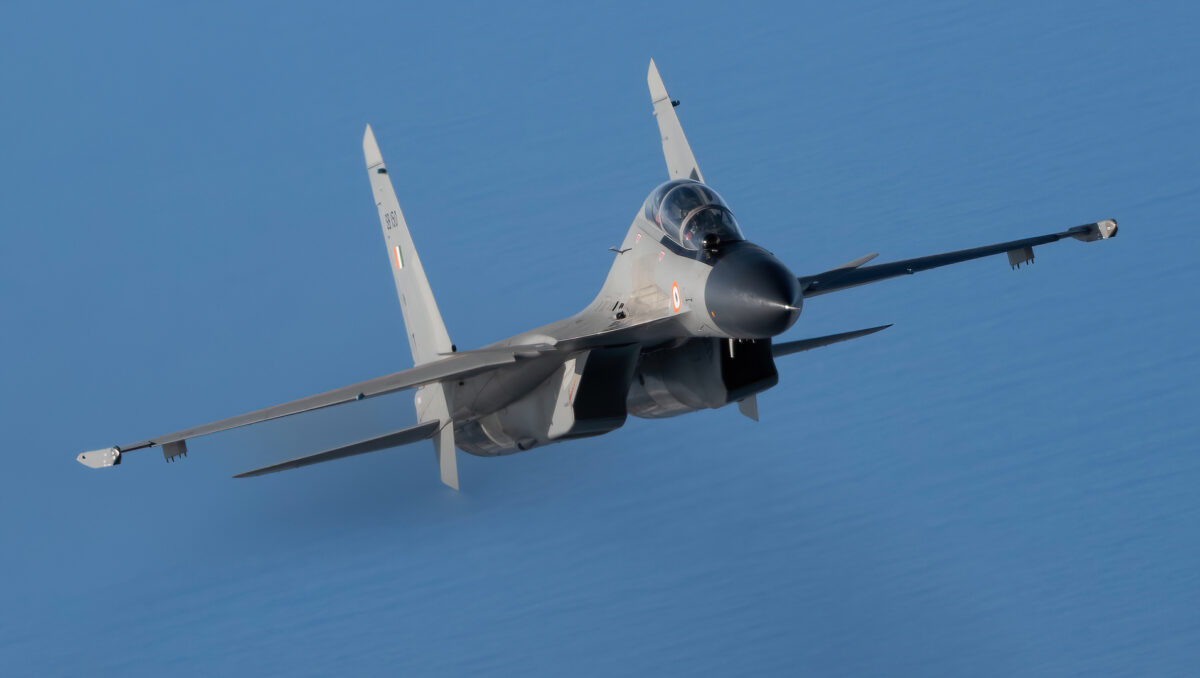
Receivers ranged from F-15s, F-16s, EF-18s, Eurofighters, and Su-30s, supported by an Indian Air Force contingent. Within the Ocean Sky framework, 25 blue aircraft faced 15 red, totaling 51 fighters, with about 40 available for daily sorties operated from Gando Air base at Gran Canaria.

Defining Interoperability: The AAR Matrix
The Air-to-Air Refueling Matrix governs authorized tanker–receiver pairings and certification levels (C2 and C3). For example, Spain’s A400M operates at C3 level with F-15, EF-18, and Su-30 fighters, while Italy’s KC-767 maintains C2 certification for heavy receivers through 2029. This matrix ensures safety, consistency, and mission reliability across allied fleets.
EART 2025 by the Numbers
- 58 sorties planned
- Over 600 tons of fuel offloaded
- 140 personnel supported by local Spanish base staff
- Two daily flights averaging 3.5 hours each, totaling 200 flight hours
- Minimum of two fully combat-ready crews
- Five multinational mentors, five liaison officers, and one training supervisor under EATC oversight
An expanded e-learning platform prepared crews with unified doctrine before arrival, allowing flight hours to focus on tactical refinement and interoperability.
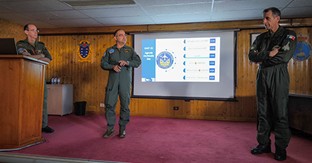
From left to right: Colonel Guido Henrich, Colonel Carlos Jimenez, Major General Franck Mollard during the press day.
Distinguished Visitors and Media Days
On October 28 and 29, Lanzarote Air Base hosted Distinguished Visitors and Media Days, offering stakeholders and journalists a firsthand look at planning and executing complex multinational AAR operations. Major General Franck Mollard, Commander of the European Air Transport Command (EATC), led a senior delegation visiting deployed personnel. During a courtesy call to Colonel Carlos Jiménez Andrés, Commander of Lanzarote Air Base, General Mollard praised the teamwork behind the exercise:
“Around 150 highly dedicated men and women are deployed here, and I am particularly proud that EATC contributes a major share of this workforce. Every division—Operations, Functional, Policy & Support, and Public Affairs—plays its part. This collective involvement sends a clear message: we succeed because we succeed together.”
The event embodied its guiding principle: “Strengthening Allied Air Power Through Interoperability and Innovation.”
General Mollard underlined the broader significance of the exercise:
“EART is more than a training event — it is a strong signal of European readiness, interoperability, and unity. I am truly proud of our people, our mission, and our partners.”



Peter van den Berg is from Coevorden, Netherlands. His love for military aviation began in 1980. The first airbase where he photographed was Soesterberg, Netherlands where the 32 TFS was stationed with the F-15. After photographing many military exercises in Europe over the years, Peter decided to spend the last 15 years visiting Asia and the USA. He regularly writes books for Veldhuis Media Group. Peter has written books about NAS Fallon, Red Flag and the Japanese Airforce.
In addition to publishing books, Peter is working as a teacher for senior secondary vocational education.
Peter uses Nikon equipment.
Peter can be reached at: [email protected]