

Dubai Airshow 2025
Report and photos by Gabriele Rivera
December 18, 2025
The United Arab Emirates is a relatively young state, considering that this year it will celebrate its 54th anniversary. In this short span of time, the emirs who govern it have invested the enormous sums derived from the fossil fuel industry on which the seven emirates (especially Abu Dhabi) ‘float’, transforming fishing villages into global cities whose skylines change year after year. Among the sectors in which money and efforts have been poured is the one we are interested in: the impressive growth of airlines such as Emirates and Etihad has shaped civil aviation history over the last twenty years. This is accompanied by the will to create a local aerospace industry, which logically entails the need to attract the attention of international competitors by organizing an air show capable of competing with the most prestigious events in the global industry.
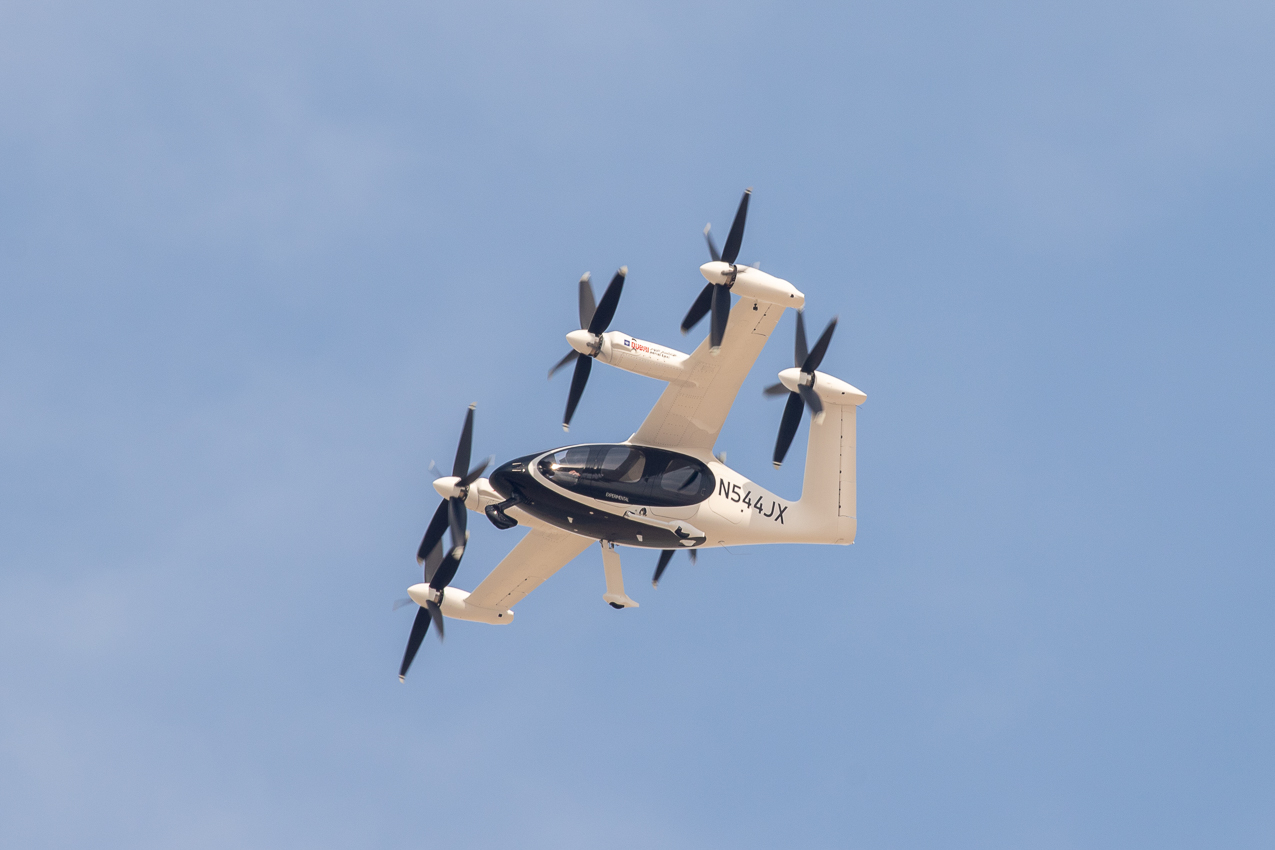
Since its first edition in 1989, the Dubai Airshow has grown steadily, and today it is undoubtedly the most important event in the Middle East and one that every major player wants to attend. The civil sector is obviously the protagonist, also considering the growing role of Advanced Air Mobility (several models of electric-powered flying taxis were presented) and especially the space sector, a focal point of this 19th edition. But given the historical moment and the ongoing dynamics of the various military procurement programs in the region, the armed forces sector has also received particular attention.

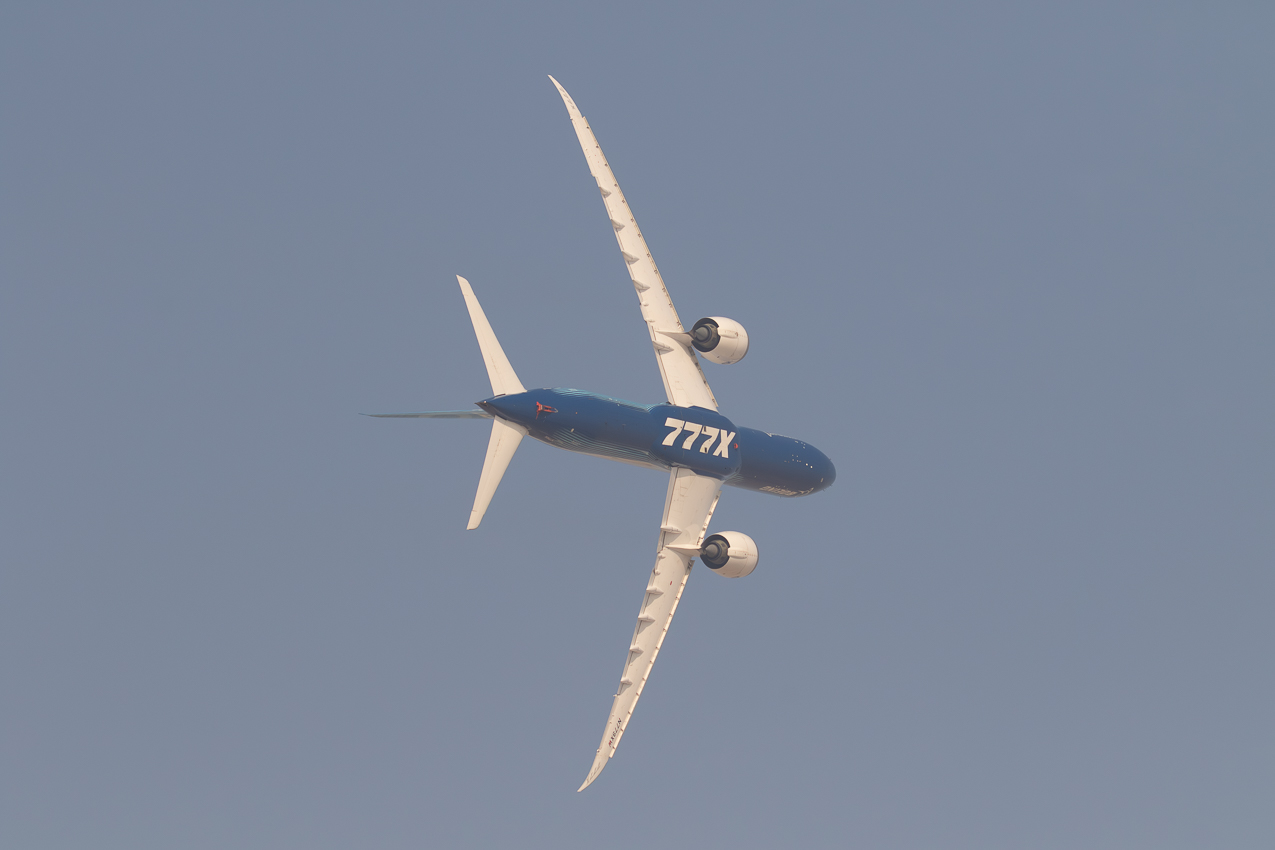
Upon entering the exhibition area set up inside the Dubai World Central pavilions—adjacent to the Al Maktoum International Airport terminal, whose scale model of the massive expansion planned for the coming years was on display—the first impression is the dominant presence of Boeing, returning in full force after the turbulence of recent years. The American company opened its participation by announcing a newly signed contract with Emirates for a third batch of 65 777Xs, valued at an estimated $38 billion. Boeing’s demonstration aircraft flew daily during the three days reserved for industry operators and, as always, watching a wide-body aircraft take advantage of an empty cabin to showcase its capabilities made a strong impression.
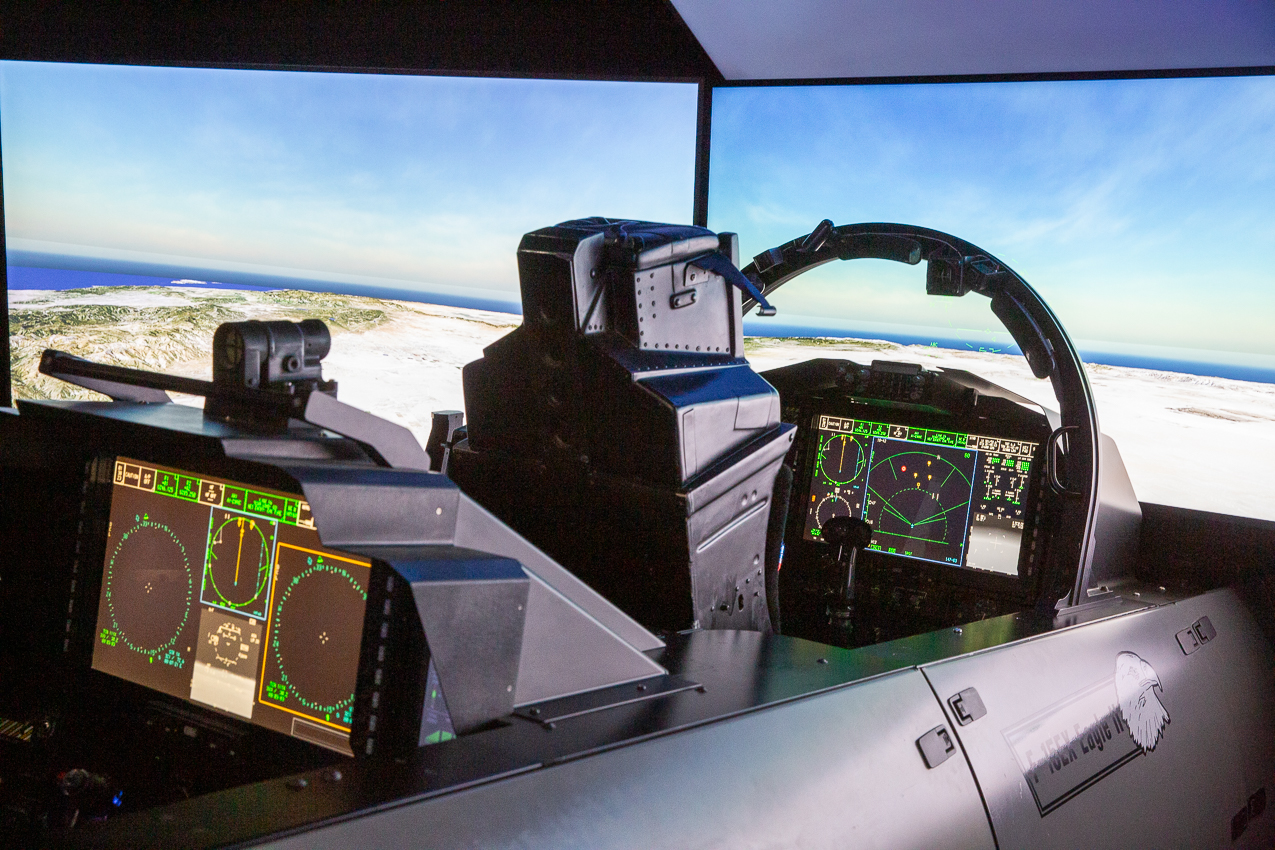
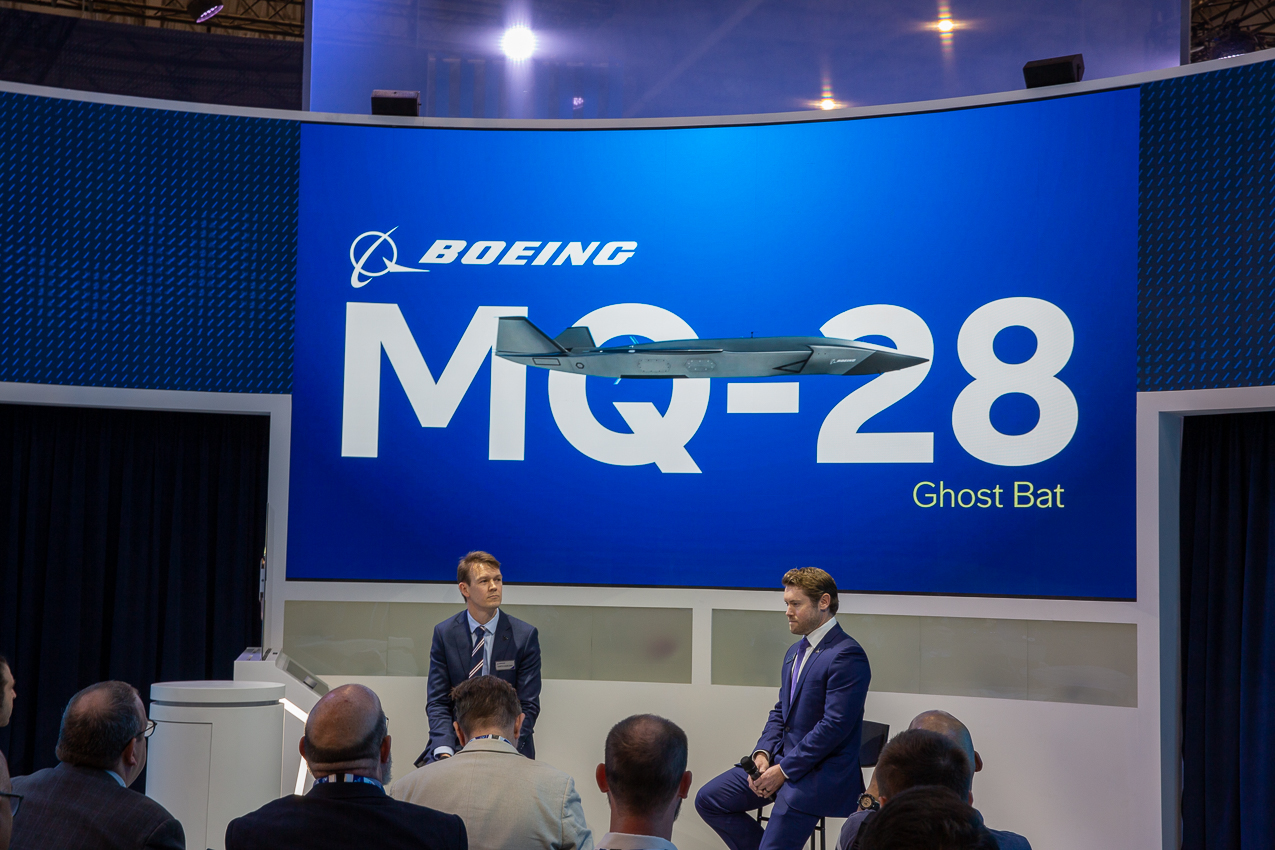
On the military side, the company presented the F-15EX simulator, accessible by invitation only. During public briefings, the company emphasized how the two-seater configuration allows for better coordination with one or more CCA/Loyal Wingman, increasing the lethality of the manned platform and reducing risks, without increasing the management burden for the pilots. In the video rendering shown at the stand, the F15EX operates in coordination with the MQ-28 Ghost Bat, also produced by the Seattle-based company in collaboration with the Royal Australian Air Force.
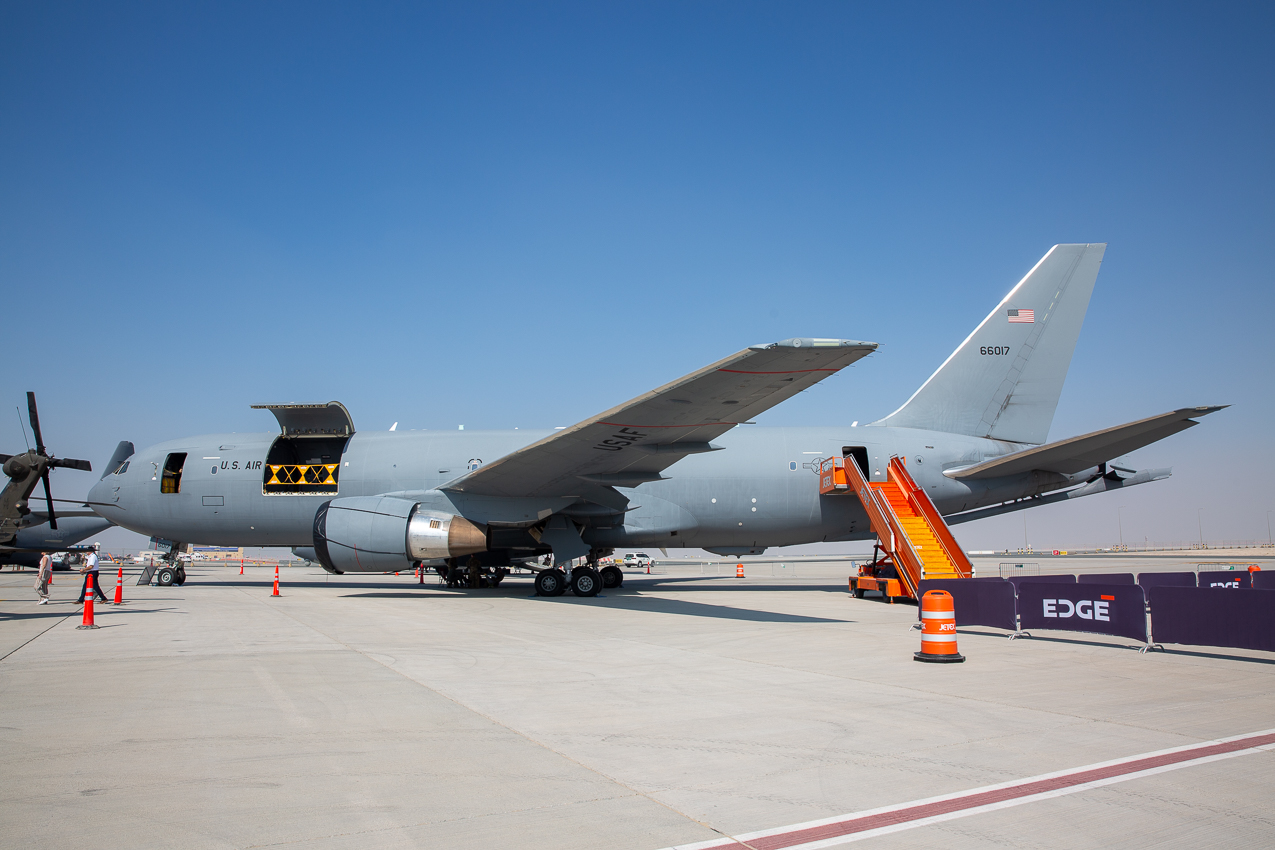
Static display included also a KC-46; Qatar is a potential buyer of the tanker, and given that USAF has several ones deployed in the region, other Middle Eastern air forces could follow suit. During a press conference updates were provided regarding version 2.0 of the RVS (Remote Vision System), which manages in-flight refueling of other aircraft from a remote station, eliminating the need for the boom operator to lie on his stomach in the plane’s tail for the duration of refueling. The new version should resolve issues reported with the current release, such as image distortion and poor responsiveness to highly variable lighting conditions.
The announcement of the agreement between President Trump and Saudi Crown Prince Mohammed bin Salman for the sale of F-35As carries significant implications. Six years ago, the first Trump administration approved a $10 billion deal to deliver 50 F-35As to the UAE. However, the following Biden administration suspended the process in September 2021, citing the UAE’s allegedly growing ties with China. Since then, Abu Dhabi has largely lost interest in the possibility of the deal moving forward, shifting its attention elsewhere. This context helps explain why the news from Washington was received with great understatement by Lockheed Martin representatives.
The company showcased the F-35 simulator at the air show—also reserved for selected guests—as well as a full-scale mock-up that drew hundreds of visitors eager to be photographed inside the cockpit of the U.S. fighter. Lockheed Martin also highlighted the milestones achieved throughout its long-standing cooperation with the Emirati armed forces: fifty years have passed since the delivery of the first Hercules to the Abu Dhabi Defence Force; thirty years since the launch of the Desert Falcon program for the supply of F-16s; and collaboration on the THAAD (Terminal High Altitude Area Defense) system began in 2015. Although not physically present at the exhibition, the company also emphasized its autonomous systems portfolio, including the S-70UAS U-Hawk (a fully unmanned Black Hawk), the Nomad VTOL UAS, and the Vectis CCA.
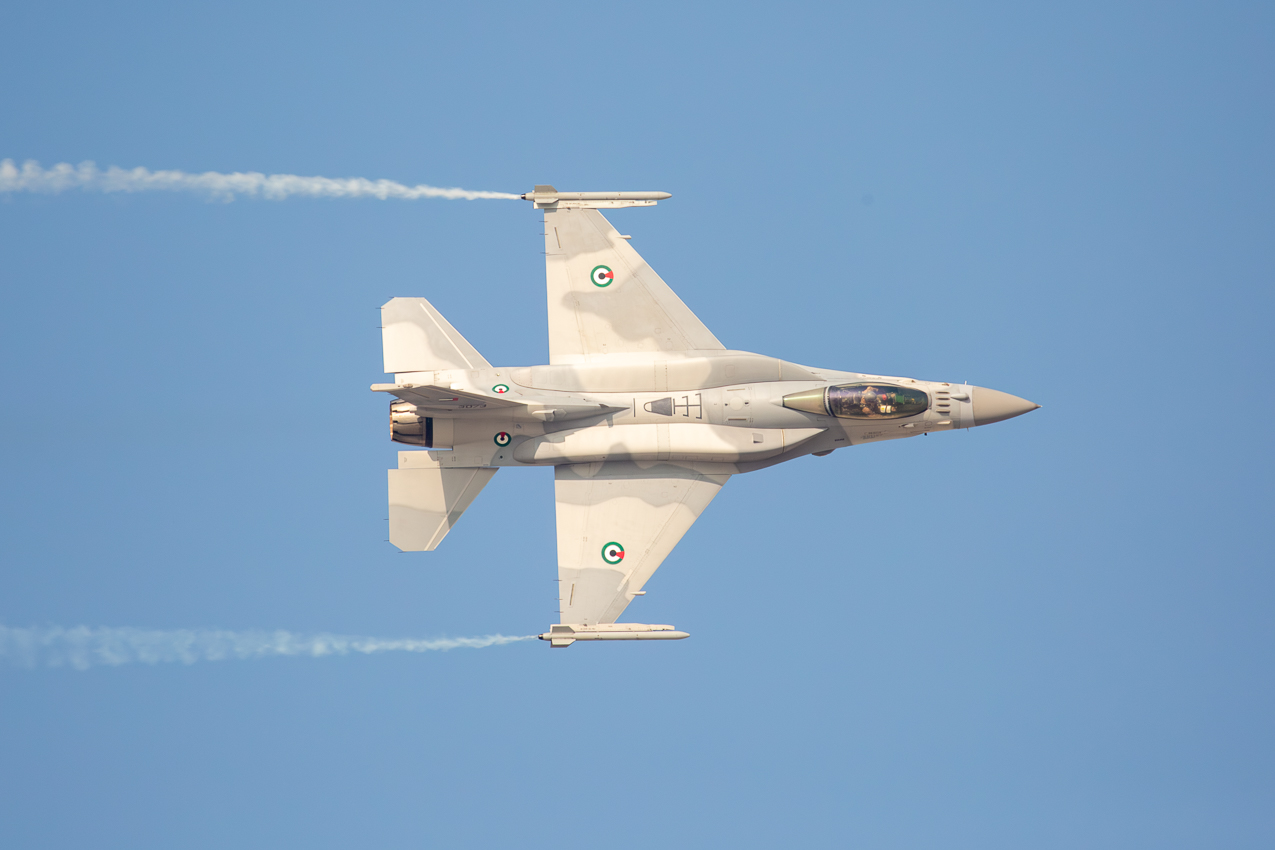
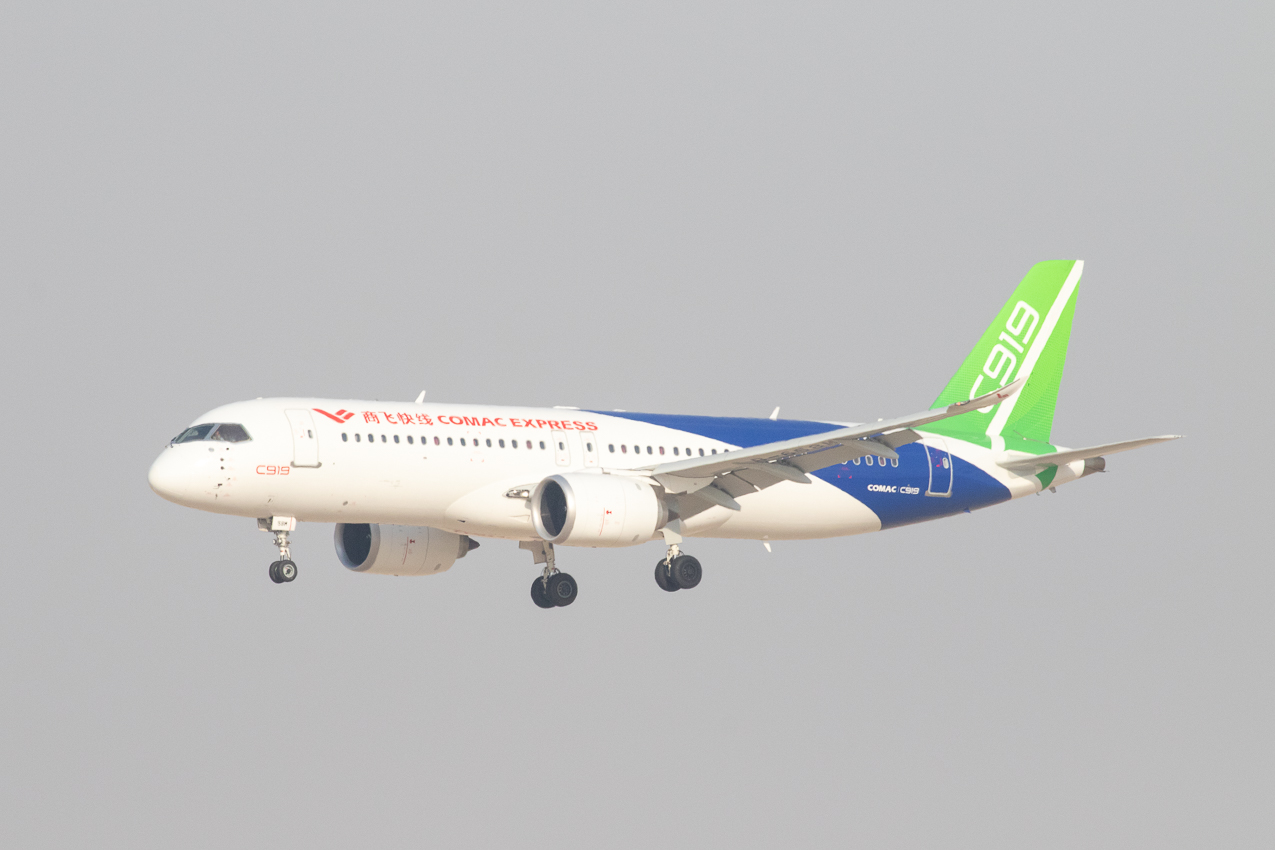
The initial impression of overwhelming U.S. dominance was later tempered by the discovery that the pavilion immediately behind Boeing’s was assigned to the China National Aero-Technology Import & Export Corporation (CATIC), one of China’s largest state-owned companies active in the defense sector. On static display was a full-scale mock-up of the Wing Loong-X UAV, exhibited for the first time outside China; according to company statements, several Middle Eastern air forces have already shown concrete interest. Among the various missiles displayed beneath the unmanned aircraft’s wings (and also under those of the Pakistani JF-17), it was impossible not to notice the PL-15 BVR air-to-air missile and the CM-400AKG anti-radiation missile, both of which gained prominence during the brief but intense conflict last May between India and Pakistan. China also played its cards in the civil sector: COMAC showcased its new C919 airliner, performing a daily flying display, while a second example was exhibited on static display alongside a C909.

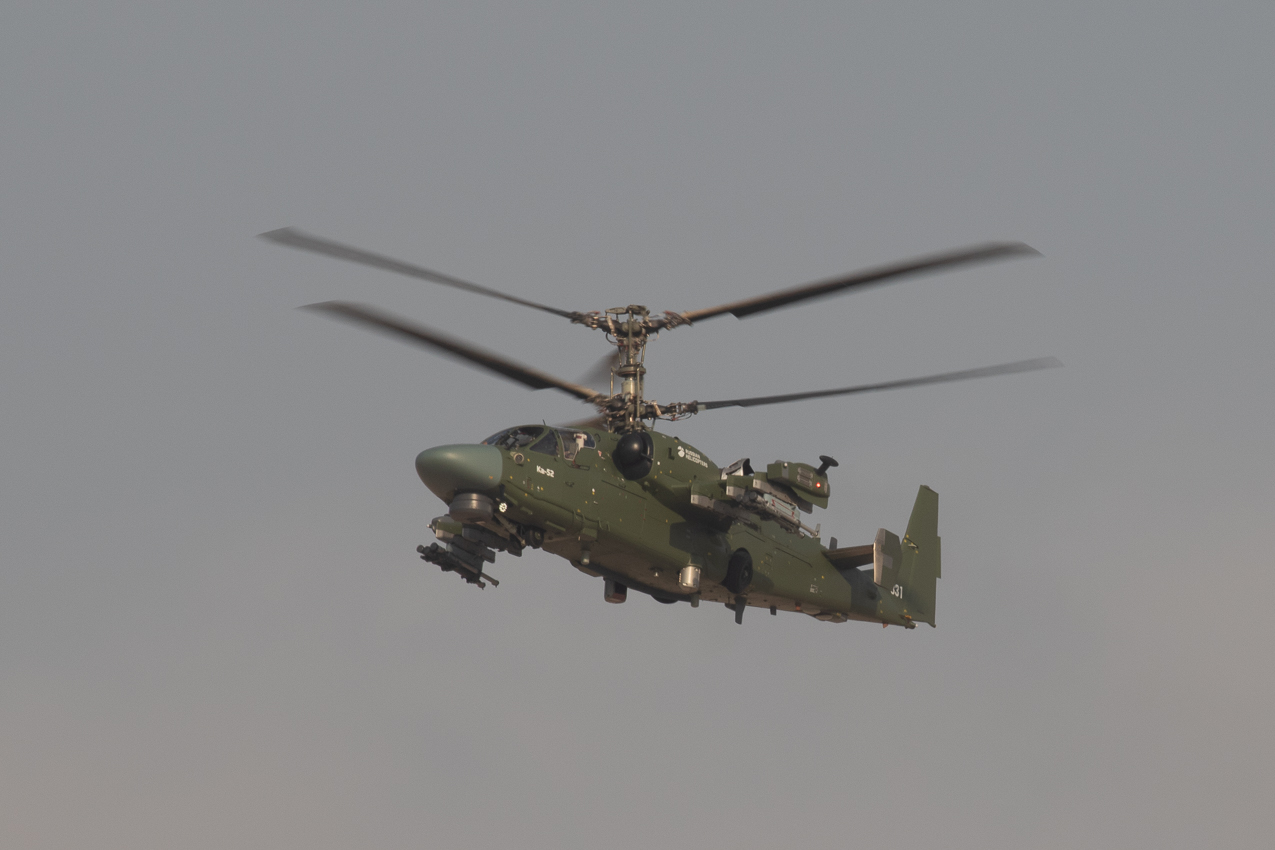
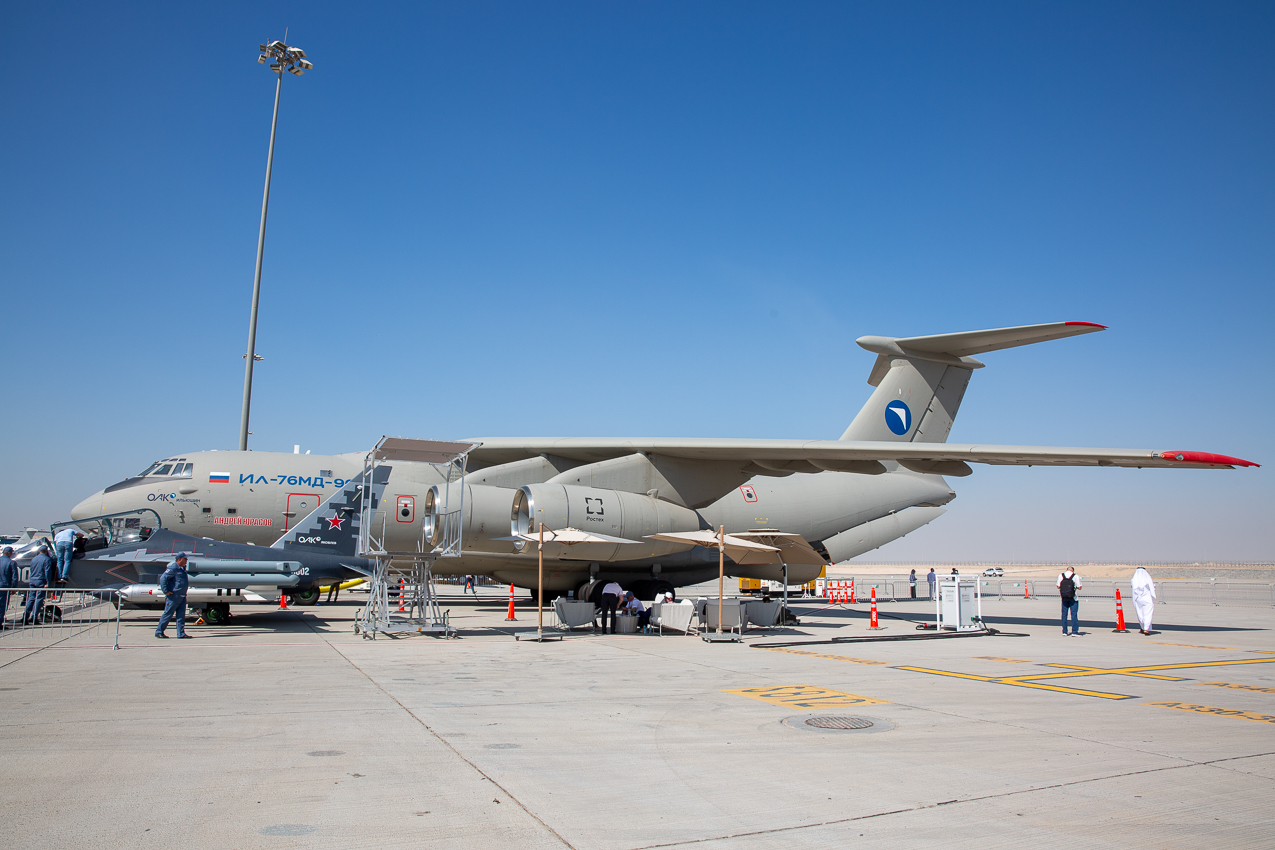
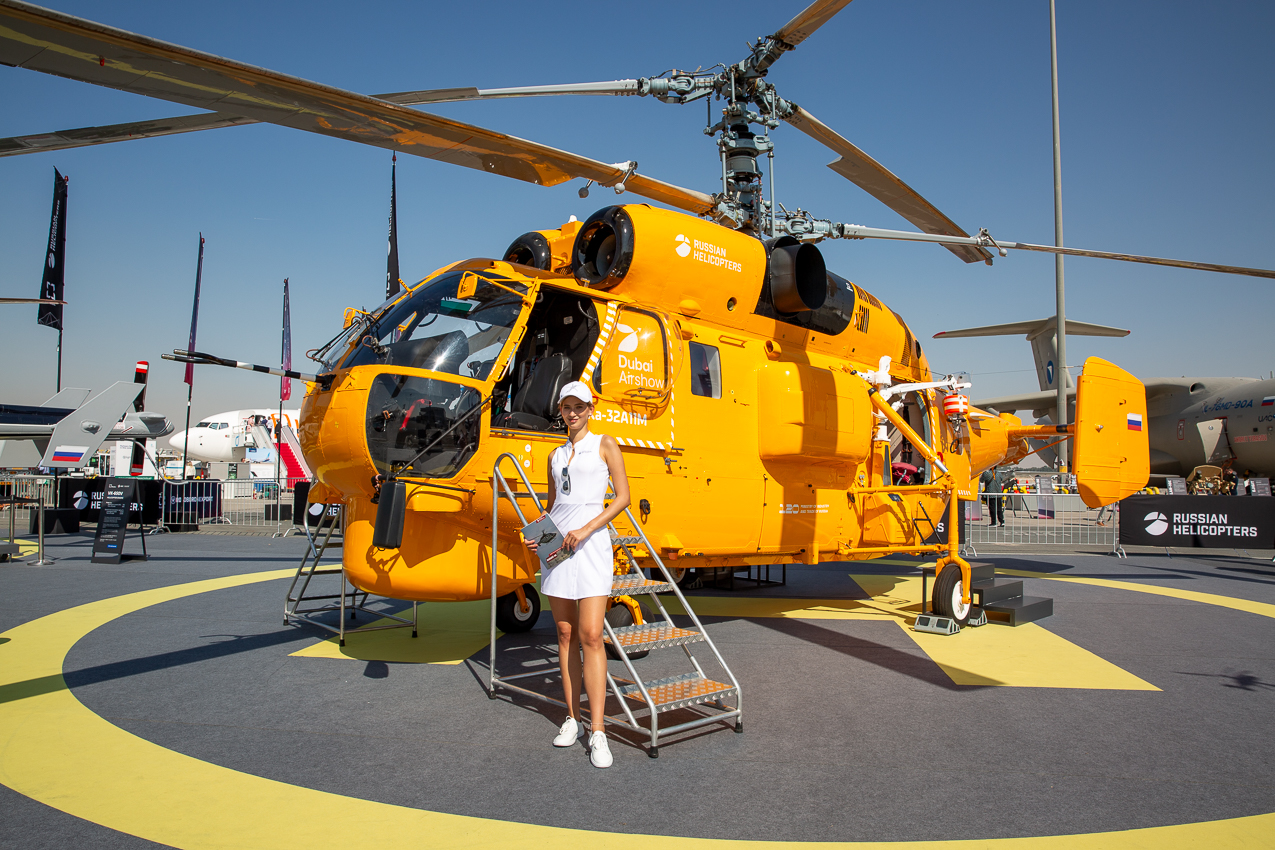
A further counterbalance to U.S. presence came from the strong participation of the Russian aerospace industry. In addition to an entire pavilion (separate from the main hall) occupied by Rosoboronexport and a smaller one assigned to Russian Helicopters, several aircraft were displayed statically, including the Sukhoi Su-57E, the Kamov Ka-52E, the Ilyushin Il-76MD-90A, and the Yakovlev Yak-130M. For the Yak-130M, Dubai marked her first presentation outside Russian borders, while for the Ansat-M helicopter this was a world premiere, having only recently completed her maiden flight. Although displayed only statically, both generated notable interest, as did the Kamov Ka-32A11M.
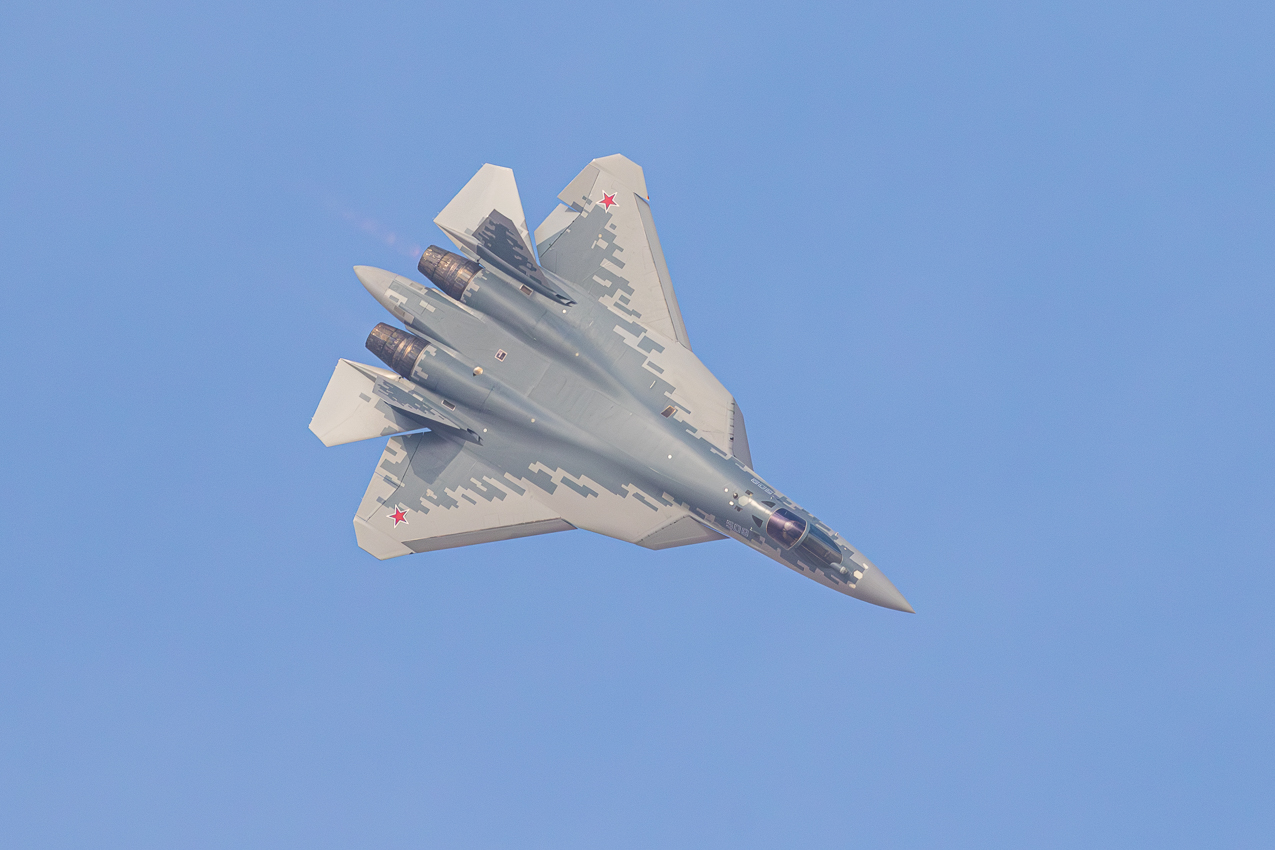
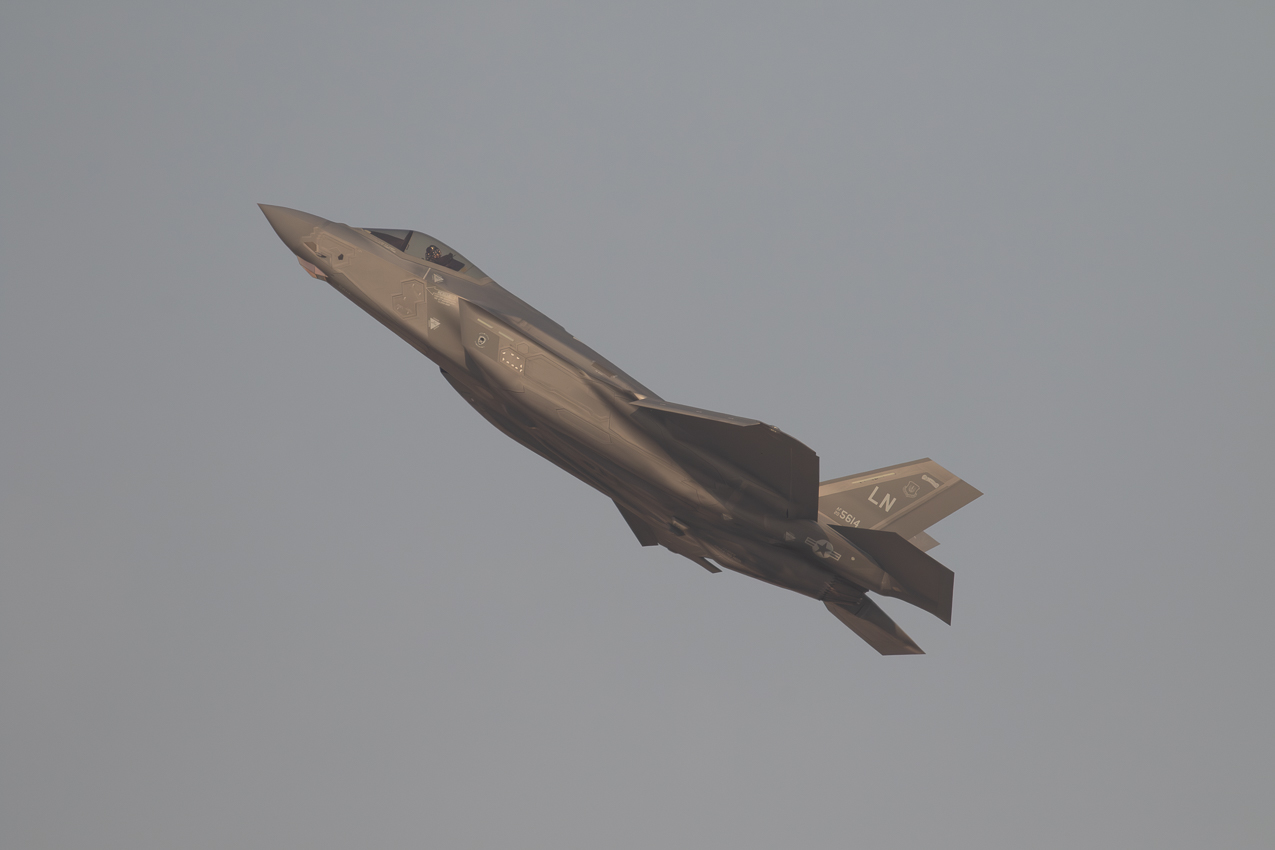
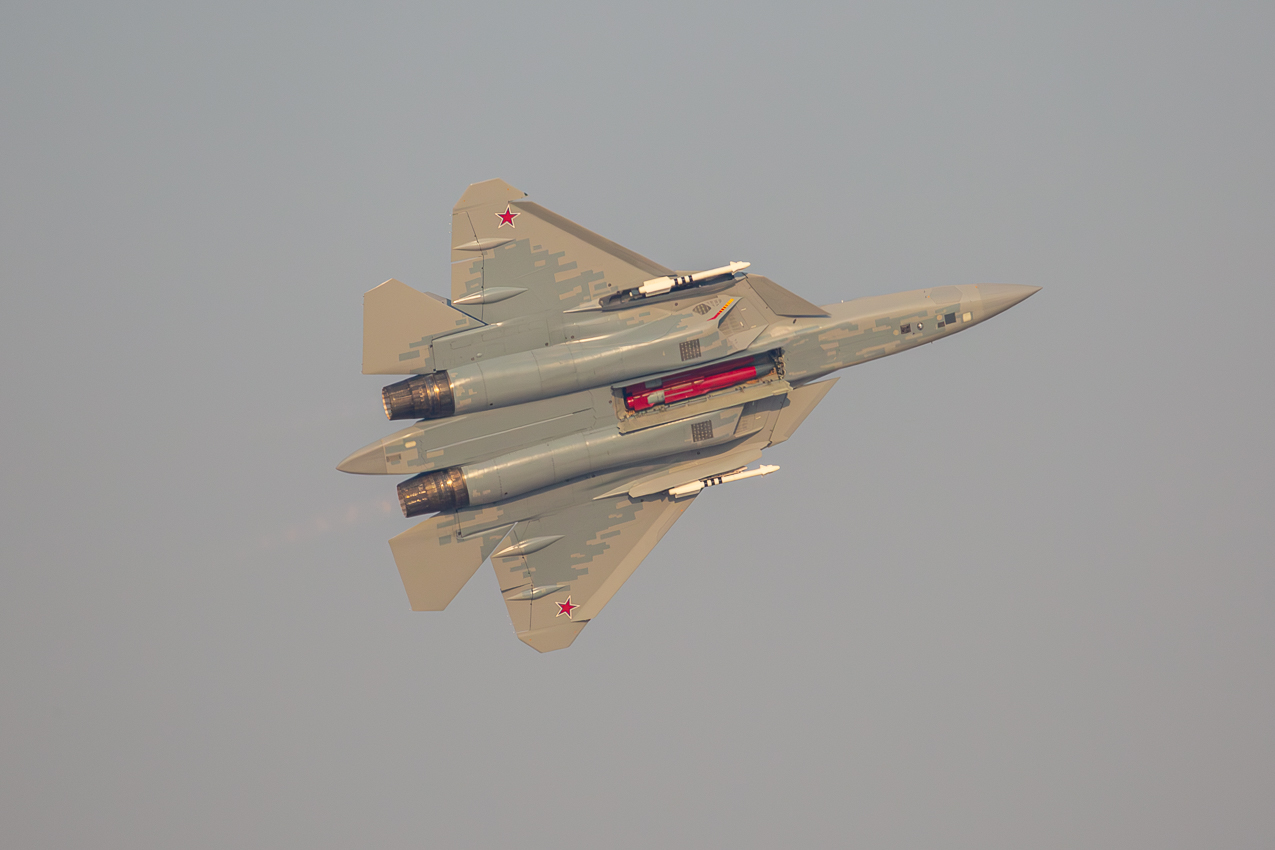
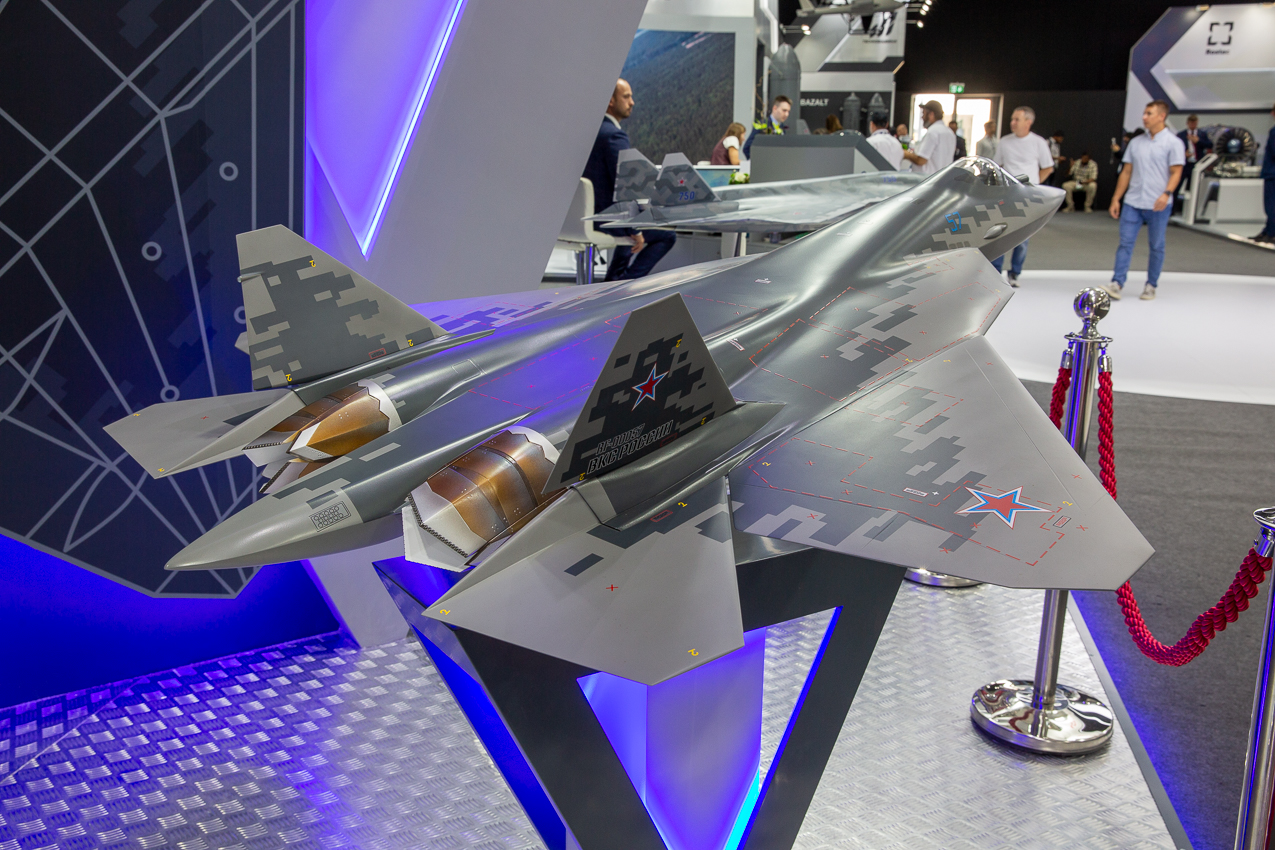
Despite the efforts of Major Melanie “Mach” Kluesner, pilot of the F-35A Lightning II Demonstration Team, the Felon immediately captured the attention of the entire audience. Sergey Bogdan, Sukhoi’s renowned test pilot, demonstrated the interpretation of the laws of physics according to the vision of the successors of Sukhoi and Lyulka. Moreover, for the first time, the aircraft’s weapon bays were opened in flight, revealing two Kh-58UShK anti-radiation missiles in the forward ventral bays and two R-74M2 air-to-air missiles in the lateral bays. The scale model displayed at the Rosoboronexport pavilion anticipated the results of ongoing work on the aircraft’s exhaust nozzles, which retain thrust-vectoring capability while reducing the infrared signature of the rear sector.
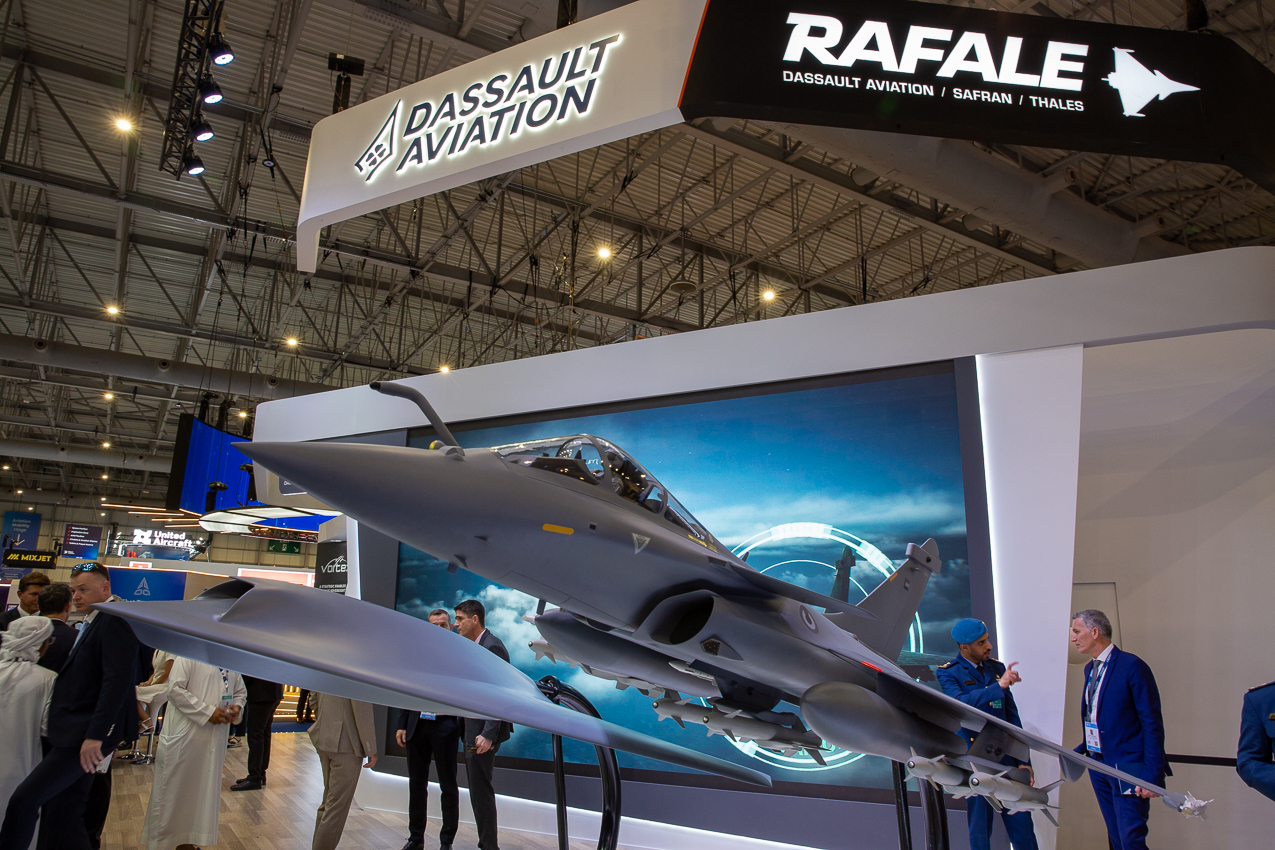
Turning to Europe, we begin with Dassault, which participated in the flying display with a Rafale—its 300th airframe having been produced only recently. The contract with the UAE for the purchase of 80 aircraft, signed by President Macron during a visit to Abu Dhabi in 2021, has entered a decisive phase with the acceptance of the first aircraft in January of this year. During the morning static display, she was shown with EDGE payloads, whose integration is expected in the near future. In addition to the recent announcement of Ukraine’s intention to acquire 100 Rafales, the fighter is well positioned in the MRFA (Multi-Role Fighter Aircraft) competition, through which India is expected to procure as many as 114 aircraft. Moreover, the prospect of equipping Taiwan—now seeking a replacement for its 60 Mirage 2000s operated since the early 1990s—is also gaining traction. Naturally, the scale model displayed at the stand was accompanied by the UCAV currently under development by the French company. In the business aviation sector, Dassault showcased its Falcon 6X and 8X, both present on static display.
The Eurofighter consortium was present at the air show, albeit with a reduced profile; nevertheless, the agreement between Turkey and the British government for the supply of 20 aircraft was particularly noteworthy, bringing to ten the number of air forces operating the Typhoon. Added to this were the German order for 20 Tranche 5 aircraft, the Spanish order for 25, and the Italian order for 24, both finalized at the end of 2024. Finally, the European fighter is on the verge of surpassing the symbolic one-million-flight-hour milestone, an unquestionably remarkable achievement.
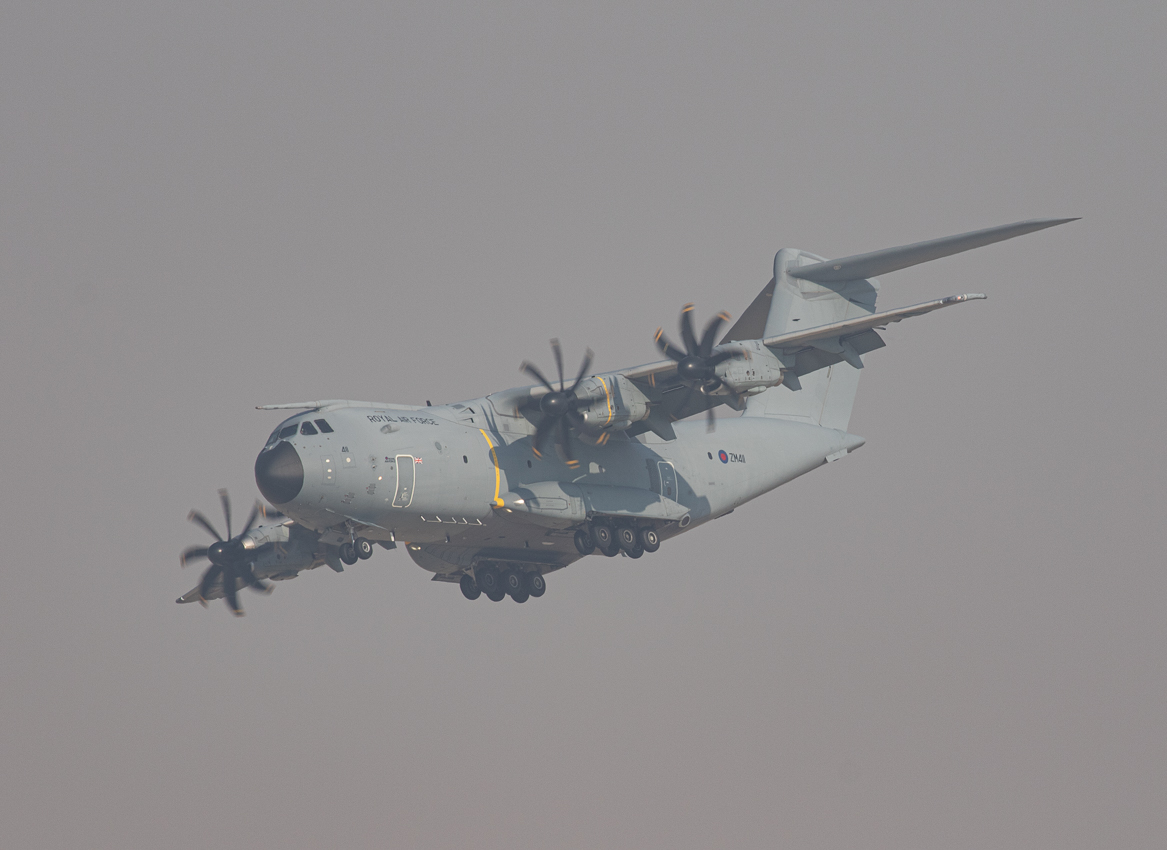
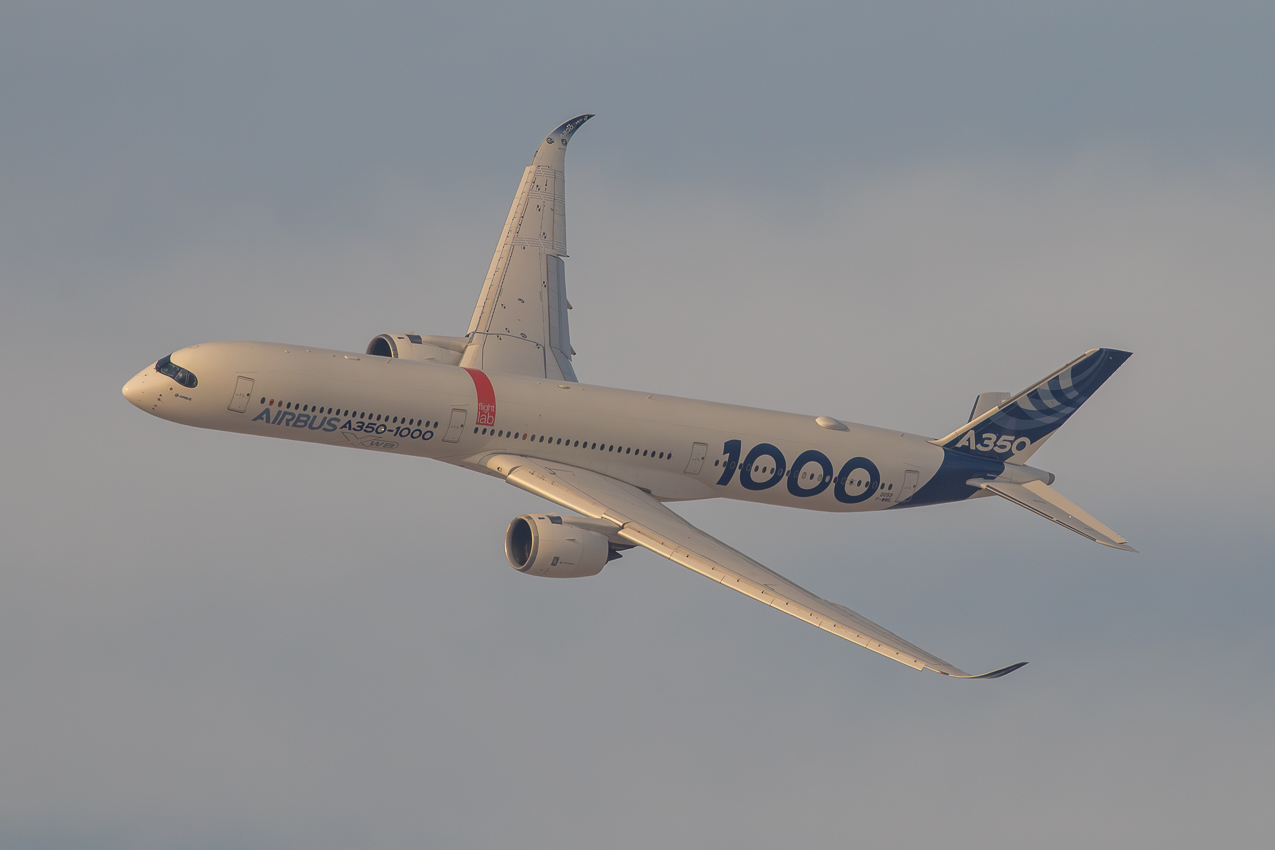
Another European consortium, Airbus, also exhibited its products. In response to the UAE’s requirement to replace eight to 10 Hercules aircraft, two A400Ms were on display, one from the Royal Air Force and one from the Armée de l’Air et de l’Espace. The signing of a collaboration agreement between Airbus and Strata, a company of the Abu Dhabi-based Mubadala group, introduces a Emirati partner to the A400M supply chain, also in light of the aforementioned requirement. Several potential and current customers have requested an increase in payload from 37 to 40 tonnes; Airbus is attempting to meet this request working only on the software, rather than requiring structural modifications. The A350-1000, competing with the Boeing 777X in the same market segment, took center stage during the flight demonstrations. The consortium announced orders from Etihad for six A330-900s and from Emirates for eight A350-900s, followed by a Memorandum of Understanding with FlyDubai for 150 A321neos. In the helicopter sector, Morocco has signed an order for 10 H225Ms for CSAR missions, replacing the Puma, which has been in service for 40 years.
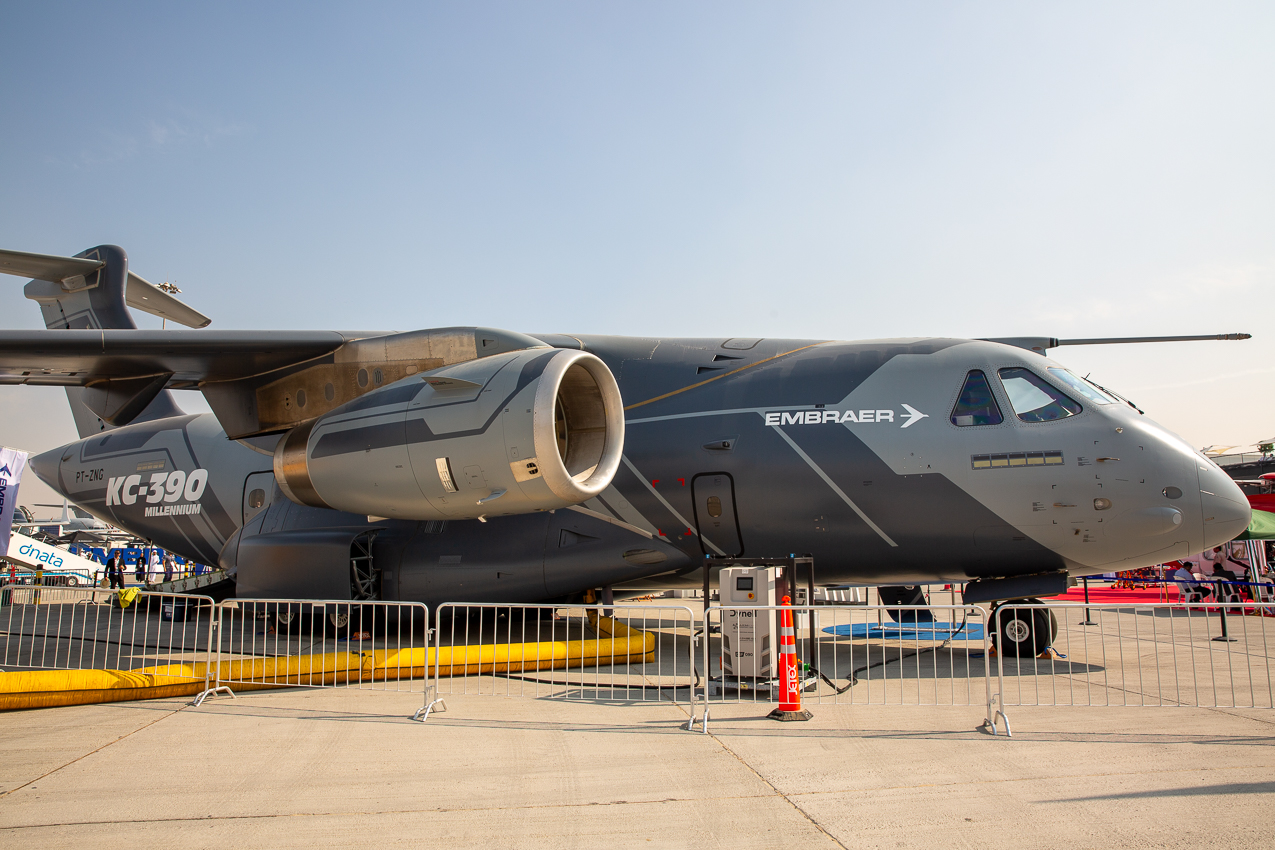
Naturally, the replacement of the Emirati Hercules sees as competitors Lockheed-Martin, which offers the C-130J, and Embraer, which has displayed the company’s KC-390 Millennium demonstrator. In addition to the Millennium, the Brazilian company is also promoting the A-29 Super Tucano, including counter-UAS among the missions the turboprop can successfully perform.
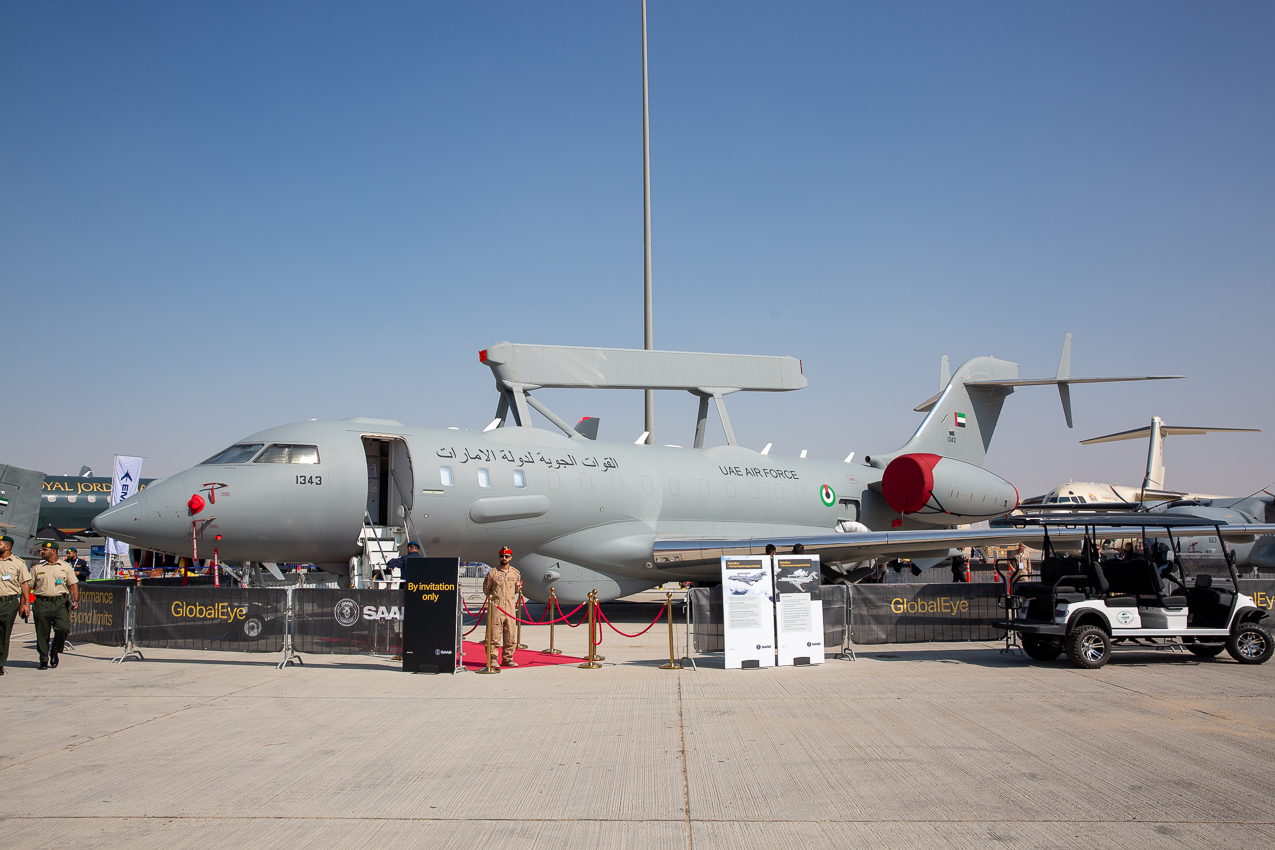
Saab arrives at the air show with positive prospects following the announcements regarding the possible contract for the Gripen E with Ukraine, while Colombia has just ordered 15, along with two F two-seaters. Relations between Saab and the United Arab Emirates date back to 1980 and intensified with the contract for the supply of five GlobalEye AEW&C (Airborne Early Warning & Control) aircraft, the fifth of which was delivered in September 2024. One of the five was on display in the static display, accessible by invitation only. Furthermore, the Swedish company developed a phased-array radar for maritime surveillance at its TIP (Tawazun Industrial Park) facility in Abu Dhabi.
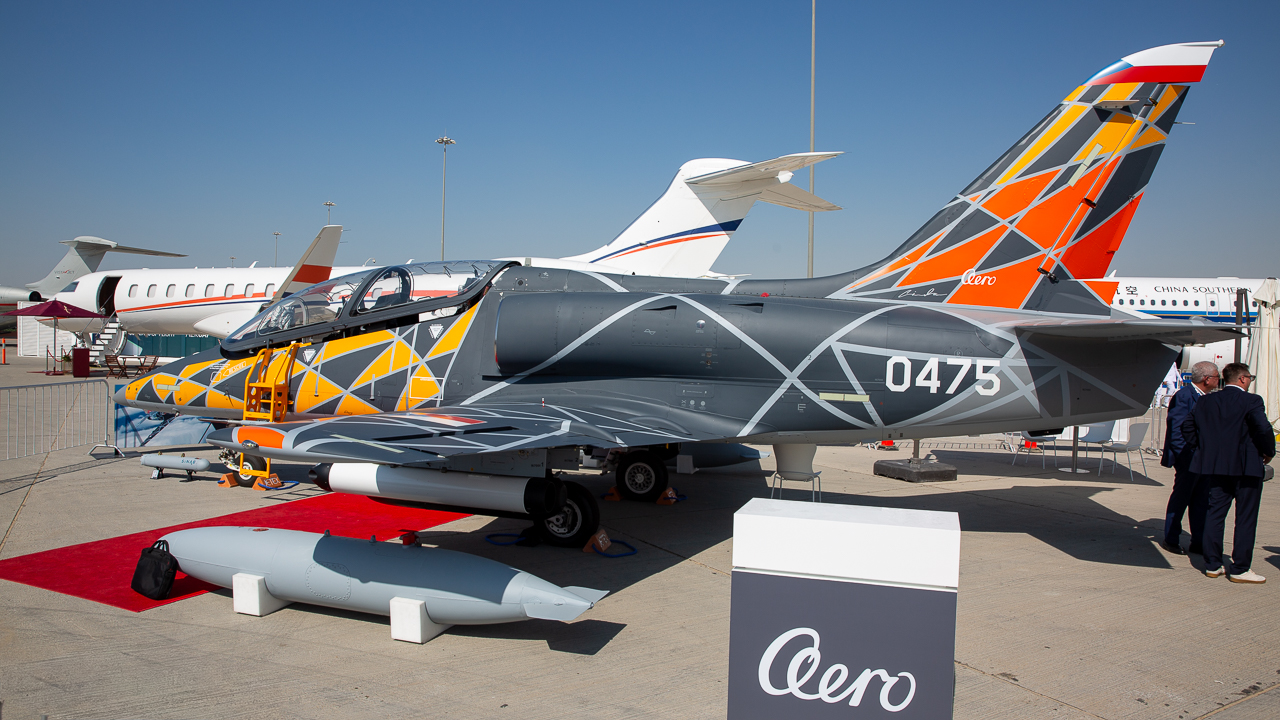
Aero Vodochody continues the marketing campaign for its L-39NG Skyfox trainer, shown in a vibrant livery. After the success of the L-39 Albatros, over 3,000 aircraft produced, the Czech company risked permanent closure in recent years. However, it managed to advance development of the Skyfox, and the first orders finally arrived: 12 aircraft for Vietnam, 12 for Hungary, and 8 for CLV, a training partner of the Czech Air Force. The aircraft is also being offered in a light attack configuration, highlighting the ease with which the Skyfox’s avionics can interface with Western and Eastern payloads, a significant advantage for air forces with former Soviet equipment in their inventory. Nigeria and Ghana are among the countries interested, but no official statements have yet been released.
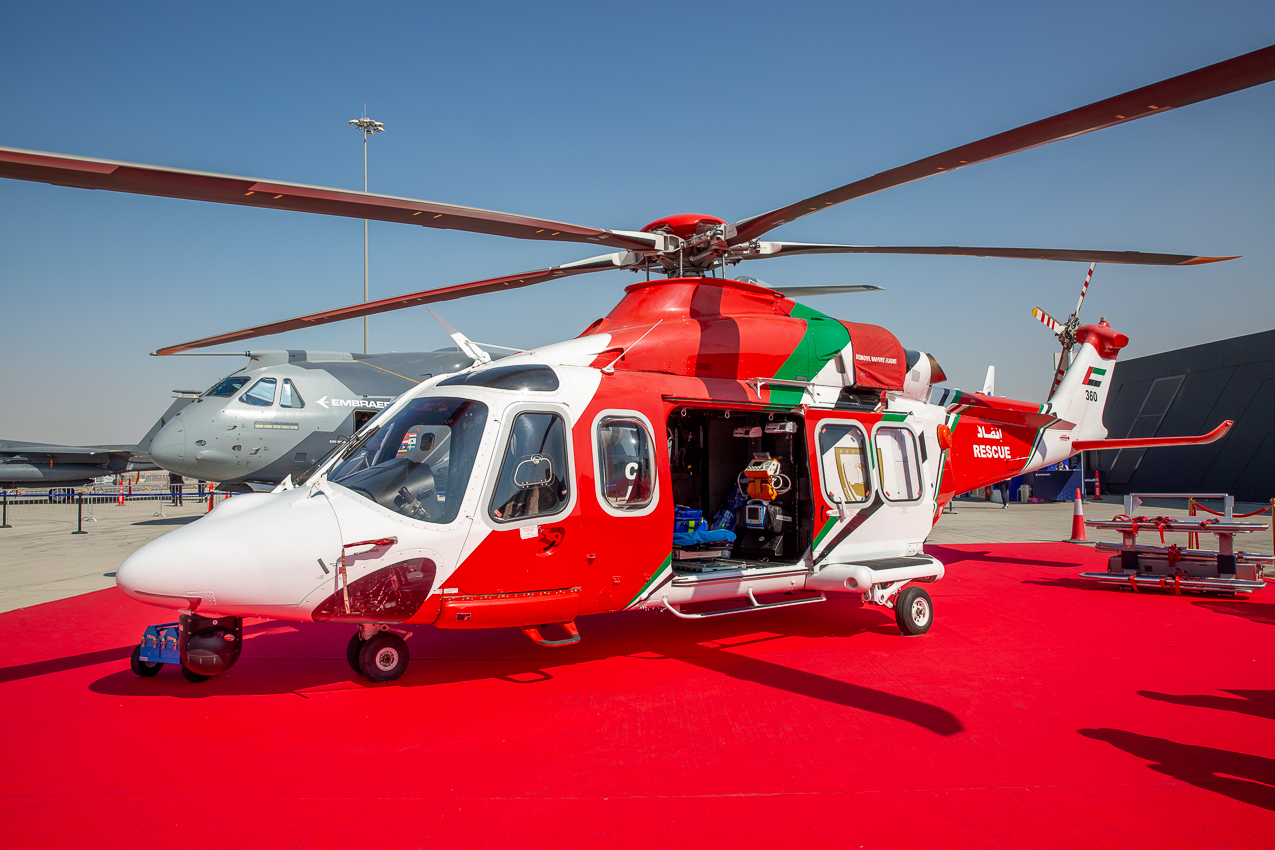
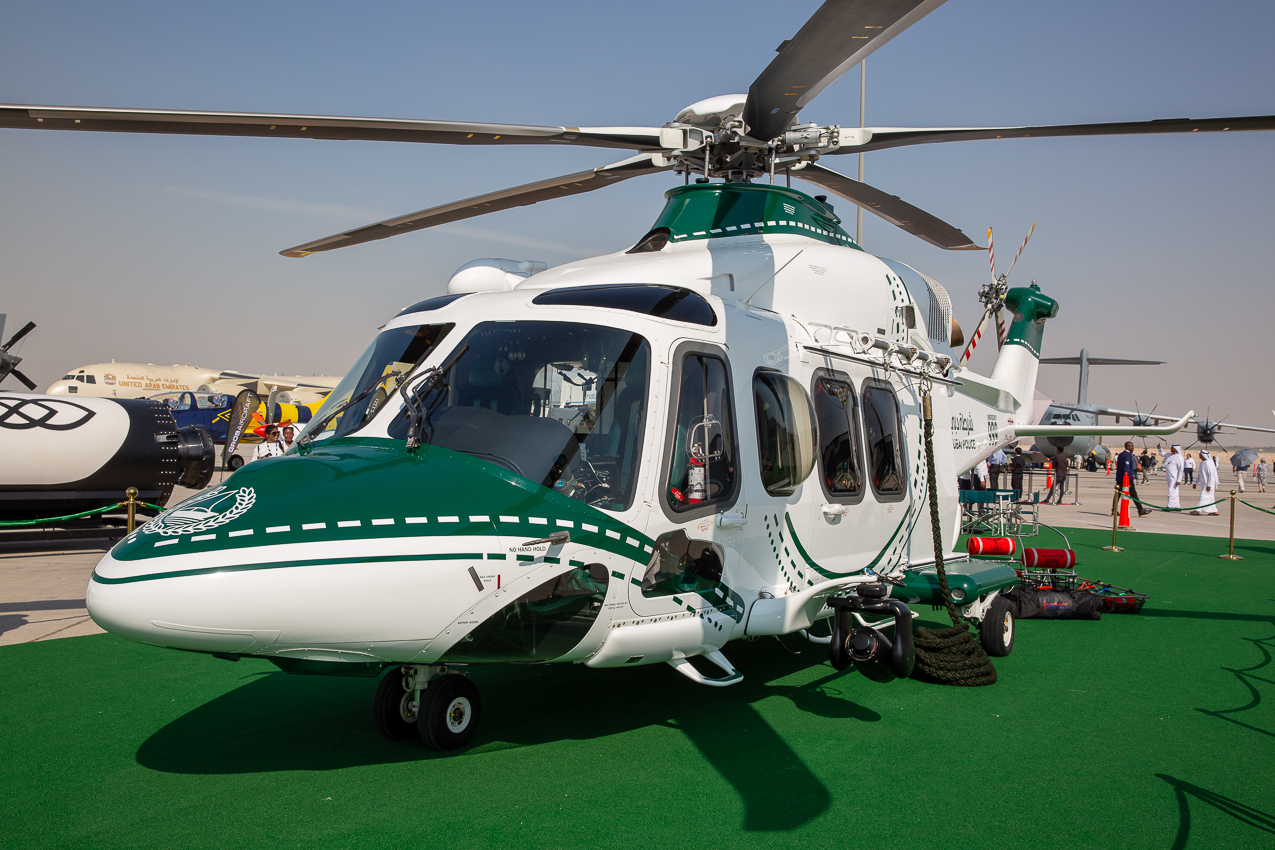
Leonardo, too, could not miss an air show of this caliber; several of its helicopters were on display, in the colors of both the Dubai and Abu Dhabi police forces, as well as those of other government agencies and private operators (in addition to those flying during the airport’s normal operating hours). A contract announced during the air show includes the supply of an additional five AW139s to the Abu Dhabi Police; another notable announcement is the establishment of a joint venture with the EDGE Group, a company founded in 2019 in Abu Dhabi and highly active in advanced defense technology. A product that is enjoying great success, already installed on over 70 platforms of various types, is the ATOS (Airborne Tactical Observation and Surveillance) mission system. In addition to its extreme flexibility in configuration and interface with the customer’s chosen sensors, it also features Deep Neural Networks developed for each domain (land, air, sea) and trained on the Davinci-1 High Performance Computer.
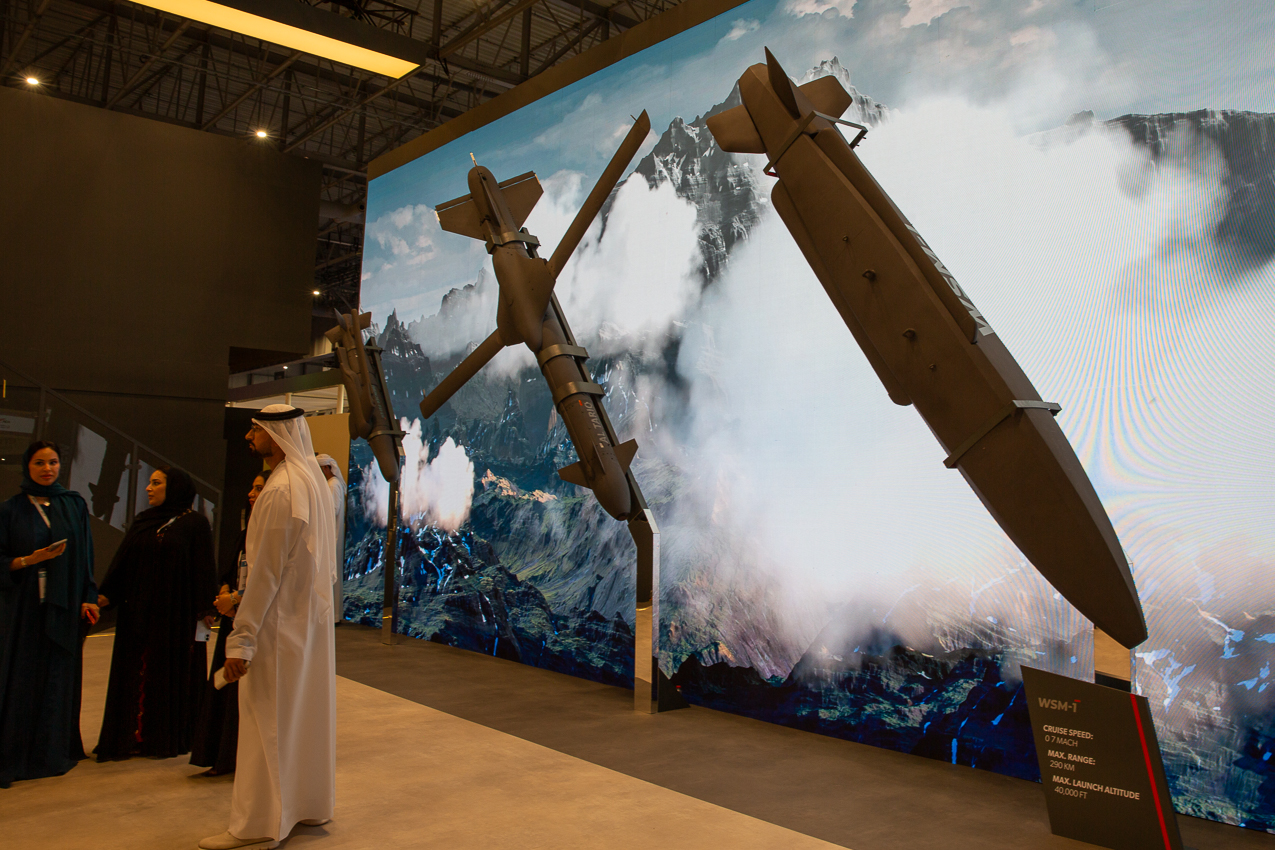
As mentioned at the outset, the local industry, thanks to agreements signed over the years with major players in the sector, aims to increase its role in the aerospace sector by focusing on cutting-edge technologies. The EDGE stand displayed many of the 33 solutions on offer, including the JERNAS-M, a MALE (Medium Altitude Long Endurance) for ISR and ground attack missions, and the JENIAH, a UCAV with a payload of up to 480 kg and MUM-T (Manned Unmanned Teaming) capabilities. Equally impressive is the array of precision weapons, including the Al Tariq family with standoff capabilities from 45 to 120 km and day and night guidance systems. Naturally, several of these are ready to be integrated with the Rafale as soon as deliveries continue, a move that heralds potential customers among other users of the French fighter, such as Egypt and Indonesia.
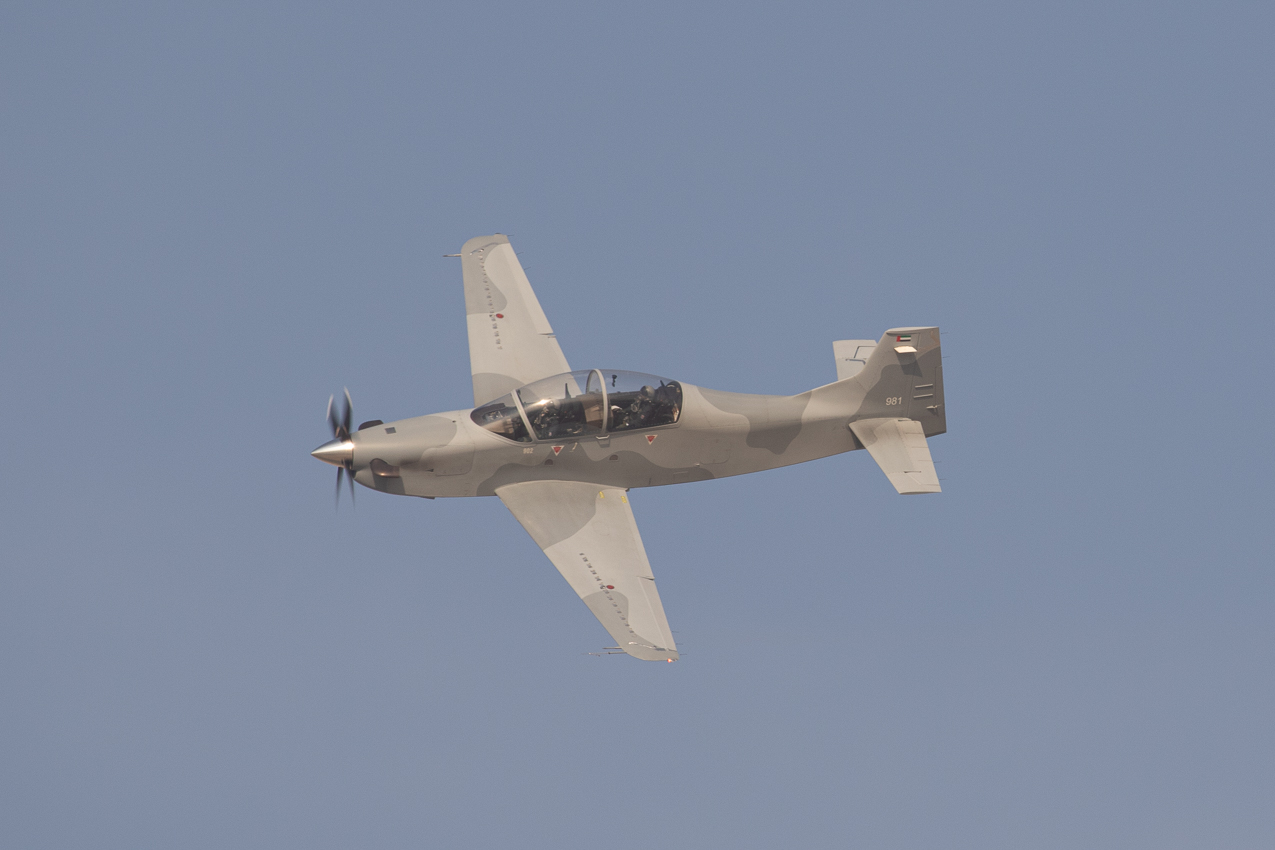
Another Emirati company is Calidus, founded just 10 years ago, which showed the B-250T trainer flying, naturally also ready to serve as a light attack aircraft in the B-250 LAA version. Powered by a Pratt & Whitney PT6A, the aircraft reaches an altitude of 30,000 feet and a speed of 320 knots. It is equipped with a configurable LAD (Large Area Display) and a Ground-Based Training System that optimizes training costs. Also EDGE is in talks with China’s Zhongke for the joint development of the TA-20 basic trainer, derived from the Dart 450. The prototype, presented under the name Hamdan, was displayed on static display after a six-stops flight that took it from Wuhu City to Dubai.

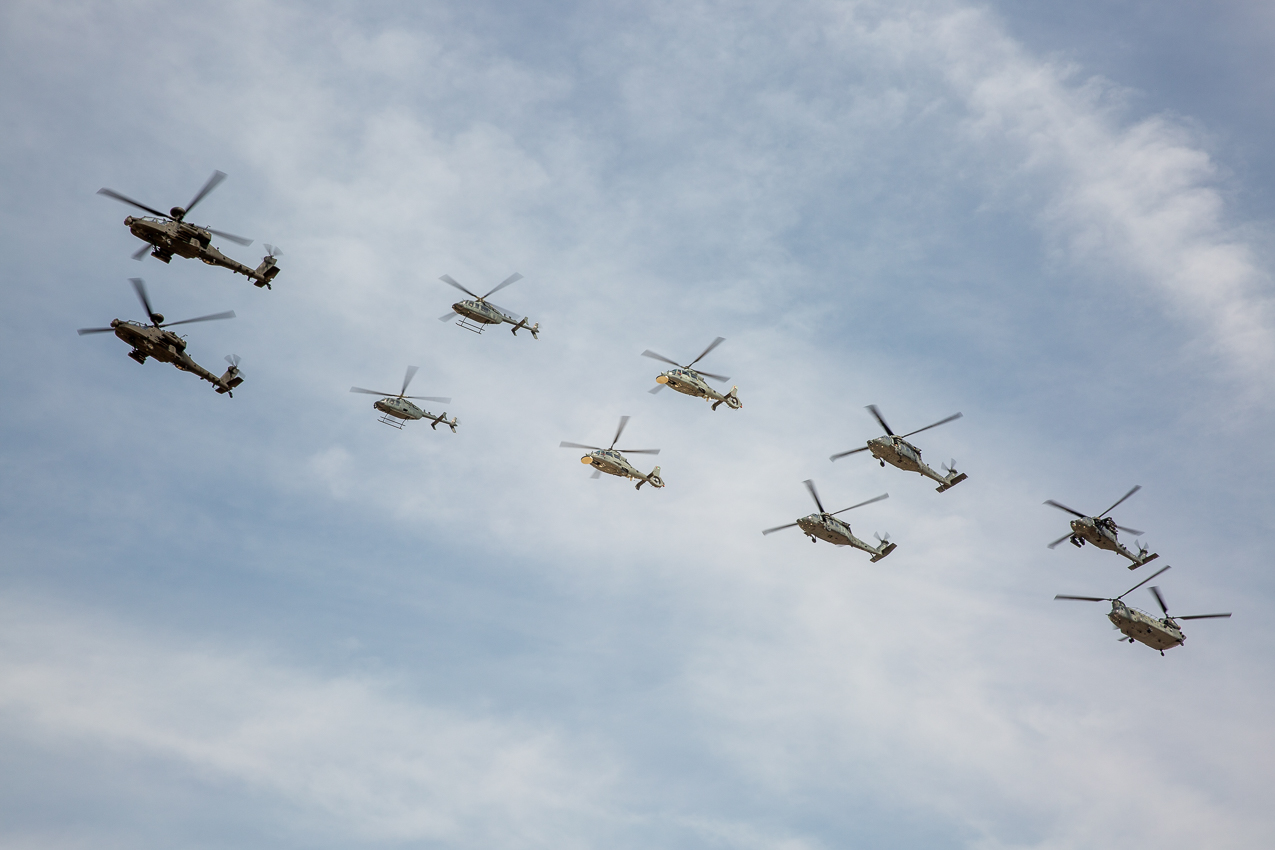
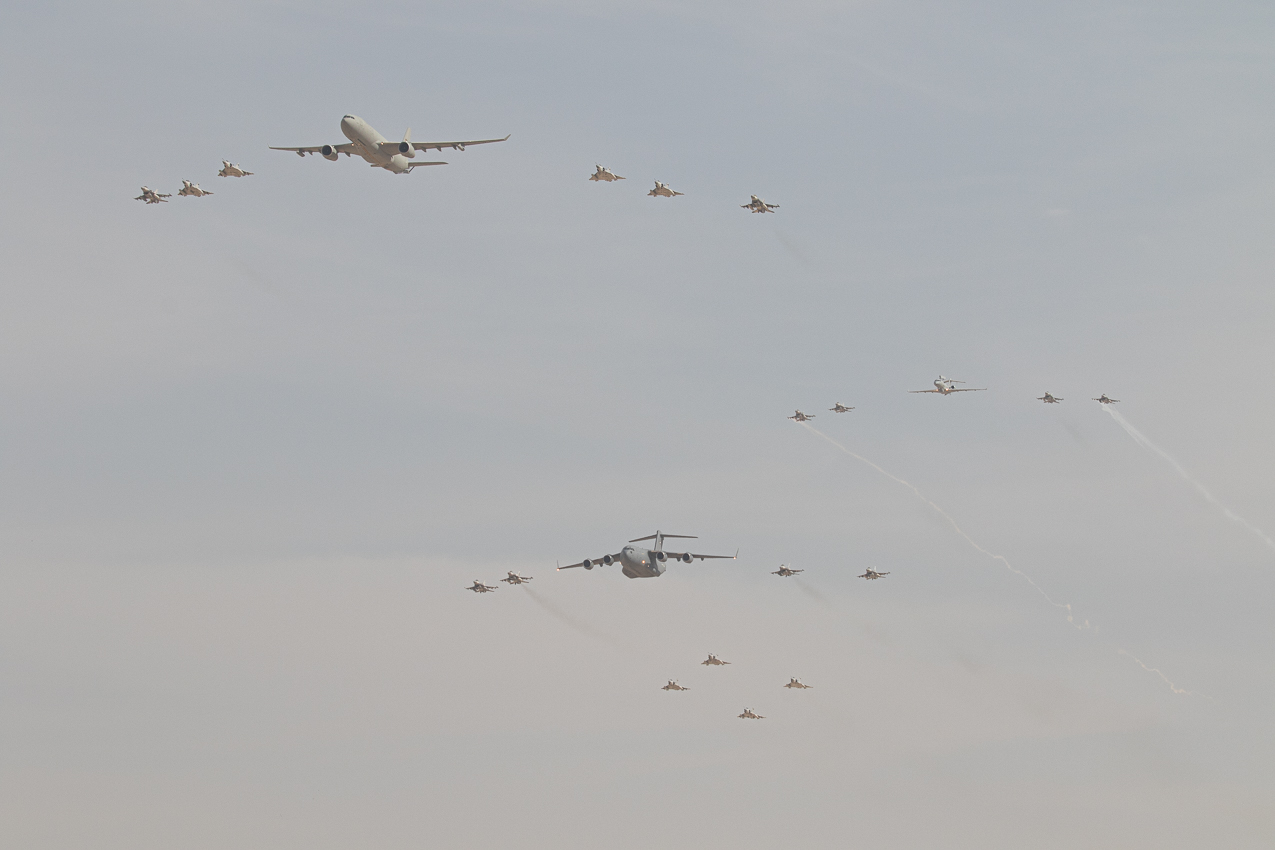
On Monday, at 1:30 PM, a formation of 10 helicopters from the UAEAF&AD (UAE Air Force and Air Defence) Joint Aviation Command, composed of Boeing AH64 Apaches, Bell 407GXs, Airbus Panthers, Sikorsky UH-60 Black Hawks, and Boeing CH-47 Chinooks, opened the flight demonstration program. This was followed by an impressive formation of 29 aircraft; the first section consisted of an A330 MRTT escorted by four Mirage 2000s and two F-16s, followed by a C-17 escorted by four F-16s and four Mirage 2000s, and concluded by a GlobalEye escorted by another four F-16s. The second section was led by a C-295 escorted by two Twin Otters and two Cessna 208s; closing the flight was a Hercules accompanied by two AT-802s. The baton was passed to Emirates, with a vertically stacked formation led by an Airbus A380, followed by a Boeing 777 and an Airbus 350, followed by an Etihad A380 and a FlyDubai Boeing 737 Max 8.
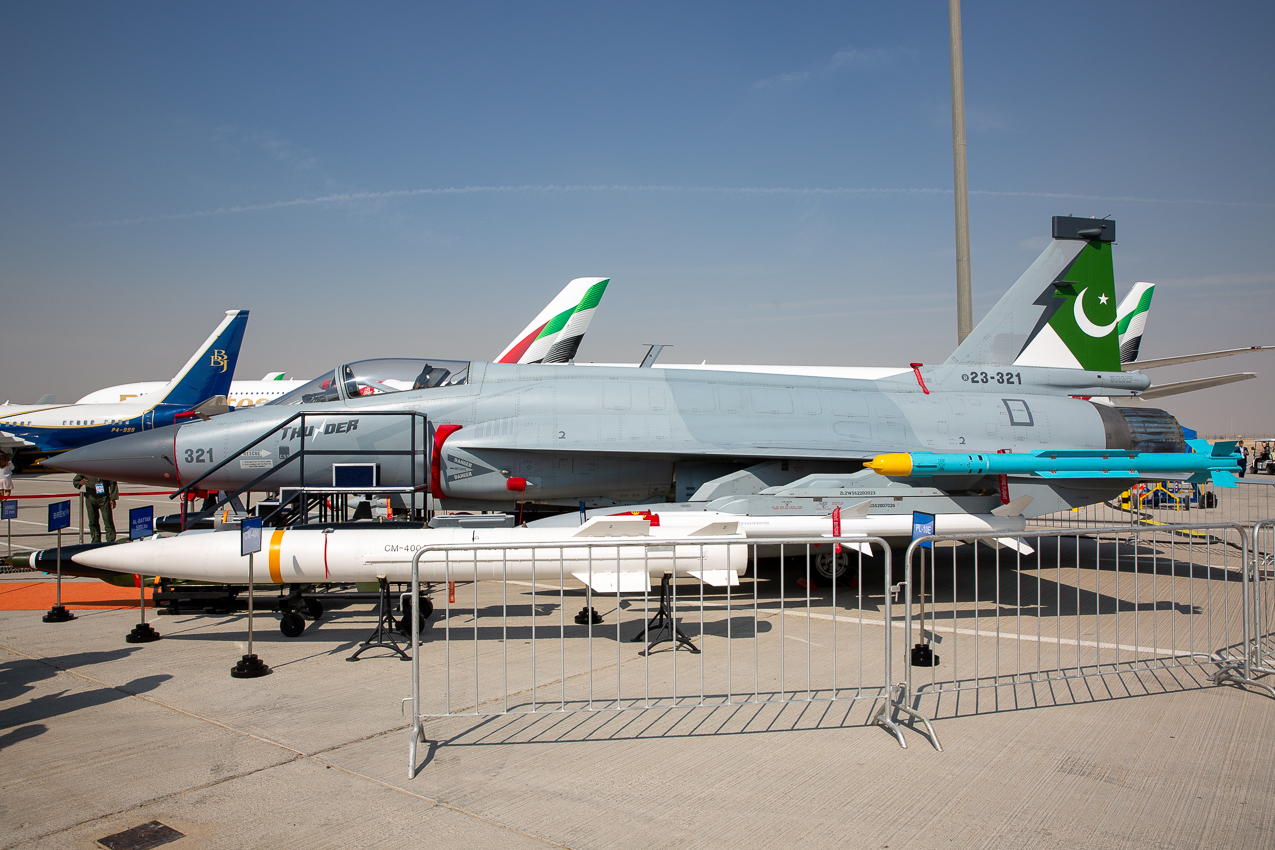
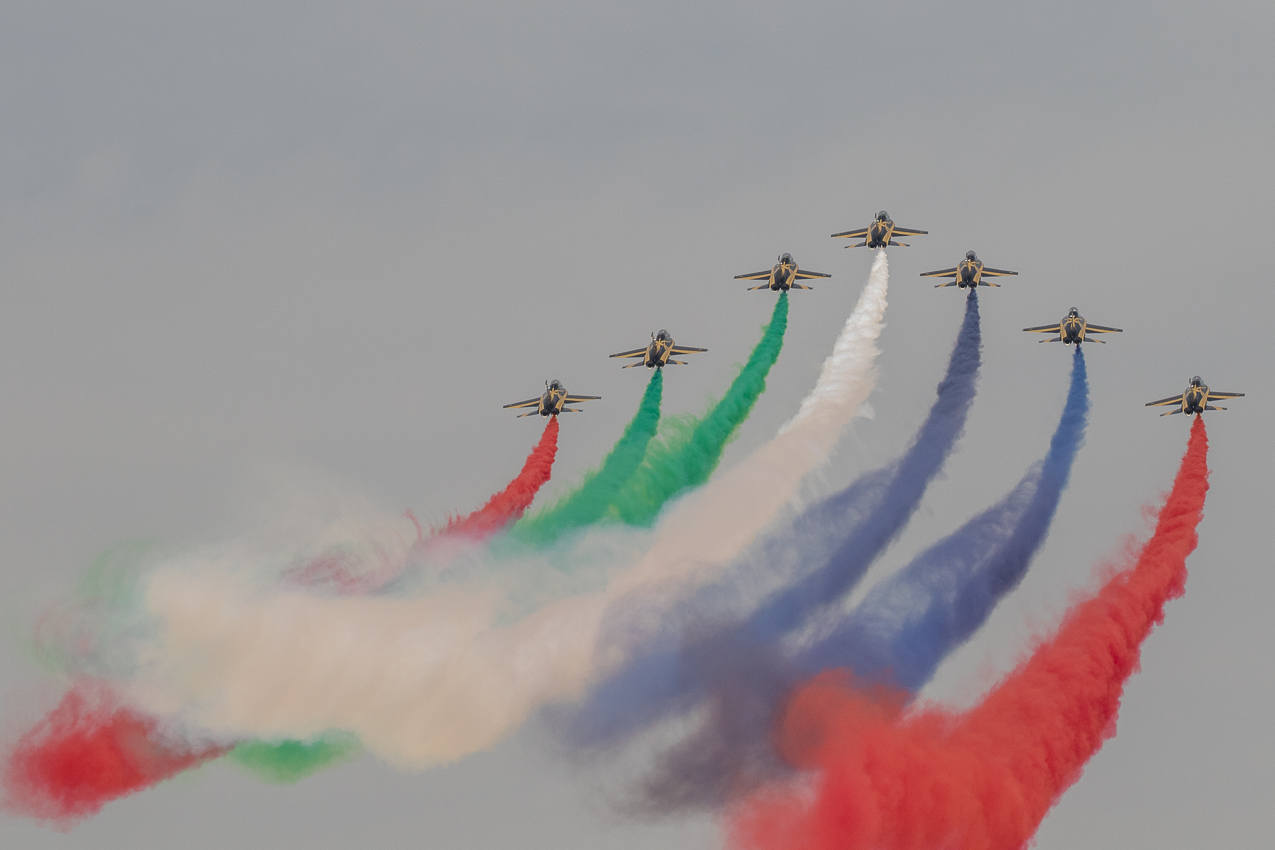
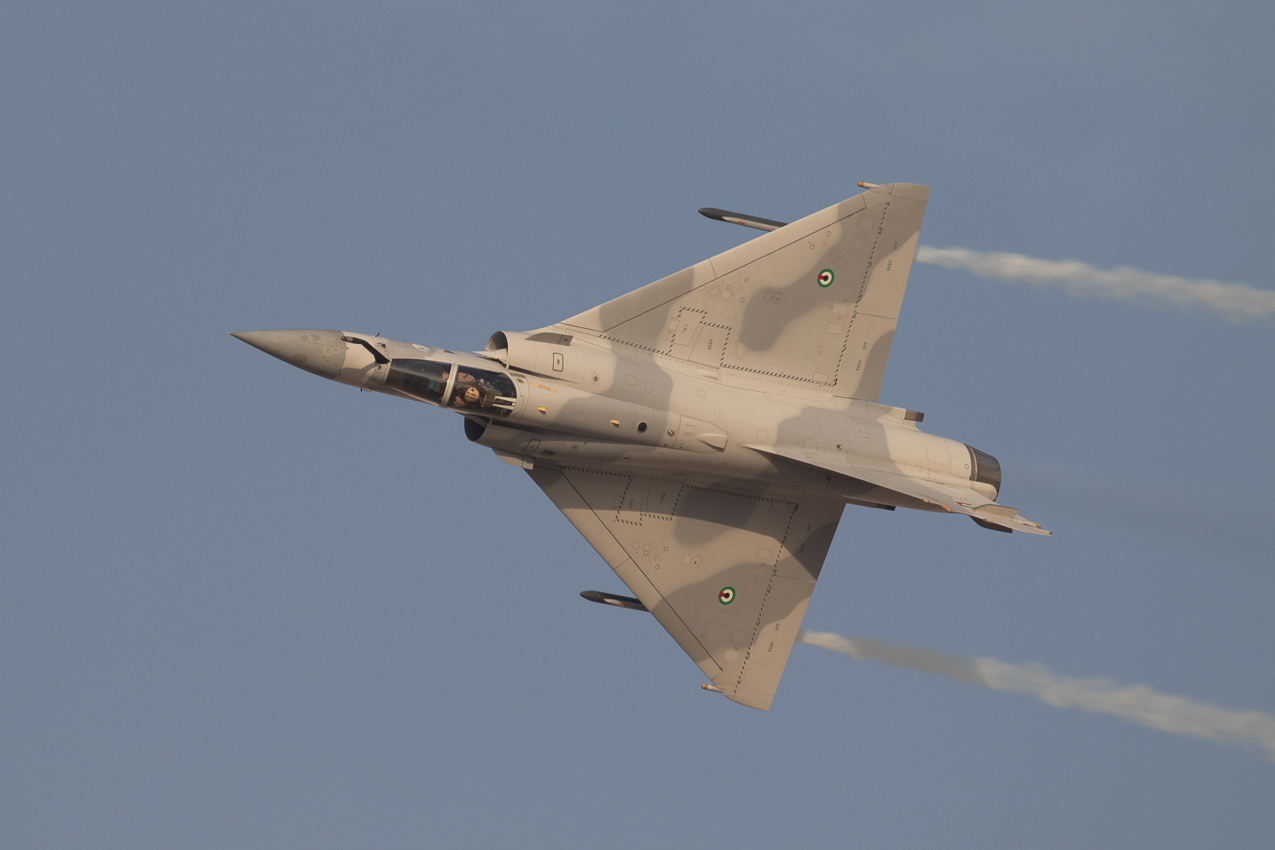
This was followed by the display of the Emirati team, the Al Fursan al Emarat (Knights of the Emirates), which recently completed the transition from the Leonardo MB-339 to the new aircraft, the Chinese Hongdu L-15 Falcon trainer. The new formation’s first public display certainly won over the public, intrigued by the distinctive whistle of the AI-222 engine. One would have expected daily participation in the flight program; maintenance requirements likely prevented them from rushing the program. The domestic air force then contributed to the flight program with displays of the Mirage 2000-9 and the F-16E.
Another patrol that garnered considerable praise was the Indian Surya Kiran (Sunbeams), equipped with nine BAe Hawk Mk.132s. The installation of underwing smoke generators combined with the traditional injector in the exhaust fumes allows for the simultaneous generation of colored and white smoke, making some of their displays truly unique.

Wandering the stands, one could easily spot the Black Eagles’ one, South Korea’s aerobatic team, but the flight schedule did not include their participation, which was prevented by a diplomatic dispute with Japan, which denied them a technical stopover in Okinawa. The unexpected setback prevented any alternatives from being found, depriving the audience of a team that would have further enriched the show.
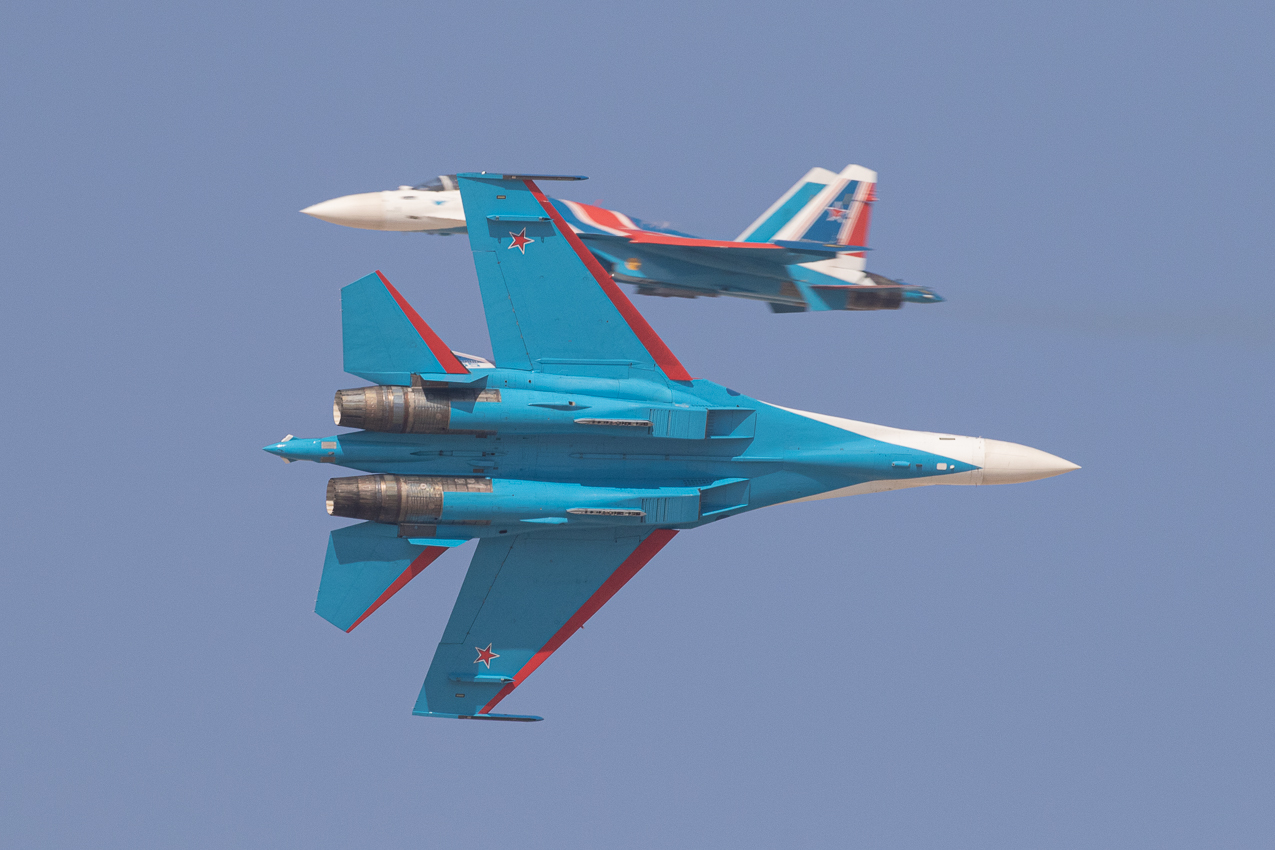
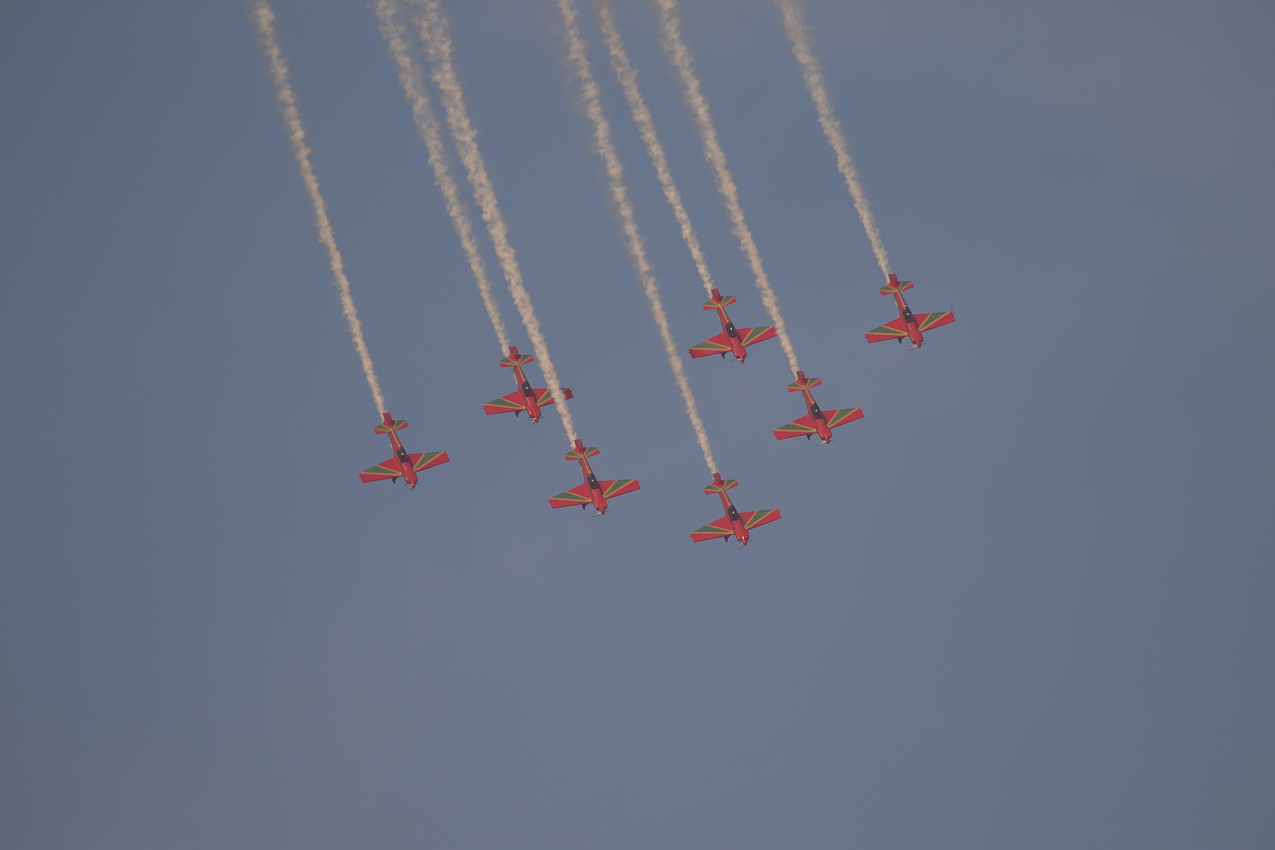
The daily displays also included performances by the Russian Knights, the Baltic Bees, and the Marche Vert; the latter, the Royal Moroccan Air Force team composed of seven CAP-232s, drew a star with their smoke, a figure featured in the country’s flag.
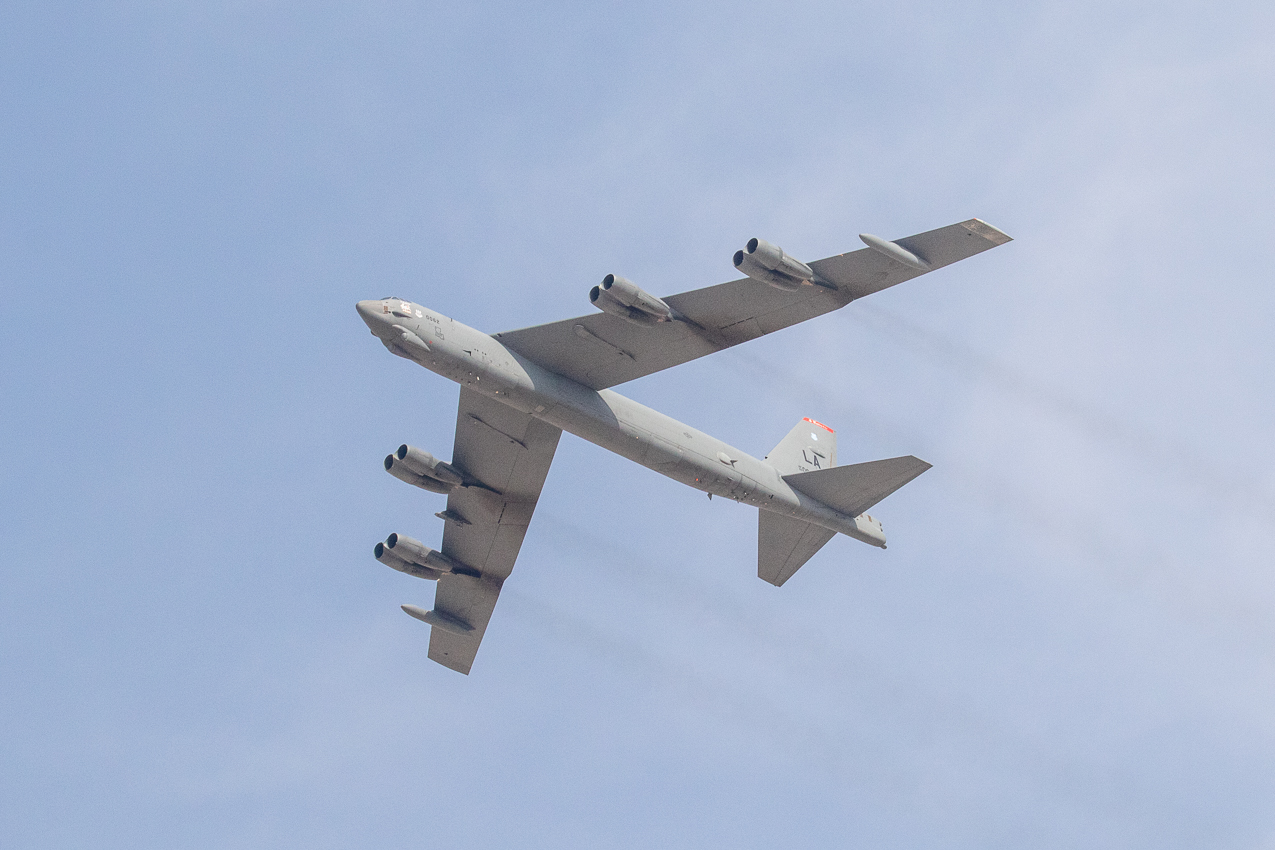
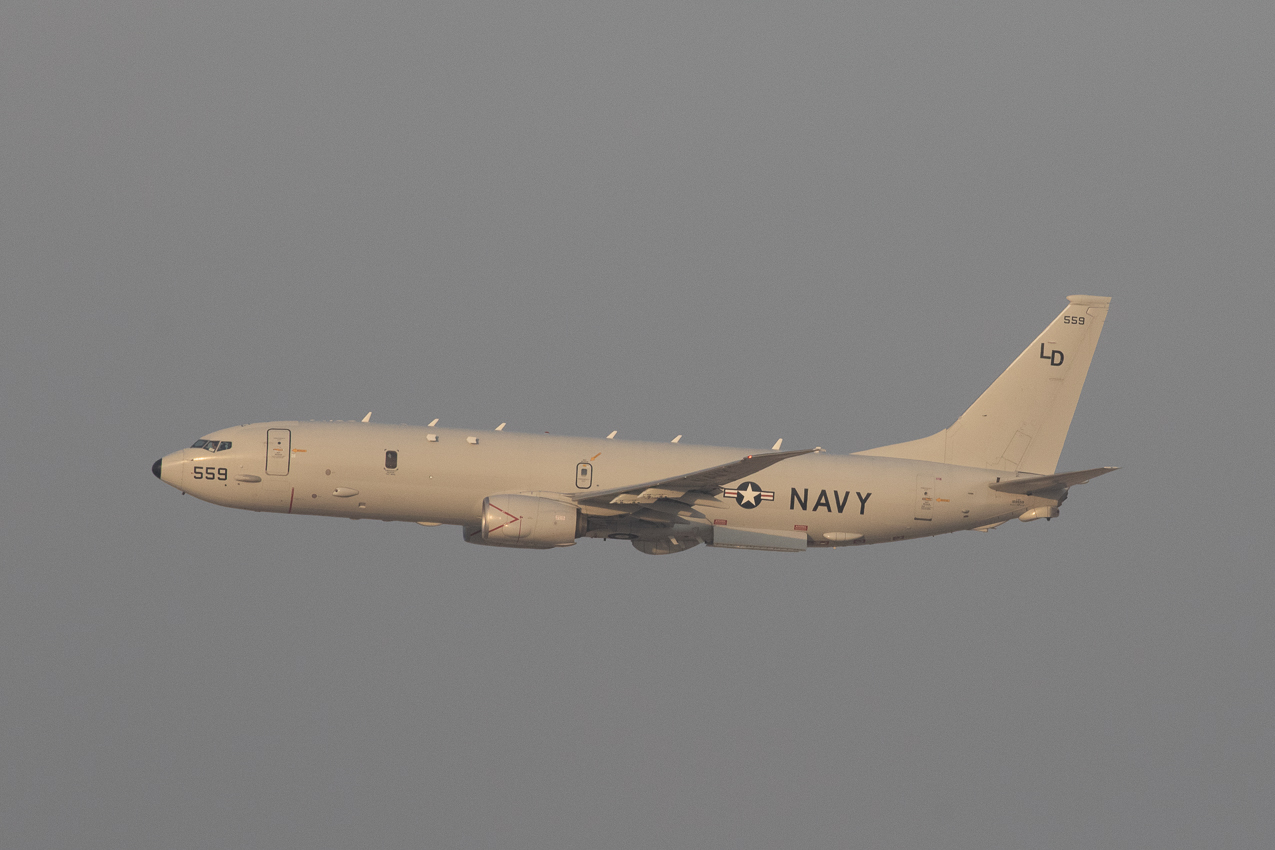
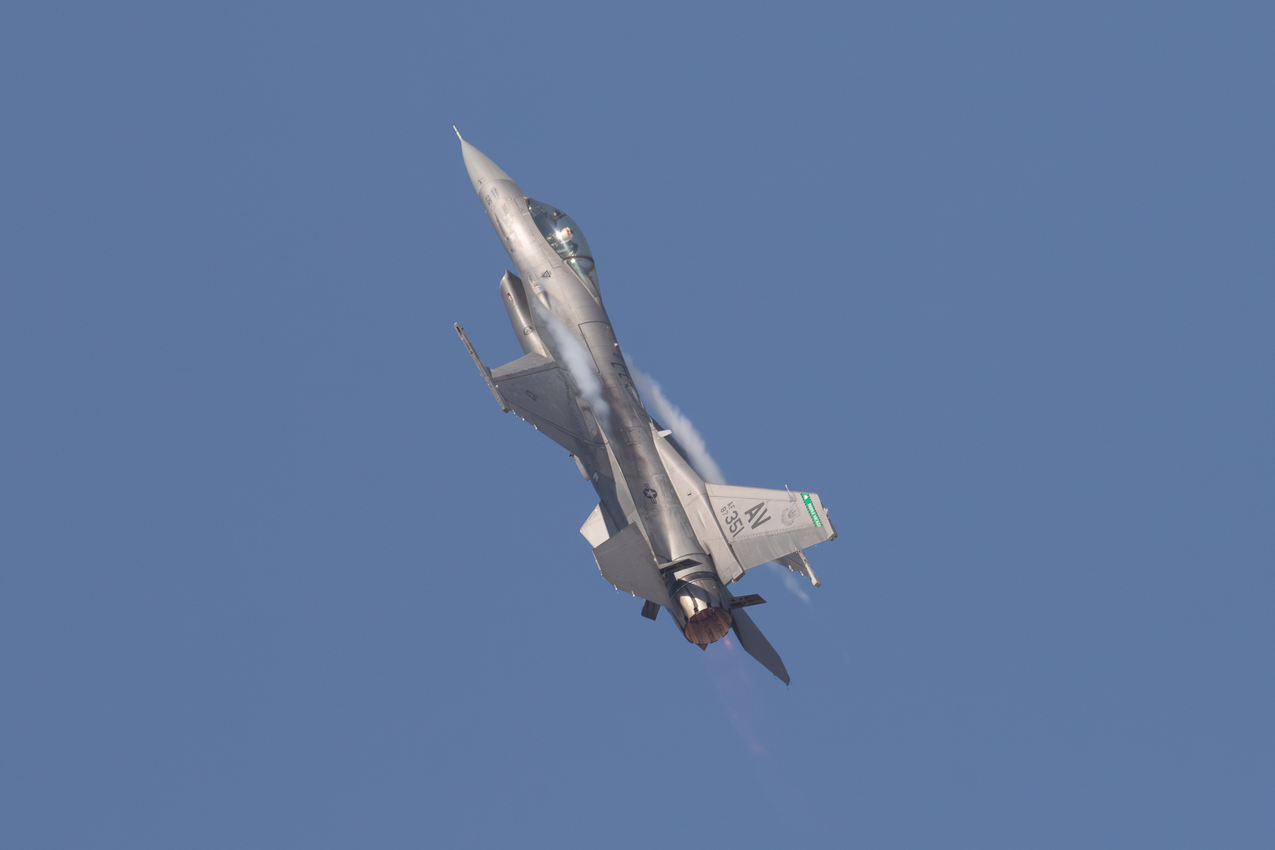
The US presence at the air show was significant, symbolizing the strength of relations between the two countries. A B-52 based in Barksdale but temporarily deployed to Moron, Spain, made a flyby on Monday, followed in the afternoon by a P-8 Poseidon. Each day featured an F-35 display, or alternatively, an F-16C from the Viper Demo Team (which sported the new Have Glass V gray camouflage with radar-absorbent material). Also on static display were a KC-46, two Hercules, an F-15, an A-10, a UH-70, an SH-70, and an AH-64.
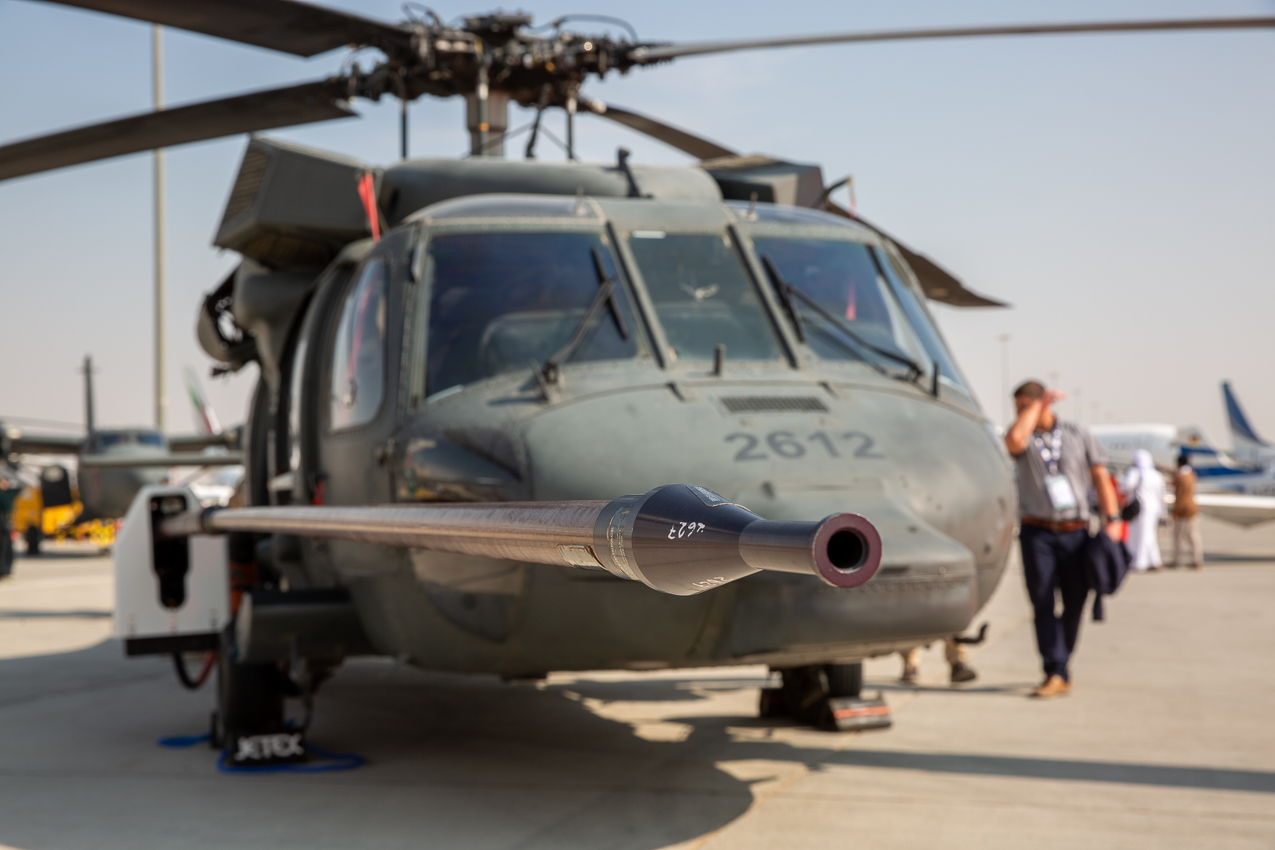
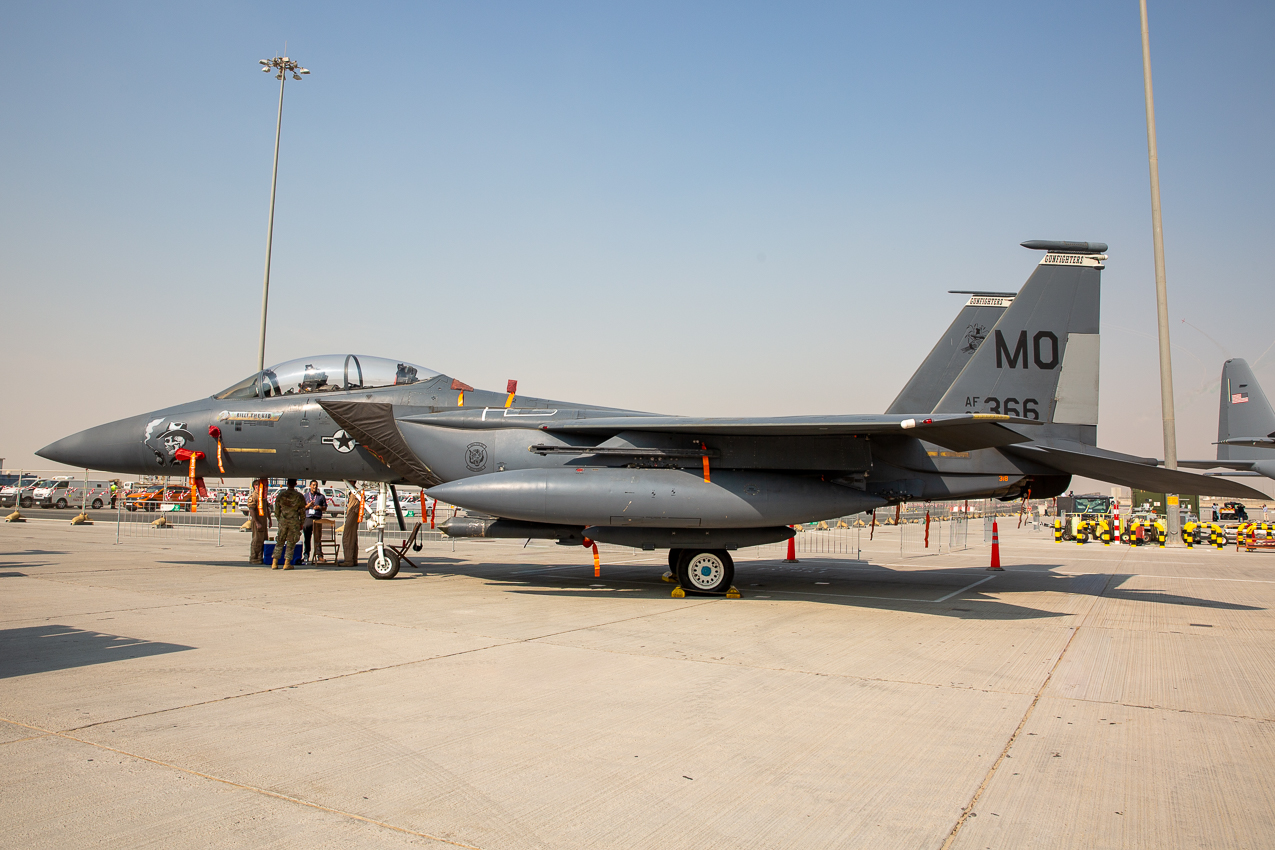
Among the numerous aircraft on static display let’s highlight the UAEAF&AD C-17 with a “golden” livery and the Joint Aviation Command’s Black Hawk equipped with the Dart Aerospace SkyCannon system, designed to fight fires in skyscrapers. Also on display an F-15E Strike Eagle from the 366th Fighter Wing, nicknamed “Billy the Kid,” which during her deployment to the region launched 13 APKWS guided rockets and five AIM-9X Sidewinders.

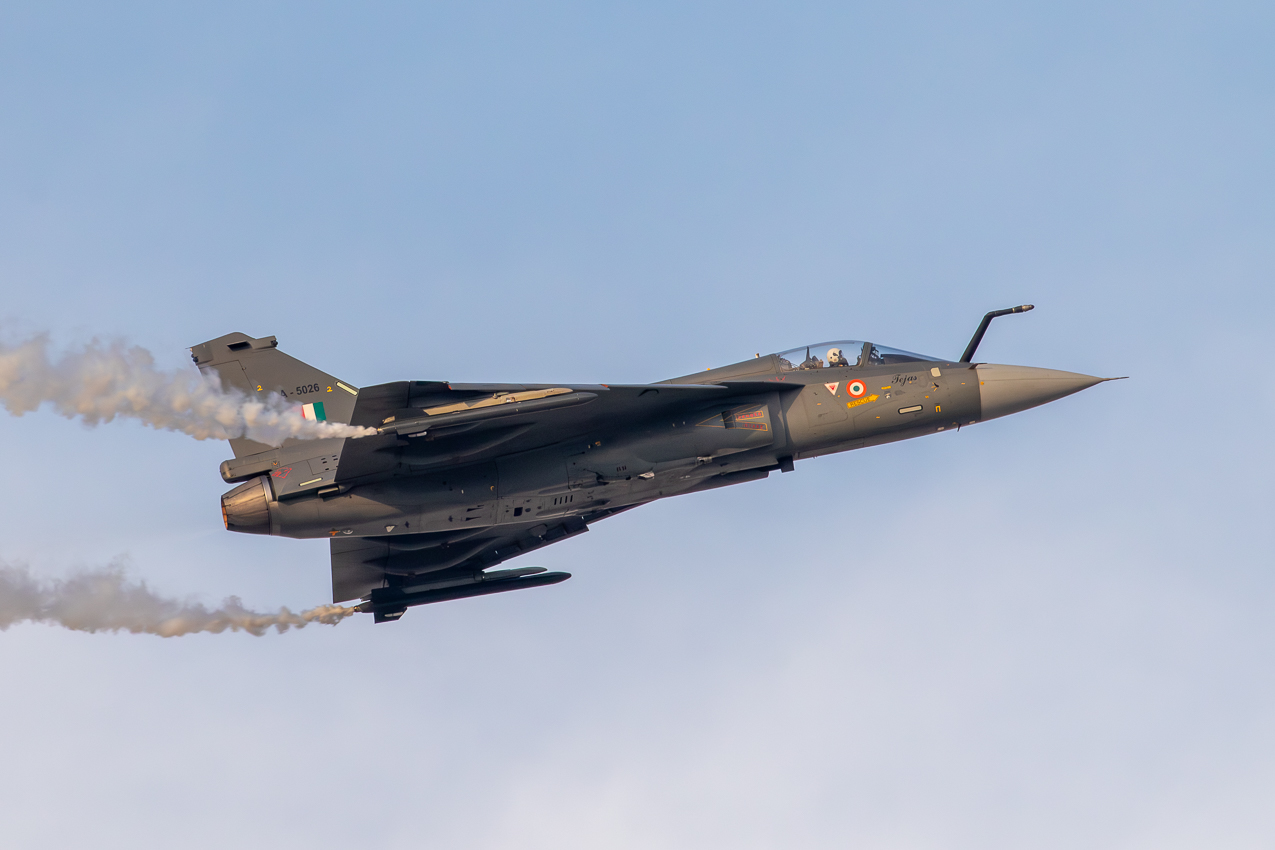
The flight program also included the display of the Tejas Mk1, the Indian fighter in service since 2001 which arrived at the show accompanied by another one intended for the static display, and parked not too far from the Pakistani JF-17 (for which a deal was recently concluded to deliver 40 Block 3 aircraft to Azerbaijan). Unfortunately, the display on the final day ended fatally; for reasons yet to be determined, the Indian aircraft crashed to the ground after a negative-G maneuver, and the pilot, Wing Commander Namansh Syal, died. The day’s handling of the tragedy sparked some controversy, including a post on social media X by Major Taylor ‘FEMA’ Hiester, the Viper Demo Pilot, who was surprised that the rest of the event hadn’t been canceled after such a disastrous outcome. Several performances were canceled, except for the Russian Knights, who performed the Missing Man figure in memory of their recently deceased Indian colleague, and the Al Fursan, who nevertheless took to the air for their closing performance.
Despite the tragic outcome, Dubai 2025 was undoubtedly a successful event; the numbers involved (over 148,000 attendees, more than 490 delegations from 98 countries, 18 national pavilions) confirm the show’s growth trend. Those attending the next edition in 2027 will find a city even more diverse than this year, with an expanding airport and a growing local industry competing to master emerging technologies.



Gabriele was born in Turin, Italy, grew up in Sicily and now lives in Rome. His love for aviation goes back to the days when he was seven years old, he started to collect the ‘History of Aviation’ sold weekly at the nearby newsstand. With that, he realized that his goal was to become a military pilot. This dream met a harsh reality when, during the medical tests, a defect in his chromatic sense of sight was discovered.
His interest in photography arose a few years later, when he bought from a colleague his first single-lens reflex camera, a Pentax ME Super. Then everyday life took its toll; working as an IT analyst, studying for an MD in political science and starting a family left no time for enjoying his old interest for aviation. One day in 2008, he decided to revive the passion, starting again to take pictures of aircraft each time he has a chance. Now, using Canon gear, he is striving to become a photojournalist.
Gabriele can be reached at: [email protected]